
Flowers
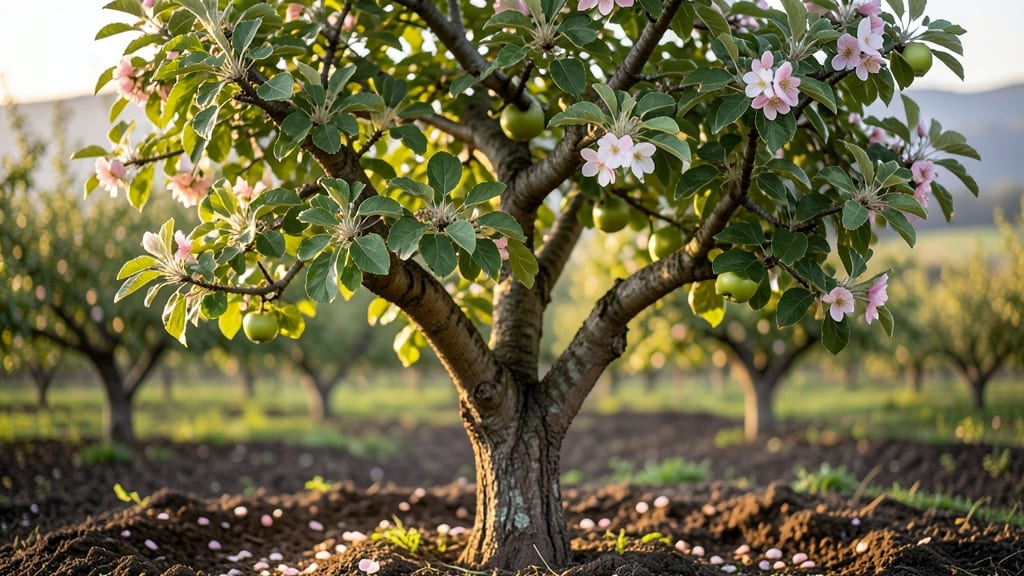
Apple tree flowers turning into fruit is all about the right mix of pollination, timing, and care — and most gardeners miss the key triggers that make the difference between a handful of apples and a full harvest.
Did you know that up to 90% of apple blossoms never become fruit? The gap between a stunning spring bloom and a bountiful fall harvest often comes down to factors you can control, like pollinator activity, temperature swings, and even soil health.
With the right approach, you can turn that frustration into a doubled yield.
This isn’t just about waiting for bees to do their job — it’s about creating the perfect conditions for every blossom to set fruit. From the moment those delicate petals open to the day the apples ripen, small adjustments in your orchard can make a huge difference.
In this guide, I’ll walk you through the science of pollination, the critical window for fertilization, and the proven strategies that gardeners use to boost fruit set — so you can go from hoping for apples to counting them.
How apple tree flowers develop into fruit: the science of pollination success
Every spring, your apple tree bursts into a breathtaking display of pink and white blossoms, but did you know only a fraction will become fruit? The transformation from flower to apple hinges on a delicate biological process called pollination and fertilization.
Without it, those beautiful blooms fall to the ground, leaving you with empty branches. Understanding this process is the key to unlocking a bountiful harvest.
When apple blossoms open, they reveal tiny reproductive organs: the stamens (male) and pistil (female). For fertilization to occur, pollen from the stamens must reach the pistil. This can happen through wind pollination or, more effectively, via bees and other pollinators.
Once pollen lands on the pistil, it travels down to the ovary, where fertilization takes place—typically within 3 to 7 days after bloom.
But here’s the catch: this process is incredibly sensitive to environmental conditions. Temperature, humidity, and sunlight all play critical roles in determining whether your apple blossoms will set fruit. For example, ideal temperatures for pollination range between 55°F and 85°F.
If it’s too cold or too hot, pollen may not germinate, or the pistil may fail to accept it. Similarly, high humidity can hinder bee activity, while dry conditions may cause pollen to dry out before reaching the pistil.
Even after successful fertilization, the young fruit—called a king fruit—must compete for the tree’s resources. If too many blossoms set fruit, the tree may abort some developing apples to prioritize the healthiest ones.
This is why thinning blossoms (but not too aggressively) can actually improve the quality and size of your final harvest.
| Stage | Key Process | Critical Factors | Optimal Conditions |
|---|---|---|---|
| Blossom Opening | Pollen release | Pollinator activity | 55°F–85°F, sunny days, bees active |
| Pollen Transfer | Wind/bee-mediated | Pollen viability | Humidity <40%, no rain during bloom |
| Fertilization | Pollen tube growth | Temperature stability | 60°F–75°F, consistent sunlight |
| King Fruit Formation | Ovary development | Nutrient availability | Well-draining soil, pH 6.0–6.5 |
| Fruit Set | Resource competition | Thinning strategy | 6–8 weeks post-bloom, 4–6" spacing |
One of the most common misconceptions is that all apple trees pollinate themselves. While some varieties are self-pollinating, many—like Gala or Fuji—require cross-pollination from a different apple tree to produce fruit.
Planting two compatible varieties near each other can double your yield. For instance, if you grow a Honeycrisp, pair it with a Granny Smith to ensure successful pollination.
Bees are the superheroes of pollination, but they need the right conditions to thrive. Early spring blooms often coincide with cooler temperatures, which can limit bee activity. To give pollinators a boost, plant bee-friendly flowers like clover or lavender near your apple tree.
These provide nectar and attract bees to your orchard. Additionally, avoid using pesticides during bloom, as they can harm bees and reduce pollination success.
Light also plays a surprising role in fruit set. Apple trees need at least 6 hours of sunlight daily for optimal pollination and fruit development. If your tree is in partial shade, consider pruning nearby branches or thinning the canopy to improve light penetration.
Poor light exposure can lead to smaller fruit or even fruit drop before maturity.
Finally, don’t overlook the role of soil health in this process. Apple trees thrive in well-draining, slightly acidic soil with a pH between 6.0 and 6.5. If your soil is too alkaline or compacted, roots may struggle to absorb the nutrients needed for fruit development.
Conduct a soil test in early spring and amend the soil with compost or organic matter if necessary to create the ideal growing conditions.
By understanding these critical stages and conditions, you can maximize your apple tree’s fruit set and enjoy a harvest that rivals the best orchards. Pay attention to the weather forecast during bloom, monitor pollinator activity, and give your tree the care it needs—your future apples will
5 Proven pollination triggers to double your apple harvest
Transforming those delicate apple blossoms into a bountiful harvest starts with understanding the right pollination triggers. Many gardeners miss the critical window when blossoms are receptive—usually just 3-7 days after opening.
With the right techniques, you can boost fruit set by 50-100%, turning a sparse harvest into a tree heavy with apples.
First, identify your tree’s bloom stage. Early bloomers (like Honeycrisp) need attention in late April, while late varieties (such as Granny Smith) peak in early May.
Timing is everything—miss it, and you’ll watch those blossoms drop without setting fruit. The good news? You don’t need a hive of bees to succeed—just a few targeted strategies.
🌱 5 Proven Pollination Triggers for Apple Trees
- Hand-Pollination: Use a soft paintbrush or cotton swab to transfer pollen between blossoms. Do this on dry, sunny mornings when humidity is low—ideal conditions for pollen transfer.
- Companion Planting: Plant clover or thyme near your tree to attract bees. These flowers provide early-season nectar, keeping pollinators active during apple bloom season.
- Sugar Water Spray: Mix 1 cup sugar + 1 cup water and spray blossoms lightly. This mimics nectar, luring bees to your tree for 2-3 days of focused pollination.
- Yeast Solution: Dissolve 1 packet yeast + 1 tsp sugar in warm water. Spray on blossoms—yeast releases CO2, mimicking bee activity and stimulating pollen release.
- Monitor Bloom Stages: Check blossoms daily. Petals should start curling—this signals the end of the receptive window. Thin fruit later to 6-8 inches apart for larger apples.
For hand-pollination, focus on cross-pollination if you have multiple apple varieties. A single tree may not self-pollinate efficiently, so transfer pollen between different blossoms. I’ve seen Fuji trees go from 10 apples to over 100 after just 3 days of hand-pollination during a cool, bee-sparse spring.
Don’t overlook organic sprays like yeast or sugar water—they’re bee-friendly and work even when natural pollinators are scarce. Apply these in the early morning to avoid attracting pests. Pair this with companion plants, and you’ll create a pollinator paradise right under your tree’s branches.
Finally, thin blossoms early to prevent overcrowding. Too many fruit can lead to small, misshapen apples and stress the tree. Aim for 1 fruit per cluster and monitor for fruit set success—look for blossoms that swell into tiny apples within 2 weeks.
With these 5 triggers, you’ll turn those drooping blossoms into a harvest that rivals commercial orchards. Start today—your tree’s next harvest depends on it! 🍎