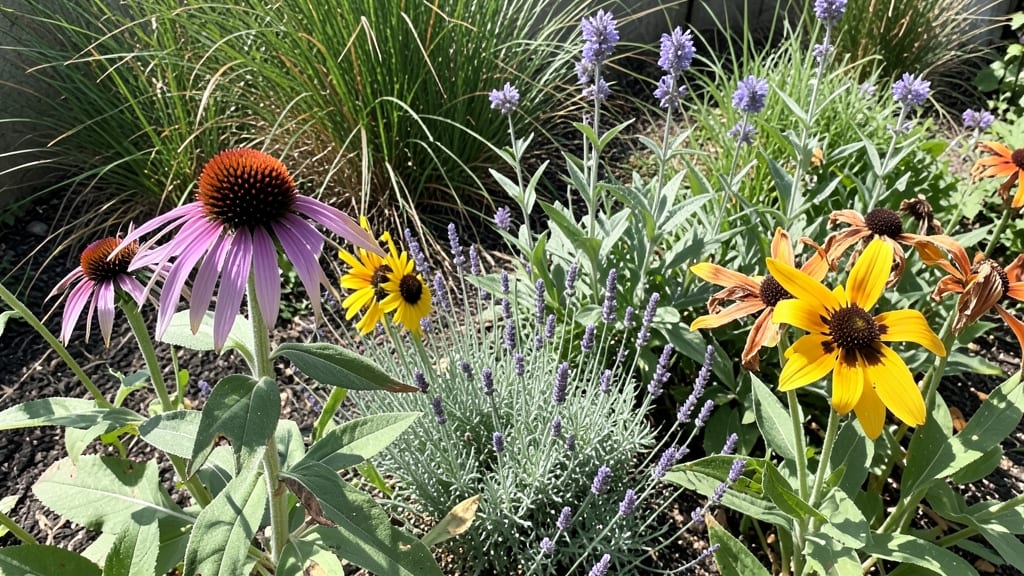
A backyard flower garden design that thrives year-round isn’t just pretty—it’s a pollinator paradise and a breeze to maintain once you know the secrets.
Picture this: a spring burst of tulips, summer’s buzzing cosmos, and fall’s fiery mums all growing together without fighting for space. The key? Layering plants by height and bloom time so your garden stays vibrant from April to October while keeping bees, butterflies, and hummingbirds visiting all season.
Most people assume a stunning flower garden requires hours of work or a big budget—but the best designs actually save you time. The right pollinator-friendly plants self-seed, repel pests, and need less watering once established.
Plus, you can start small with just a few key varieties and expand as you go.
In this guide, I’ll walk you through the easiest layout tricks for your USDA Zone 6a space, from choosing low-maintenance blooms to arranging them so they support each other. No green thumb required—just a little strategy and a love for watching your yard come alive.
How to plan a season-long flower garden with pollinator-friendly layers
A season-long flower garden thrives on strategic layering—combining plants by height and bloom time to create a nonstop pollinator buffet. Start by mapping your space into three height zones: tall backdrops (4-8 ft), mid-height accents (2-4 ft), and low ground covers (under 2 ft).
This structure prevents overcrowding while ensuring every pollinator—from bees to hummingbirds—finds food year-round.
Native plants are the gold standard for pollinator gardens, as they’ve co-evolved with local insects and require less water and care. However, a few well-chosen non-natives (like butterfly bush or black-eyed Susan) can add bold color without harming ecosystems. Always check your region’s invasive species list before planting.
Here’s how to balance native and non-native plants for a sustainable, high-impact garden:
🌱
| Layer |
Plant Type |
Bloom Time |
Height |
Pollinator |
| Tall Backdrop |
Coneflower (Echinacea) |
Summer-Fall |
3-5 ft |
Bees, Butterflies |
| Tall Backdrop |
Joe Pye Weed (Native) |
Late Summer |
4-7 ft |
Bees, Hummingbirds |
| Mid-Height |
Black-Eyed Susan |
Summer-Fall |
2-3 ft |
Bees, Butterflies |
| Mid-Height |
Bee Balm (Native) |
Summer |
2-4 ft |
Bees, Hummingbirds |
| Ground Cover |
Creeping Thyme |
Spring-Fall |
0.5-1 ft |
Bees |
| Ground Cover |
Wild Bergamot (Native) |
Summer-Fall |
1-2 ft |
Bees, Butterflies |
| Spring Starter |
Columbine (Native) |
Spring |
1-2 ft |
Hummingbirds, Bees |
| Fall Filler |
Aster (Native) |
Fall |
Top 15 flowers for year-round pollinator support (by season and color)
A thriving pollinator garden requires strategic plant selection to ensure continuous blooms and diverse pollinator support. By choosing flowers that bloom in early spring, mid-season, and late fall, you create a non-stop buffet for bees, butterflies, and hummingbirds.
The key is balancing color variety—purples attract bees, yellows lure butterflies, and reds draw hummingbirds—while keeping maintenance simple with perennials and self-seeding annuals.
I’ve curated 15 top-performing flowers that fit these criteria, organized by bloom season and color. These picks thrive in USDA Zones 5-9 and require minimal fuss, making them perfect for busy gardeners who still want a vibrant, pollinator-packed yard. Let’s dive into the best choices for each category!
🌸 EARLY SPRING BLOOMERS (March-April)
- 1. Purple Crocus – 💜 Purple blooms attract early bees; drought-tolerant and perennial.
- 2. Virginia Bluebells – 💙 Blue-purple clusters loved by butterflies; thrives in partial shade.
- 3. Daffodils – 🟡 Yellow blooms signal bees to wake up; deer-resistant.
🌻 MID-SEASON STARS (May-August)
- 4. Black-Eyed Susan – 🟡 Gold daisy-like blooms adored by bees and butterflies; drought-resistant.
- 5. Coneflower (Echinacea) – 🟣 Purple-pink attracts hummingbirds and bees; medicinal benefits.
- 6. Butterfly Weed – 🟠 Orange blooms are a butterfly magnet; native perennial.
- 7. Bee Balm – 🔴 Red-pink tubular flowers loved by hummingbirds; self-seeds easily.
🍂 LATE SEASON SHOWSTOPPERS (September-October)
- 8. Goldenrod – 🟡 Bright yellow clusters feed late-season bees; not invasive (unlike myths).
- 9. Asters – 💜 Purple-blue blooms sustain migratory butterflies; tough perennials.
- 10. Russian Sage – 🟣 Lavender-blue spikes attract bees and hummingbirds; drought-proof.
🌿 WHITE & LOW-MAINTENANCE PICKS (All Seasons)
- 11. Shasta Daisy – ⚪ White blooms loved by bees and butterflies; self-cleaning.
- 12. Yarrow – ⚪ White or pink flat-topped flowers feed all pollinators; deer-resistant.
- 13. Sedum (Stonecrop) – 🟠 Pink-white late-season blooms; succulent-like, drought-tolerant.
- 14. Lavender – 💜 Purple fragrant spikes attract bees; herbaceous and aromatic.
- 15. Coreopsis – 🟡 Gold-yellow daisy-like blooms; long bloom time, self-seeds.
For maximum pollinator appeal, I recommend mixing 3-4 colors per season in clusters of 3-5 plants.
For example, pair purple coneflowers with yellow black-eyed Susans and white Shasta daisies to create a high-contrast, bee-friendly display. Native varieties like butterfly weed and goldenrod also support local ecosystems without extra work.
Pro tip: Group tall flowers (like bee balm) at the back, medium-height (like coneflowers) in the middle, and ground covers (like sedum) at the front. This layered approach ensures every pollinator—from tiny bees to hummingbirds—has easy access to nectar and pollen.
With this season-long color palette, your garden will buzz with activity from spring to frost, all while requiring minimal upkeep. Start small with 5-10 plants and expand as you see which pollinators thrive in your yard!
★★★★★4.5(1 review)
|