
Flowers
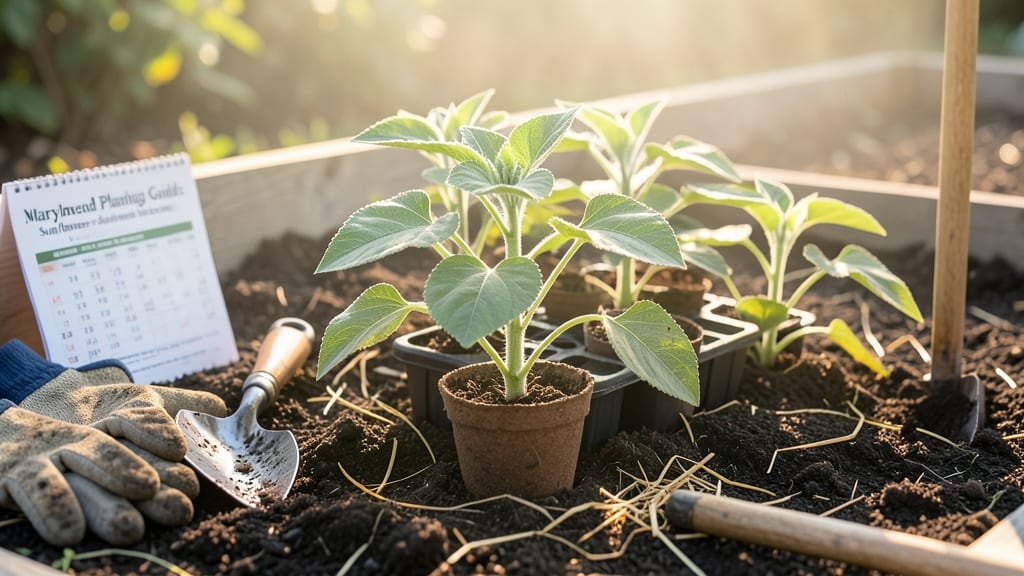
Planting sunflowers in Maryland after the last frost date — typically late April to early June — ensures your 🌻 thrives and reaches its towering potential.
Sunflowers bring bold color and joy to Maryland gardens—but planting them at the wrong time can mean stunted growth or missed blooms entirely. Timing is everything, especially in USDA Zones 7b-8a where frost dates shift yearly.
In Maryland’s climate, the last frost date around April 15th signals the perfect window to start sowing seeds. Waiting too long risks shorter plants or even failure, while starting too early could leave seedlings vulnerable to late frosts.
Below, I’ll walk you through the exact frost-free dates by zone, soil prep tips, and how to adjust for Maryland’s unpredictable weather—so you can grow sunflowers that stand tall and proud all summer long.
Maryland sunflower planting timeline by USDA Zone 7b-8a
Maryland’s USDA Zones 7b-8a offer a perfect climate for growing sunflowers, but timing your planting is critical. The last frost date typically falls between April 15-30, while the first frost arrives around October 15.
This gives you a 180-day growing season—ideal for sunflowers that mature in 70-120 days. Planting too early risks frost damage, while late planting may delay blooms until fall.
Sunflowers thrive when soil temperatures reach at least 50°F (10°C). In Maryland, this usually happens by mid-April in warmer microclimates like Baltimore County or Southern Maryland, but may wait until late April in cooler areas like Western Maryland.
Always check local forecasts to avoid planting during unpredictable late frosts.
Here’s your Maryland sunflower planting timeline broken down by zone and season, with data from the University of Maryland Extension:
For spring planting, aim to sow seeds 2-3 weeks after your last frost date. In Maryland, this typically lands in late April to early June. Use a soil thermometer to confirm temperatures are stable at 50°F (10°C) or warmer.
If you’re in Zone 7b (e.g., Frederick or Hagerstown), err on the later side to avoid late frosts.
Fall planting is possible but requires fast-maturing varieties like 'Teddy Bear' or 'Moulin Rouge'. Start seeds in early August for Zone 8a (e.g., Annapolis or Salisbury) or mid-August for Zone 7b.
Sunflowers planted in fall will bloom earlier than spring-planted ones and may survive light frosts if protected.
Maryland’s unpredictable weather means you should always have a backup plan. If frost warnings appear after planting, cover seedlings with frost cloth or move potted sunflowers indoors temporarily. For tall varieties (8+ feet), stake them early to prevent wind damage during summer storms.
Pro tip: Stagger your planting by 2 weeks for a continuous bloom cycle. For example, plant half your seeds in late April and the rest in mid-May.
This ensures some sunflowers will bloom in July while others follow in August and September. Just be sure to space them 6-12 inches apart to avoid overcrowding.
After planting, focus on consistent moisture—sunflowers need 1-2 inches of water weekly, especially during Maryland’s hot, humid summers. Mulch around the base to retain moisture and suppress weeds. With the right timing and care, your sunflowers will reward you with vibrant blooms from July through October.
Remember, Maryland’s microclimates vary. If you’re near the Chesapeake Bay, you may enjoy earlier frost-free dates, while inland areas like Cumberland might face later springs. Always check the National Weather Service or your local Cooperative Extension for updates before planting.
With this timeline, your Maryland sunflowers will thrive—bring
How to adjust sunflower planting for Maryland’s unpredictable weather
Maryland’s unpredictable weather can throw off even the best-laid sunflower planting plans. Late frosts in May, sudden heatwaves, or heavy rains can all threaten your sunflower seedlings if you’re not prepared. The key is flexibility—adjusting your approach based on real-time conditions rather than relying solely on average frost dates.
I’ve learned that staggered planting is my secret weapon. Instead of sowing all seeds at once, I plant a small batch every 10-14 days from late April through early June.
This ensures that no matter when the last frost hits or when summer heat arrives, I’ll always have healthy sunflowers at different growth stages.
For seedling protection, I swear by cloche tunnels or lightweight row covers. These create microclimates that shield young plants from cold snaps while still allowing sunlight.
If a frost warning pops up, I cover seedlings by sunset and remove them the next morning—just in time for a full day of growth.
Maryland’s summer heat can also be brutal. Once your sunflowers reach 12 inches tall, they’ll need deep watering every 2-3 days during dry spells.
I water deeply in the early morning to prevent fungal issues, and I always mulch with straw or wood chips to retain moisture and keep roots cool.
Not all sunflower varieties handle Maryland’s extremes equally. Early-maturing varieties like ‘Autumn Beauty’ (50-60 days) or ‘Teddy Bear’ (55-65 days) are my go-tos—they bloom before summer’s worst heat arrives. For taller varieties like ‘Mammoth’ (120+ days), I plant them slightly later in early June to avoid early-season stress.
If you’re dealing with heavy rain, prioritize well-draining soil. Amend clay-heavy Maryland soil with compost or sand to prevent waterlogging. For containers, ensure pots have drainage holes and elevate them slightly to avoid soggy roots.
By combining staggered planting, protective covers, and heat-tolerant varieties, you can turn Maryland’s unpredictable weather into an advantage. Your sunflowers will thrive regardless of what Mother Nature throws their way—just like mine do every year! 🌻