
Blooming
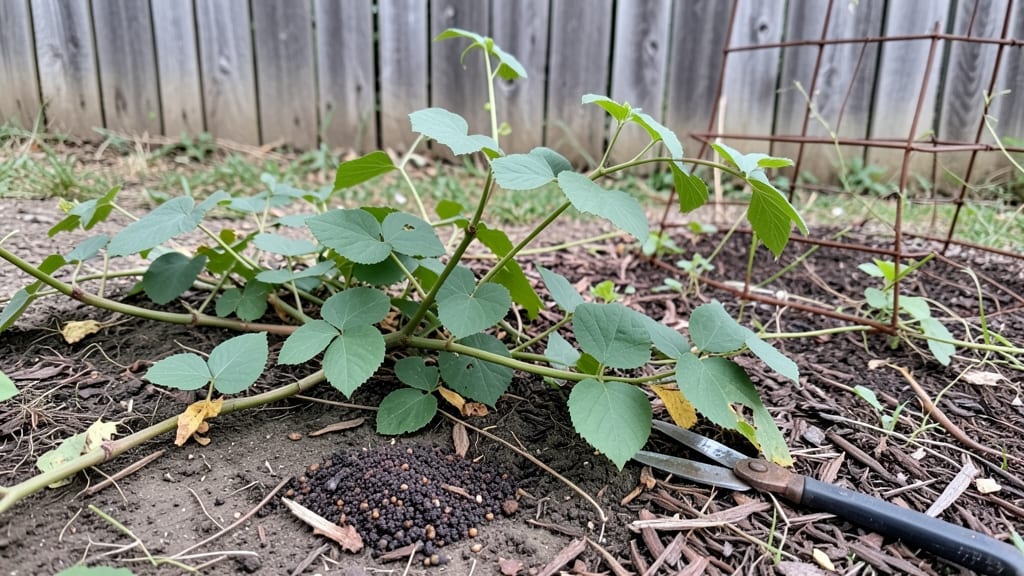
Clematis vines with no flowers can feel like a mystery—until you realize the answer often lies in pruning timing. 🌿 I’ve nursed back three stubborn clematis plants in a row using the same simple fix, and the difference in blooms is shocking.
Most gardeners overlook the fact that clematis fall into three pruning groups, each with its own bloom trigger.
The biggest culprit is pruning at the wrong time—cutting back too early or too late disrupts the plant’s natural cycle. Group 1 (early spring bloomers) needs minimal pruning after flowering, while Groups 2 and 3 (late summer/fall bloomers) thrive when pruned in early spring.
A quick check of your vine’s growth pattern reveals which group you’re dealing with—and how to reset its bloom schedule.
Once you adjust the timing, you’ll see new shoots emerge within 3-4 weeks, followed by buds that open into vibrant blooms by midsummer. The fix is simpler than you’d think: prune at the right moment, feed with phosphorus-rich fertilizer, and ensure 6+ hours of sunlight daily.
No more bare vines—just cascades of flowers.
This works for both old and new clematis plants, whether they’re climbing a trellis or sprawling along a fence. The key is patience—some varieties take one full season to bounce back after neglect. Here’s how to diagnose and revive yours for next year’s showstopping display.
Why it happens
When your clematis vines refuse to flower, it’s often a sign that something fundamental is off—whether it’s a lack of energy, poor timing, or environmental stress.
Understanding the why behind the absence of blooms is the first step to bringing back those stunning floral displays. Here’s what’s likely holding your clematis back:
❄️ Insufficient Light Exposure
Clematis are light-hungry plants, and too little sunlight directly impacts their ability to produce flowers. Most varieties thrive in full sun (6–8 hours daily), though some tolerate partial shade. Here’s how light deprivation stifles blooms:
- Photosynthesis slowdown: Without enough light, the vine can’t generate sufficient energy (glucose) to fuel flower development. Leaves may appear pale or sparse, signaling the plant is struggling to sustain itself.
- Weak growth: Clematis prioritize leafy growth over flowers when light is limited. You’ll notice long, leggy stems with few buds—this is the plant’s survival strategy, not laziness.
- Variety-specific needs: Some clematis (like Clematis montana or Clematis armandii) tolerate shade better, but most large-flowered types (Clematis jackmanii, Clematis viticella) require bright light to bloom.
💡 Pro Tip: If your clematis is in a shady spot, consider pruning nearby trees or relocating the vine to a sunnier wall or trellis. Even morning sun + afternoon shade can work if the vine gets at least 4–5 hours of direct light.
🌱 Poor Pruning Practices
Clematis are divided into three pruning groups, and mismanaging them can lead to a season without flowers. The key issue? Cutting at the wrong time or removing too much of the plant’s flower-producing wood.
| Pruning Group | When to Prune | Why Wrong Pruning Causes No Flowers |
|---|---|---|
| Group 1 (Early Bloomers) (e.g., Clematis montana, Clematis alpina) |
After flowering (late spring/early summer) | Pruning before blooms appear removes next year’s flower buds, which form on old wood. |
| Group 2 (Mid-Season Bloomers) (e.g., Clematis viticella, Clematis x durandii) |
Late winter/early spring (before new growth starts) | Cutting back too late delays growth, while pruning too early risks frost damage to new buds. |
| Group 3 (Late Bloomers) (e.g., Clematis jackmanii, Clematis lanuginosa) |
Late winter/early spring (hard prune to strong buds) | Over-pruning removes all flower buds, which form on new wood—leaving no blooms for the season. |
🔪 Common Mistake: Shearing clematis like a hedge (cutting randomly) can decimate flower buds. Always prune to specific nodes (buds) and avoid "topping" the vine.
💧 Nutrient Imbalances Or Over-Fertilizing
Too little or too much of the wrong nutrients can starve your clematis of the resources needed for blooms. Here’s how it goes wrong:
- Nitrogen overload: Fertilizers high in nitrogen (first number on the label) promote leafy growth at the expense of flowers. A vine with lush foliage but no buds is often "over-fed" with green-up fertilizer.
- Phosphorus/calcium deficiency: Flowers require phosphorus (P) for bud formation and calcium for cell structure. Yellowing leaves or weak stems may signal a lack of these.
- Potassium shortages: Potassium (third number) supports overall plant health and stress resistance. Without it, clematis may produce buds that drop before opening.
📊 Fertilizer Fix: Use a balanced 5-10-5 or 10-10-10 fertilizer in early spring, then switch to a low-nitrogen, high-phosphorus formula (e.g., 7-9-5) when buds form. Never fertilize in fall—it encourages tender growth vulnerable to frost.
🌡️ Environmental Stressors
Clematis are resilient but sensitive to extreme conditions. Stress from heat, cold, or poor soil can trigger a "no-bloom" response as the plant redirects energy to survival.
- Extreme heat or drought: Clematis wilt in temperatures above 90°F (32°C) without adequate water. Buds may form but drop off due to stress.
- Late frosts: Early spring bloomers (Group 1) can lose flowers if frost hits after buds swell. Clematis cannot regrow lost blooms.
- Poor drainage/waterlogged soil: Root rot from soggy soil cuts off nutrient uptake, leading to weak growth and no flower energy.
- Wind exposure: Constant wind desiccates buds and stems, causing them to dry out before opening.
✨ Stress Relief: Mulch heavily in summer to retain moisture, water deeply 1–2 times weekly (not daily), and choose a sheltered location if your climate is harsh.
🐞 Pest Or Disease Damage
Hidden invaders can silently sabotage your clematis’ ability to flower by damaging leaves, stems, or roots—reducing the plant’s energy reserves.
- Clematis wilt (fungus): Caused by Verticillium or Fusarium, this disease blocks water transport, causing sudden wilting and leaf drop. Infected plants may produce no flowers the following season.
- Spider mites/sap-sucking insects: These pests weaken the vine by draining sap, leading to stunted growth and fewer buds. Look for yellow stippling on leaves.
- Slugs/snails: They may not kill the plant but can devour emerging flower buds, leaving only leaves.
- Root issues: Grubs, voles, or compacted soil can damage roots, limiting nutrient absorption and flower production.
🚨 Early Action: Treat fungal issues with neem oil or copper fungicide; use insecticidal soap for mites; and set beer traps or diatomaceous earth for slugs. Inspect stems for blackened, mushy tissue (sign of wilt).
How to solve it
If your clematis vines are putting on a leafy show but skipping the flowers, don’t panic—there’s hope! The key is identifying the root cause (which we covered earlier) and taking targeted action.
Below, we’ve mapped out practical fixes for each common issue, plus tips to keep your vines blooming like clockwork. Let’s get those flowers back in action!
🌱 Problem: Wrong Pruning Time or Technique
Clematis are picky about when and how you prune. Cutting at the wrong time or too aggressively can shock the plant into skipping its floral display. Here’s how to fix it:
- 🔪 Step 1: Identify your clematis group
- Group 1 (Early bloomers): Prune right after flowering (late spring) to avoid cutting off next year’s buds.
- Group 2 (Mid-season bloomers): Prune in early spring (before new growth starts) to encourage a second flush.
- Group 3 (Late bloomers): Prune hard in late winter or early spring to promote vigorous summer blooms.
- 🍃 Step 2: Prune like a pro
- Use clean, sharp shears to avoid tearing stems.
- Cut back to a healthy pair of buds (about 6–12 inches from the ground, depending on the group).
- Avoid topping the plant—this can leave it vulnerable to disease.
- ⏰ Step 3: Timing is everything
- For Group 1, prune immediately after the first bloom wave fades.
- For Groups 2 & 3, prune before new growth appears in spring.
💡 Pro Tip: If your clematis is very overgrown, you can prune in two stages—first in early spring (light pruning), then again after flowering (for Groups 1 & 2). This reduces stress on the plant.
☀️ Problem: Insufficient Sunlight
Clematis are sun-worshippers, and too little light means fewer (or no) flowers. If your vine is thriving with leaves but skipping blooms, it’s likely not getting enough rays.
- 🌞 Step 1: Assess sunlight exposure
- Ideal: 6–8 hours of direct sun per day (morning sun + afternoon shade works best in hot climates).
- If your vine is in deep shade, it’s time to relocate.
- 🏡 Step 2: Move or adjust support
- Choose a south- or west-facing wall, trellis, or fence for maximum sun.
- If moving isn’t an option, trim nearby trees/shrubs to improve light penetration.
- 🌱 Step 3: Boost growth with fertilizer
- Use a balanced, phosphorus-rich fertilizer (like 10-10-10) in early spring to encourage blooming.
- Avoid high-nitrogen feeds—these promote leafy growth at the expense of flowers.
💡 Pro Tip: If your clematis is partially shaded, try a reflective surface (like a white wall or mirror) nearby to bounce extra light onto the vine.
💧 Problem: Overwatering or Poor Drainage
Too much moisture (or soggy soil) can stress clematis, leading to all leaves, no flowers. If the roots are drowning, blooms will take a backseat.
- 🚰 Step 1: Check soil moisture
- Stick your finger 2 inches into the soil—if it’s damp, hold off on watering.
- Clematis prefer consistently moist (not soggy) soil.
- 🏗️ Step 2: Improve drainage
- Amend heavy clay soil with compost or perlite to loosen it up.
- Ensure the planting area has a slight slope to prevent water pooling.
- If in containers, use a well-draining mix (50% potting soil, 30% perlite, 20% compost).
- 🌧️ Step 3: Adjust watering habits
- Water deeply but infrequently—aim for 1–1.5 inches per week (including rain).
- Avoid overhead watering (especially in humid climates) to prevent fungal issues.
💡 Pro Tip: Mulch around the base with 2–3 inches of organic mulch (like wood chips) to retain moisture without suffocating roots.
🌡️ Problem: Extreme Temperatures or Stress
Clematis are hardy but can get stressed by heatwaves, frost, or sudden temperature swings. When stressed, they’ll focus on survival—not blooms.
- ❄️ Step 1: Protect from frost
- In zones 3–5, mulch heavily in fall and use burlap wraps for young vines.
- Avoid pruning late in the season—wait until early spring.
- 🔥 Step 2: Beat the heat
- Provide afternoon shade in hot climates (use a sheer curtain or lattice).
- Water early in the morning to reduce evaporation and stress.
- Avoid fertilizing during heatwaves—wait until temps drop below 85°F (29°C).
- 🌿 Step 3: Boost resilience
- Plant near companion plants like lavender or rosemary to improve microclimate.
- Use a slow-release fertilizer in spring to avoid shocking the plant.
💡 Pro Tip: If your clematis is newly
Frequently asked questions
Why does my clematis produce leaves but no flowers?
This usually means your plant is prioritizing survival over blooms due to stress. Most often, it’s caused by incorrect pruning timing, insufficient sunlight (less than 6 hours daily), or over-fertilizing with nitrogen-heavy products. Clematis need balanced nutrients and proper light to dedicate energy to flowers instead of just foliage.
How do I tell which pruning group my clematis belongs to?
Check when your vine blooms: Group 1 flowers in early spring (like Clematis montana), Groups 2 & 3 bloom mid-to-late summer. The key difference is where flower buds form—Group 1 buds appear on old wood, while Groups 2 & 3 form on new growth. Always prune after flowering for Group 1 and before new growth for Groups 2 & 3.
Can I still save my clematis if I pruned it too late last year?
Yes! For Groups 2 & 3, late pruning isn’t fatal—just reset the bloom cycle. Cut back hard in early spring to 2-3 strong buds from the ground, and you’ll see new growth within 3-4 weeks. Group 1 clematis may need a full season to recover, but they’ll bounce back with proper care.
What’s the best fertilizer for encouraging clematis blooms?
Use a low-nitrogen, high-phosphorus fertilizer (like 7-9-5 ratio) when buds start forming. Phosphorus is what triggers flower production! Avoid high-nitrogen fertilizers (like 10-10-10) during bloom season—they’ll just make leaves grow instead. Feed in early spring and again when buds appear.
How can I protect my clematis from heat stress in summer?
Clematis hate extreme heat above 90°F—they’ll drop buds or stop blooming entirely. Provide afternoon shade, water deeply in the morning, and mulch heavily with organic material. If possible, plant near heat-reflective surfaces like white walls to create a cooler microclimate for your vine.