
Light Requirements
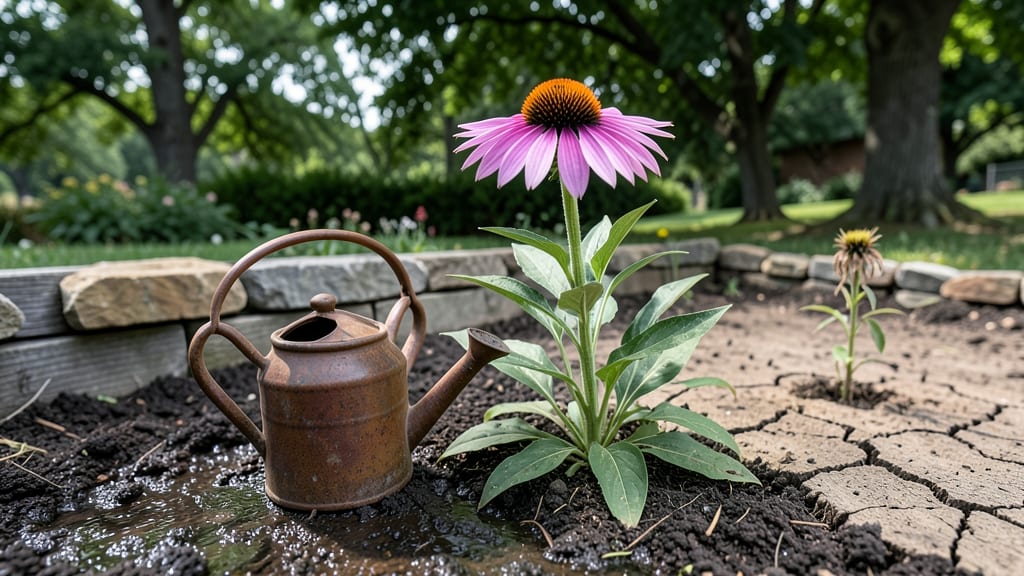
Coneflowers don’t need a lot of water to thrive—these resilient perennials actually love drought conditions once they’re established.
If you’re picturing wilting petals or drooping stems every time you forget to water, think again. These 🌼 hardy bloomers store moisture efficiently, making them perfect for busy gardeners or dry climates like USDA Zone 6a.
But there’s a catch: seedlings and newly planted coneflowers need consistent moisture to root well. After that, deep but infrequent watering keeps them happy without the fuss.
Below, I’ll break down exactly how much water they need by season, how to spot over- or under-watering, and the easiest mulching tricks to cut watering in half.
How much water coneflowers actually need (and when)
Coneflowers are often praised for their drought tolerance, but that doesn’t mean they’re completely water-independent. The key lies in understanding their watering needs at different growth stages—from delicate seedlings to robust, established plants.
Unlike thirsty annuals, coneflowers store moisture efficiently once their roots establish, but they still need consistent care during their first year. Let’s break down exactly how much water they need and when to provide it for the healthiest blooms.
Newly planted coneflower seedlings require the most attention, needing water 2-3 times per week to keep soil evenly moist. Over time, their deep taproots develop, allowing them to access water from lower soil layers.
By their second year, mature coneflowers can thrive with just 1 deep watering every 10-14 days during dry spells. This adaptability makes them ideal for xeriscaping and low-water landscapes.
Seasonal adjustments are crucial for coneflower care. During hot summer months, increase watering to every 5-7 days with a deep soak to compensate for evaporation. In contrast, fall and winter require minimal watering—just enough to keep the soil slightly moist.
Overwatering in these seasons can lead to root rot or fungal diseases, which are the last things you want for these resilient perennials.
To test soil moisture, stick your finger 2-3 inches deep into the soil. If it feels dry, it’s time to water. For container-grown coneflowers, check moisture daily during the first year, as potted plants dry out faster.
Always water at the base of the plant to avoid wetting the foliage, which can promote fungal growth like powdery mildew. A drip irrigation system or soaker hose is ideal for delivering water directly to the roots.
Mulching plays a critical role in conserving moisture. Apply a 2-3 inch layer of organic mulch, like straw or shredded leaves, around the base of your coneflowers. This helps retain soil moisture, regulates temperature, and suppresses weeds.
Just be sure to keep the mulch 2 inches away from the plant stem to prevent rot. In clay-heavy soils, amend with compost or sand to improve drainage, as coneflowers hate soggy roots.
One common misconception is that coneflowers need frequent watering to produce abundant blooms. While they do need adequate moisture during their first year, mature plants are remarkably self-sufficient. In fact, overwatering is a more common issue than underwatering.
Always prioritize deep, infrequent watering over shallow, frequent sessions. This encourages deep root growth, making your coneflowers even more drought-resistant over time.
If you’re growing coneflowers in drought-prone areas, consider grouping them with other drought-tolerant perennials, such as black-eyed Susans or sedum. This creates a low-maintenance pollinator garden that thrives with minimal intervention.
With the right watering approach, your coneflowers will reward you with vibrant blooms from mid-summer to fall, attracting bees, butterflies, and hummingbirds to your garden.
Remember, the goal is to mimic natural rainfall patterns. Coneflowers evolved
Signs of overwatering vs. underwatering coneflowers (and how to fix it)
Coneflowers are famously drought-tolerant, but even these hardy perennials can suffer from watering extremes. Yellowing leaves, wilting, or fungal spots often signal trouble—but knowing the difference between overwatering and underwatering is key to saving your plants.
Let’s break down the symptoms and solutions so you can keep your coneflowers thriving with minimal fuss.
One of the first clues is leaf color. Overwatered coneflowers often show yellowing lower leaves with a mushy texture, while underwatered plants develop crispy, brown edges.
Both issues can cause wilting, but the timing differs: overwatered plants wilt suddenly, while underwatered ones droop gradually in the heat of the day. Pay attention to these details—they’re your early warning system.
Fungal diseases like powdery mildew or root rot are red flags for overwatering. You’ll spot white powder on leaves or stems, or notice a foul smell around the base. On the flip side, underwatered coneflowers may show stunted growth or premature flower drop, especially during dry spells.
Both problems can be fixed, but the solutions couldn’t be more different.
⚖️ Watering Coneflowers: Pros & Cons
✅ DO: Water Deeply but Infrequently
- Encourages deep roots for drought resistance
- Reduces fungal risks by avoiding soggy soil
- Matches natural rainfall patterns
❌ DON'T: Water Lightly or Frequently
- Promotes shallow roots that dry out fast
- Increases fungal growth in compacted soil
- Wastes water and stresses plants
To fix overwatered coneflowers, start by improving drainage. Amend heavy clay soil with sand or perlite to prevent waterlogging. If your plants are already showing signs of root rot, trim away any blackened or mushy roots and repot in fresh, well-draining soil.
Mulching with gravel or straw can also help regulate moisture without suffocating the roots.
For underwatered coneflowers, focus on deep watering—aim for 1-2 inches of water per week, delivered slowly to encourage roots to grow deeper. Water in the early morning to reduce evaporation and fungal risks.
Grouping coneflowers with drought-tolerant companions like lavender or sedum can also create a microclimate that retains moisture more effectively.
Remember, coneflowers are resilient once established. With the right balance of water and soil care, they’ll reward you with vibrant blooms from summer through fall—with minimal effort on your part.
The key is observing your plants and adjusting your watering routine based on their visual cues rather than a rigid schedule.