
Pests
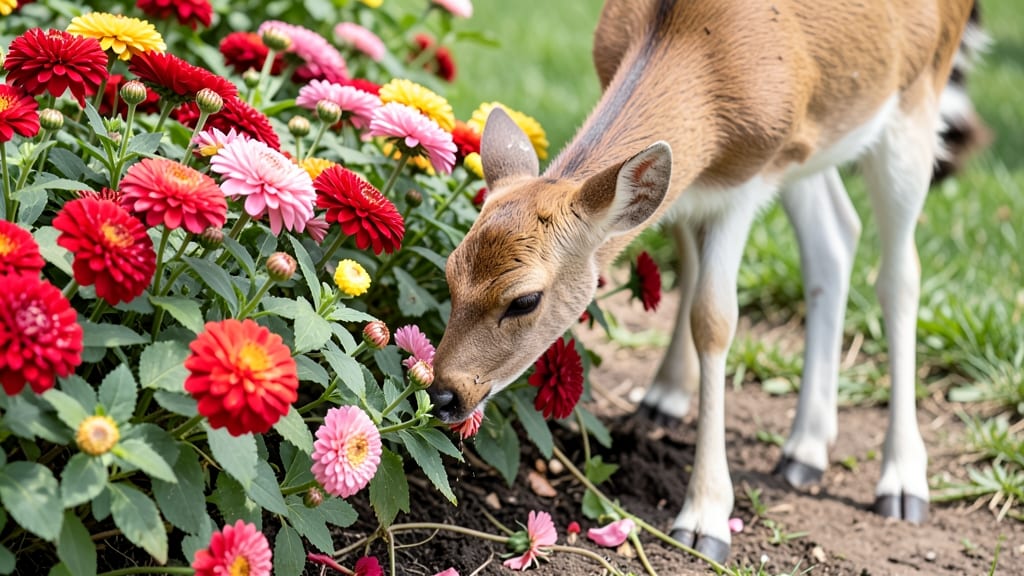
Deer rarely eat mums flowers because their strong, bitter foliage and dense blooms deter browsing, though young shoots may attract them. Hardy mums thrive in deer-prone areas when planted in clusters or paired with repellent companion plants like lavender or daffodils.
Mums, or chrysanthemums, contain natural compounds called pyrethrins that give their leaves a bitter, almost peppery taste deer avoid. 🌿 Unlike tender perennials like hostas or tulips, mums’ tough foliage and compact growth make them less appealing—though deer may still nibble on fresh spring shoots before the plants fully mature.
This built-in resistance is why gardeners often rely on mums as low-maintenance, deer-resistant ground covers in high-traffic areas.
For extra protection, I’ve found that planting mums in tight clusters creates a visual barrier deer hesitate to cross, while adding strongly scented neighbors like Russian sage or alliums amplifies the deterrent effect.
The key is combining these strategies with regular pruning to encourage dense growth—deer simply won’t bother with what feels like a fortress of foliage.
💡 In This Article
- Why Mums Resist Deer Browsing: Plant Chemistry Explained
- Deer-Proofing Your Garden: Mums and Companion Plant Strategies
Why mums resist deer browsing: plant chemistry explained
Chrysanthemums (mums) produce natural compounds called pyrethrins in their leaves and stems, which give them that characteristic bitter, almost peppery flavor deer instinctively avoid.
These compounds are part of the plant's defense system against herbivores, including deer. 🌿 The pyrethrins create a chemical signal that triggers deer's natural aversion to bitter-tasting plants, similar to how they avoid milkweed or foxglove.
This chemical defense is most potent in mature foliage, which explains why deer are more likely to nibble on young, tender shoots in spring before the pyrethrins fully develop.
The tough, fibrous texture of mum leaves also plays a role in their resistance. Unlike soft-stemmed plants like hostas or tulips, mums have a thick, waxy cuticle that makes them difficult to chew.
Deer prefer plants with tender, sweet stalks and leaves that require minimal effort to consume. 🦌 When you compare mums to other garden perennials, the contrast is striking: hostas, for example, have delicate leaves that deer find irresistible, while mums offer a structural challenge that most deer simply won't bother with.
This physical resistance combined with the chemical deterrent creates a double barrier that keeps deer at bay.
Deer feeding habits reveal another key insight: they prioritize plants with high moisture content and sweet flavors.
Mums, particularly when fully mature, have a lower water content in their leaves compared to plants like lettuce or clover, making them less appealing. 💧 The dense, compact growth habit of mums also contributes to their resistance—deer are less likely to browse through thick foliage where they might get tangled or exposed.
This is why gardeners often see better results with mums planted in clusters rather than scattered individually, creating a more formidable visual and physical barrier.
What most people don't realize is how this resistance varies by mum variety. Some cultivars, like the 'Bonanza' series or 'Dazzler', have been selectively bred for even thicker foliage and stronger pyrethrin concentrations. 🌼 These varieties often show even better deer resistance than their wild counterparts.
The key difference lies in their leaf structure: the more compact and rigid the leaves, the less appealing they become to deer. This is why choosing the right mum variety can make a significant difference in deer-prone gardens.
For a practical comparison, consider how deer treat tulips versus mums. Tulips, with their soft, bulbous bases and sweet-smelling blooms, are a deer's dream meal—easy to dig up and delicious. 🌷 Mums, on the other hand, offer no such rewards.
The combination of their bitter taste, tough texture, and dense growth makes them one of the most deer-resistant perennials available. This is why landscape designers often recommend mums for high-traffic garden areas where deer are a common problem.
The science behind this resistance goes beyond just taste and texture. Mums also contain other secondary metabolites like sesquiterpene lactones, which further contribute to their unpalatability. 🧪 These compounds create a complex chemical profile that makes mums a less attractive option for deer compared to more palatable garden plants.
Understanding this botanical defense system helps explain why mums can thrive where other perennials would be completely decimated by deer browsing.