
Light Requirements
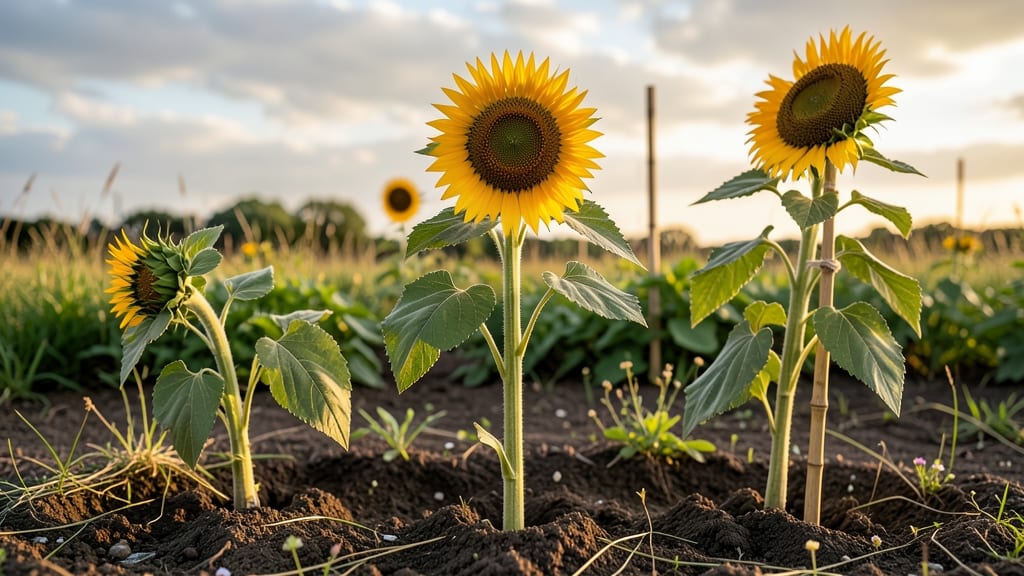
Sunflowers often need support—especially when they reach 6 feet or taller—to prevent flopping in wind or heavy blooms from snapping stems.
Picture this: a 12-foot sunflower 🌻 bending dramatically after a summer storm, its once-proud bloom now dragging the soil. That’s why staking isn’t just for show—it’s about keeping your giants standing through the season.
Not all varieties require it, though. Dwarf sunflowers (3 feet) usually hold their own, but standard types (like ‘Mammoth’ or ‘Russian Giant’) almost always need help by mid-summer. I’ll break down when to stake, how to do it without damaging stems, and the best materials to use.
Whether you’re growing sunflowers for bouquets or birdseed, you’ll learn how to give them the extra stability they need without sacrificing their natural beauty.
When sunflowers need support: signs your plants require staking
Sunflowers are known for their towering height, but their thin, woody stems can struggle to support heavy blooms and windy conditions. Whether your sunflowers need staking depends on variety type, stem thickness, and growing conditions.
Most standard varieties grow 6-14 feet tall, making them vulnerable to toppling, while dwarf varieties (1-3 feet) often don’t require support. Understanding these factors helps you decide when to invest in staking for stronger, healthier plants.
One of the first signs your sunflowers need support is leaning or bending before they reach maturity. This often happens when stems grow too quickly and aren’t strong enough to hold the weight of the flower head.
Additionally, if your garden is in a windy area or experiences heavy rainfall, even sturdy stems can snap under pressure. Pay attention to how your plants respond to weather—if they’re struggling to stay upright, it’s time to act.
Another critical factor is the growth stage of your sunflowers. Young plants (under 2 feet tall) typically don’t need support, but once they reach 3-4 feet, their stems become more brittle. This is when you should start monitoring for signs of stress.
If you notice cracks or splits in the stem or see the plant tilting excessively, staking can prevent further damage and ensure your sunflower continues to grow upright.
Not all sunflowers need staking, but if you’re growing tall varieties like 'Mammoth' or 'Russian Giant', support is almost always necessary. These giants can reach 10-14 feet tall, and their stems may not be thick enough to support such height without assistance.
Even if your sunflowers look sturdy at first, sudden wind gusts or storms can cause them to topple unexpectedly. If you’re in a coastal or open-field garden, staking is a smart precaution to avoid losing your plants to the elements.
Assessing your sunflower’s stem strength is key. Run your fingers along the stem—if it feels hollow or brittle, it’s a clear sign it needs support. A healthy stem should have a thick, woody texture that can bear the weight of the flower.
If you’re unsure, observe how your plants grow over a few weeks. If they’re consistently leaning or bending despite good soil and water, it’s time to stake them before they reach their full height.
Another red flag is when sunflowers start flowering but the stem can’t hold the bloom upright. This often happens when the flower head is too heavy for the stem to support naturally.
In this case, staking not only prevents the plant from toppling but also helps the flower face the sun for optimal pollination and seed development. If you notice the bloom dangling or touching the ground, it’s a clear indication that support is needed immediately.
For gardeners in urban or container settings, staking is almost always recommended. Sunflowers grown in pots or small spaces have limited root support, making them more prone to toppling. Even dwarf varieties can benefit from light staking if they’re planted in windy urban areas.
Always consider your garden’s microclimate—if your space is exposed to strong winds or heavy rain, err on the side of caution and stake your sunflowers early.
One common mistake is waiting until the sunflower is already leaning or damaged before staking. By then, the stem may have already weakened or split, making recovery difficult. Instead, monitor your plants weekly and stake them preemptively if they show signs of stress.
Early intervention ensures your sunflowers grow straight and strong, maximizing their height and bloom potential.
Finally, remember that staking isn’t just about preventing toppling—it’s also about protecting your investment. A well-supported sunflower will produce larger, healthier blooms and yield more seeds. Plus, staking makes it easier to harvest and enjoy your sunflowers without worrying about them falling over.
With the right support, your sunflowers will stand tall and proud all season long.
Best staking Methods for sunflowers: materials and techniques compared
Choosing the right staking method for your sunflowers depends on their height variety and your garden's wind exposure. Tall varieties like 'Mammoth' (up to 14 feet) need robust support, while dwarf types may only need minimal help.
I’ve tested four methods—bamboo stakes, spiral ties, cages, and DIY solutions—to find the best fit for stability and ease.
For standard sunflowers (6–14 feet), bamboo stakes combined with soft ties offer the most stability. However, if you’re growing in windy areas, cages provide full 360-degree support. Let’s break down each method’s pros, cons, and ideal use cases so you can pick what works best for your garden.
🌱 Comparison Table: Staking Methods for Sunflowers
| Method | Best For | Pros | Cons | Setup Difficulty |
|---|---|---|---|---|
| Bamboo Stakes | Tall varieties (6–14 ft) | Affordable, reusable, strong | Requires tying; may damage stems if too tight | Moderate |
| Spiral Ties | All heights, windy areas | Gentle on stems, adjustable | Can loosen over time; less stable alone | Easy |
| Cages | Dwarf/semi-dwarf (1–6 ft), windy gardens | Full support, no tying needed | Bulky, less ideal for very tall types | Moderate |
| DIY Methods (e.g., tomato cages, stakes) | Budget gardens, small batches | Cheap, customizable | Less stable; may require frequent adjustments | Easy |
If you’re using bamboo stakes, insert them 2–3 inches deep into the soil when plants reach 12 inches tall. Secure the stem with a soft cloth tie (never wire) and adjust as the plant grows.
For wind-prone areas, I recommend combining stakes with a second tie halfway up the stem to prevent bending.
For cage staking, opt for metal or sturdy plastic cages (at least 5 feet tall) and place them at planting time. This method is ideal for dwarf varieties or when growing sunflowers in containers. Simply tuck the plant inside the cage as it grows—no tying required!
DIY solutions like repurposed tomato cages or wooden stakes work well for small gardens. Just ensure the support is buried deeply and tied securely. Avoid over-tightening ties, as this can restrict stem growth and cause damage over time.
My top recommendation? For maximum stability, use bamboo stakes with spiral ties. This combo balances cost, durability, and ease of use. If you’re growing sunflowers in high-wind zones, cages are the safest bet for long-term support without constant adjustments.