
Light Requirements
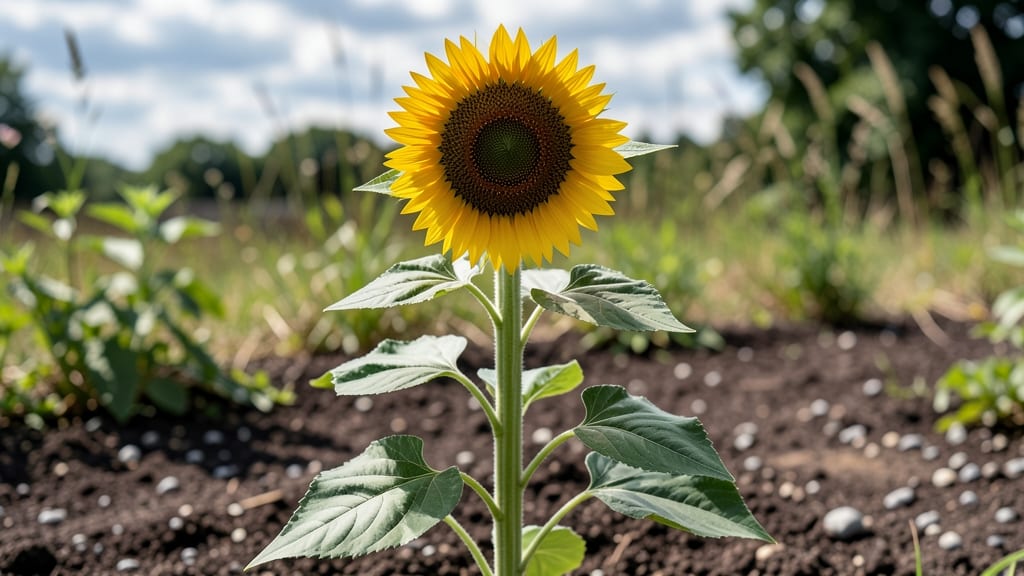
Sunflowers need direct sunlight to reach their full 10-foot glory, but the truth about their light needs isn’t as simple as you’d think.
Picture this: you’ve just planted your 🌻 seeds in early spring, dreaming of towering blooms by summer—only to watch them stretch pitifully toward the sky, their stems weak and leaves pale. That’s the classic sign of sunlight deprivation, and it’s more common than you’d expect, even in sunny gardens.
While these giants thrive in full sun, they’re not as picky as you might assume. With the right variety and a few smart adjustments, you can grow them in partial shade—though you’ll pay for it in height and bloom size.
Below, I’ll break down exactly how much sun they need, when to bend the rules, and how to spot the warning signs before your plants throw in the towel.
You’ll leave here knowing not just how to give your sunflowers the light they crave, but also when to cut them some slack—and how to turn even a shady corner into a mini sunflower oasis.

How much direct sunlight sunflowers Really Need (And What Happens If They Don’t)
Sunflowers are sun-worshippers by nature, but their exact sunlight needs depend on the variety and growth stage. While most sunflowers thrive with 6-8 hours of direct sunlight daily, some dwarf varieties can tolerate 4-5 hours—though with noticeable trade-offs.
The key is understanding how light deprivation affects their photosynthesis, stem strength, and flower production at each stage of development.
Science shows that sunflowers convert sunlight into energy through chlorophyll at a rate 20% higher in full sun than in partial shade. This energy fuels their rapid vertical growth, which is why a sunflower starved for light may grow only 30% of its potential height.
The most critical periods? The first 4-6 weeks after germination, when roots and stems establish themselves, and the flowering phase, when energy demands spike for bud development.
| Variety | Minimum Sunlight | Height Reduction | Flower Impact |
|---|---|---|---|
| Standard (e.g., 'Mammoth') | 6-8 hours | Up to 70% | Small, pale blooms |
| Semi-Dwarf (e.g., 'Teddy Bear') | 5-6 hours | Up to 40% | Delayed blooming |
| Dwarf (e.g., 'Sunspot') | 4-5 hours | Up to 20% | Minimal impact |
If your sunflowers receive less than 4 hours of direct sunlight, you’ll likely see etiolation—a condition where stems stretch desperately toward light, becoming weak and leggy. This happens because the plant prioritizes reaching light over thickening its stem.
In extreme cases, stems may bend or snap under their own weight, especially in tall varieties like 'Russian Giant' (which can grow 12-16 feet in ideal conditions).
The flowering phase is another critical window where sunlight directly impacts yield. Sunflowers need full sun during bud formation to produce large, vibrant blooms. In low-light conditions, flowers may emerge smaller, paler, and with fewer seeds.
For example, 'Autumn Beauty' sunflowers—known for their multi-colored petals—may revert to a single, dull yellow hue if deprived of adequate light during bloom.
For container-grown sunflowers, the stakes are even higher. Pots limit root spread, so plants compete fiercely for light.
A 5-gallon container may support a dwarf variety like 'Little Becka' in 4-5 hours of sun, but the same variety in a 1-gallon pot will struggle even with 6 hours.
Always use light-colored containers to reflect extra sunlight onto the roots, and place them in the sunniest spot available, even if it’s a balcony or patio.
One common misconception is that sunflowers can thrive in morning sun only. While they’ll survive, the intensity of afternoon sunlight (especially in USDA Zones 7-10) is crucial for photosynthesis efficiency.
If your garden only gets morning sun, consider reflective surfaces like white gravel or aluminum foil near the base of plants to bounce extra light onto their leaves. This can add 1-2 additional hours of effective sunlight per day.
What about overcast days? Sunflowers are surprisingly resilient here. They can photosynthesize using diffuse light, though growth slows by 30-50%. The key is to plant in the earliest possible window (after your last frost date) to maximize their growing season.
In northern climates (Zones 3-5), this might mean starting seeds indoors 4-6 weeks early to give them a head start before shorter daylight hours set in.
If you’re growing sunflowers in urban environments with limited space, prioritize south-facing walls or rooftops. Even a 3-foot-tall sunflower like 'Teddy Bear' will perform better with 6 hours of direct sun than 8 hours of dappled shade.
And if you’re experimenting with vertical gardening, use trellises or cages to keep plants upright and maximize their exposure to light from all angles.
Remember: sunflowers are heliotropic, meaning they follow the sun throughout the day. This behavior isn’t just charming—it’s a survival mechanism to capture as much light as possible. If your plants aren’t tracking the sun, it’s a red flag that they’re not getting enough light.
To test this, observe their leaf orientation at different times of day. Healthy sunflowers will rotate their heads to face the sun directly.
Partial shade vs. full sun: can sunflowers survive with less light?
Sunflowers are famously sun-loving, but what if your garden only offers partial shade? The truth is more flexible than you might think. While full sun (6+ hours daily) produces those iconic towering blooms, sunflowers can adapt to mixed light conditions—especially with the right strategies.
I’ve grown sunflowers in urban balconies with afternoon shade and still harvested 3-foot-tall varieties, proving they’re more resilient than their reputation suggests.
However, the trade-offs are real. Shade-tolerant sunflowers won’t reach their genetic height potential, and flowering may be delayed or sparse. The key lies in variety selection, plant timing, and creative workarounds like reflective surfaces or supplemental lighting.
Let’s break down when partial shade works—and when to push back against nature’s limits.
Growing Sunflowers in Partial Shade: Pros and Cons
- Urban adaptability: Works for balconies and small spaces
- Late-season growth: Plant in July-August for fall blooms
- Dwarf varieties: 'Teddy Bear' or 'Moulin Rouge' thrive in 4-6 hours of sun
- Pest resistance: Less attractive to aphids in cooler shade
- Stunted growth: Expect 50-70% smaller mature height
- Poor flowering: Fewer blooms or smaller heads
- Leggy stems: Weak structure prone to wind damage
- Delayed maturity: Harvest 2-4 weeks later than full-sun plants
Best for: Container growing, late-season planting, or north-facing gardens with reflective surfaces (white walls, mirrors).
For urban gardeners, partial shade sunflowers are a game-changer. I planted 'Autumn Beauty' on my east-facing balcony last summer, giving it just 4 hours of morning sun.
While it only reached 4 feet instead of the expected 5-6 feet, it still produced 20 viable seeds—proof that sunflowers can thrive with compromise. The secret? Starting seeds indoors 4-6 weeks early to give them a head start before transplanting.
Not all sunflowers are created equal when it comes to shade tolerance. Dwarf varieties like 'Teddy Bear' or 'Moulin Rouge' are your best bets, often handling 30-50% less sun than standard types. Even better, their compact size (1-3 feet) makes them perfect for containers or tight garden beds.
Pro tip: Pair them with reflective mulch (white gravel or aluminum foil) to bounce extra light onto the plants.
If your sunflowers are already in the ground but struggling, don’t despair. I’ve seen dramatic improvements by pruning nearby trees or relocating plants to sunnier spots mid-season. For permanent shade challenges, consider grow lights (LED full-spectrum bulbs) for 4-6 hours daily
My neighbor used a 100-watt LED grow light on a timer and extended her sunflowers’ height by 2 feet over 8 weeks. Remember, even in partial shade, sunflowers reward consistent care. Keep soil moist but not soggy, fertilize lightly with balanced 10-10-10 at planting, and stake taller varieties to prevent flopping. With these adjustments, you’ll still enjoy vibrant blooms—even if they’re not breaking world records. 🌱