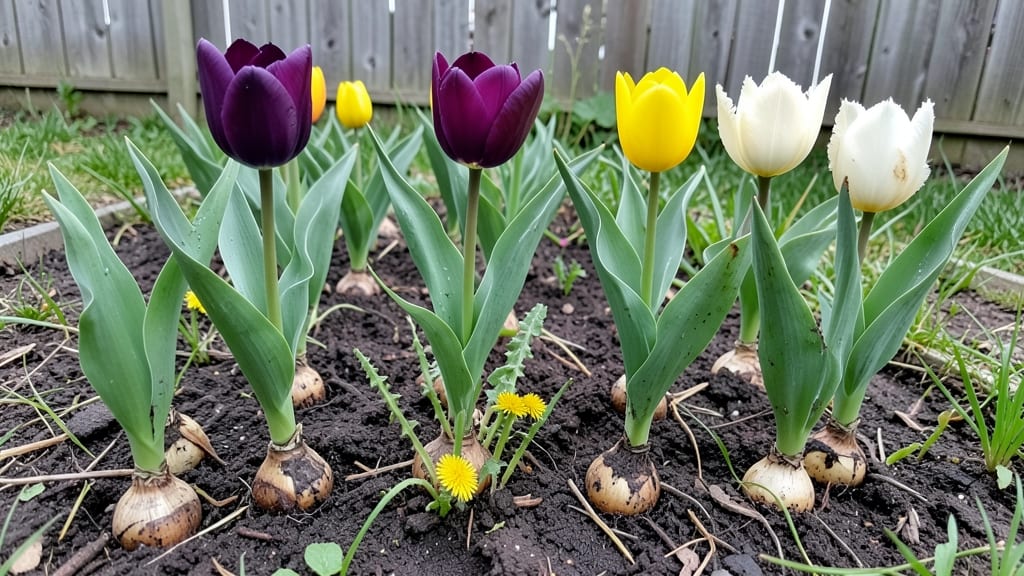
A flower bulb garden 🌷 can turn even the smallest yard into a showstopper, bursting with color from the first thaw until the first frost.
Picture this: your garden waking up in March with cheerful crocuses, then graduating into June’s towering lilies, only to fade into October’s fiery daffodils—all without replanting a single bulb. The secret isn’t luck; it’s layering the right varieties so each bloom takes over as the last one fades.
You don’t need a green thumb to pull this off. Most bulbs thrive in zone 6a, and planting them in fall (September–November) means less work for you come spring. The key is spacing them by height and bloom time, so taller varieties don’t shade the shorter ones too soon.
Below, I’ll walk you through the easiest seasonal combinations, how to avoid common mistakes, and the one trick that keeps your bulbs blooming for years—not just seasons.
Best flower bulbs for each season: a year-round planting guide
A flower bulb garden bursts with color year-round when you plant the right varieties for each season. The key is understanding planting months, sunlight needs, and soil requirements for each type. Spring brings tulips and daffodils, while summer showcases dahlias and cannas.
Fall offers crocuses and alliums, and winter surprises with snowdrops and hellebores. Let’s break down the best bulbs for every season to create a nonstop floral display.
Timing is everything in a seasonal bulb garden. Plant most bulbs in fall (6-8 weeks before frost) for spring blooms, but some like summer dahlias go in spring. Soil should be well-draining and amended with compost for healthy roots.
Most bulbs thrive in full sun, but a few tolerate partial shade. With this guide, you’ll know exactly which bulbs to plant when for a garden that never sleeps!
| Season |
Bulb Variety |
Planting Month |
Sunlight Needs |
Soil Type |
Planting Depth |
| Spring |
Tulips |
September-October |
Full sun |
Well-draining |
6-8 inches |
| Spring |
Daffodils |
September-October |
Partial shade |
Loamy |
6-8 inches |
| Summer |
Dahlias |
April-May |
Full sun |
Rich, moist |
4-6 inches |
| Summer |
Canna Lilies |
April-May |
Partial sun |
Moist, fertile |
3-4 inches |
| Fall |
Crocuses |
September-October |
Full sun |
Well-draining |
2-3 inches |
| Fall |
Alliums |
September-October |
Full sun |
Well-draining |
6-8 inches |
| Winter |
Snowdrops |
September-October |
<
How to plan a layered flower bulb garden for continuous blooms
A layered flower bulb garden creates a stunning, ever-changing display by strategically placing bulbs of varying heights and bloom times. This technique ensures your garden has color from early spring through late fall, with minimal effort.
The key is understanding how to group bulbs by their maturity height and seasonal bloom cycles for a seamless transition.
Start by selecting bulbs that bloom at different times—early spring with crocuses, mid-spring with tulips, late spring with alliums, and summer with dahlias. Pair these with fall-blooming bulbs like colchicums for a continuous show.
Layering also means placing tall bulbs like alliums at the back, medium-height tulips in the middle, and low-growing daffodils or snowdrops at the front.
Key Steps for Layering Bulbs
1
Plan by bloom time: Group bulbs into early, mid, and late-season categories. Plant early bloomers (like crocuses) first, followed by mid-season (tulips), and finish with late-season (alliums or lilies).
2
Layer by height: Place tall bulbs (18"+) at the back, medium bulbs (6"-18") in the middle, and short bulbs (<6") at the front. This creates depth and ensures no bulb is hidden.
3
Space bulbs properly: Follow 3x the bulb’s width for spacing. For example, tulips (6" wide) need 18" apart, while daffodils (3" wide) need 9" apart. This prevents overcrowding and allows foliage to thrive.
4
Add companion plants: Pair bulbs with perennials (like hostas or ferns) or annuals (like pansies) to fill gaps. These plants provide color and texture while bulbs are dormant or before they emerge.
5
Mulch after planting: Apply a 2-3" layer of mulch (like shredded bark) to retain moisture, regulate soil temperature, and suppress weeds. This is especially important in hot climates or dry seasons.
When designing your layered bulb garden, consider color themes to tie the seasons together. For example, pair white snowdrops (winter) with purple crocuses (early spring), followed by yellow daffodils (late spring) and red tulips (mid-spring). This creates a harmonious flow that feels intentional and visually appealing.
Don’t forget to rotate bulbs every few years to prevent overcrowding and disease. Dig up and divide clumping bulbs like daffodils or alliums every 3-5 years to maintain their vigor. For naturalizing bulbs (like crocuses or grape hyacinths), simply let them spread and thin them out as needed.
With careful planning, your layered flower bulb garden will become the star of your landscape, offering year-round interest with minimal maintenance. Start small if needed—even a 6" x 6" section with 3 layers of bulbs will create a stunning display. Happy planting! 🌷🌿
★★★★★4.5(13 reviews)