
Planting
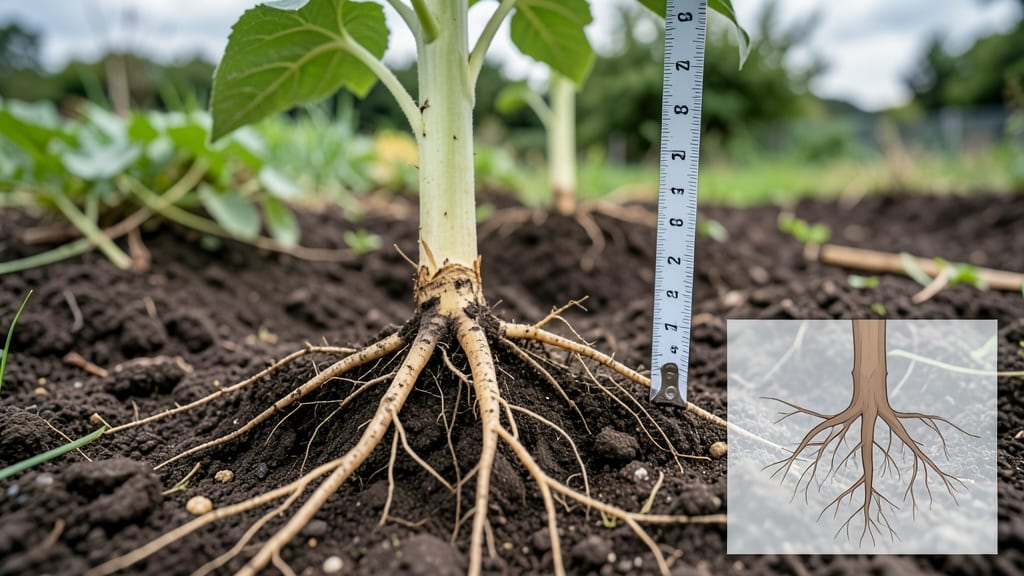
Sunflower roots grow 3 to 5 feet deep 🌻, anchoring those towering stems with surprising strength—but most gardeners underestimate how much space they need below ground.
Picture this: a 12-foot sunflower standing firm in a summer storm, all because its roots dive deep into the soil like a tree’s. Skimp on depth, though, and you’ll end up with floppy stems or plants that topple over before they even bloom.
The key to healthy sunflowers isn’t just how tall they grow above ground—it’s what’s happening below. Loose, well-drained soil lets those roots spread freely, while compacted dirt forces them to grow shallow, leaving your plants vulnerable to wind and drought.
In this guide, I’ll break down exactly how deep sunflower roots go, the best soil prep for strong growth, and 3 simple tweaks to keep your sunflowers standing tall all season.


Sunflower root depth explained: how deep do they grow?
Sunflowers develop deep taproots that anchor them securely against wind and storms. On average, their primary root extends 3-5 feet deep, while lateral roots spread 2-3 feet wide in search of water and nutrients.
This root structure explains why sunflowers thrive in drought-prone areas—their roots tap into moisture reserves below the surface.
The depth of sunflower roots isn’t uniform—it varies significantly by variety, soil type, and growing conditions. Giant varieties like 'Mammoth' develop the deepest roots, while dwarf sunflowers (1-3 feet tall) have shallower systems.
Understanding these differences helps you optimize planting depth and soil prep for healthier plants.
Here’s a breakdown of sunflower root depth by key factors, including real-world measurements and growth patterns:
The taproot of a sunflower is its most critical feature—it grows vertically downward while secondary roots branch out horizontally. In ideal conditions, this taproot can reach depths of 6 feet or more, especially in loose, well-aerated soil.
This depth allows sunflowers to access deep water reserves during droughts, reducing the need for frequent irrigation.
Lateral roots, meanwhile, spread widely but shallowly, creating a network that absorbs nutrients from the topsoil. This dual system explains why sunflowers are resilient in poor soils—they compensate for shallow nutrient layers by extending their taproot deeper.
However, compacted or rocky soil can stunt root growth, leading to weaker stems and smaller blooms.
If you’re growing giant sunflowers, prioritize deep soil loosening before planting. Use a broadfork or tiller to break up compacted layers down to 12 inches deep.
This creates space for roots to penetrate without resistance. For dwarf varieties, focus on topsoil health—their shallower roots rely on nutrient-rich surface layers.
Another key factor is planting depth. Seeds should be sown 1 inch deep, but the roots will determine how far they’ll grow.
Shallow planting (less than ½ inch) can lead to weak root development, while over-deep planting (more than 2 inches) may delay germination. Strike a balance by ensuring the soil is moist but not waterlogged at planting time.
Sunflowers also exhibit seasonal root growth patterns. Early in the season, roots grow rapidly to establish stability, while later stages focus on nutrient absorption for flower and seed development. In hot, dry climates, roots grow deeper faster to seek moisture, while cool,
Optimal soil depth for sunflowers: planting tips to maximize stability
When planting sunflowers, the soil depth you prepare makes all the difference between a sturdy, thriving plant and one that sways dangerously in the wind. Sunflowers develop a taproot system, meaning their primary root grows deep—often reaching 3 to 5 feet—while lateral roots spread horizontally for stability.
Shallow planting can leave your sunflowers vulnerable to toppling, especially in windy conditions or storms.
To ensure your sunflowers grow strong from the start, focus on two key soil prep steps: seed planting depth and root zone loosening. Planting seeds too shallowly risks poor root anchorage, while compacted soil restricts root growth.
Loosening the soil to a depth of at least 12 inches gives roots room to establish without resistance, which is critical for tall varieties like Mammoth sunflowers.
Warning: Shallow Roots = Toppling Risks
Sunflower roots can grow 3-5 feet deep, but if planted in compacted or shallow soil, they struggle to anchor. Loosen soil to 12+ inches deep to prevent wind damage, especially for varieties over 6 feet tall.
Start by loosening the soil with a garden fork or tiller to a depth of 12 to 18 inches. This creates a root-friendly zone where moisture and nutrients can penetrate easily. For container-grown sunflowers, ensure the pot has at least 12 inches of depth to accommodate the taproot.
If using raised beds, mix in compost or aged manure to improve drainage and fertility, which encourages deeper root penetration.
When it comes to seed planting depth, aim for 1 inch deep—no deeper, as sunflower seeds need light to germinate. After planting, gently firm the soil around the seeds to eliminate air pockets, which can disrupt early root growth.
Water lightly to settle the soil without displacing seeds. Once seedlings emerge, thin them to 6-12 inches apart, depending on the variety, to give roots ample space to spread.
For extra stability, especially in wind-prone areas, consider staking tall sunflowers early in their growth. Insert stakes 6 inches deep beside the plant and loosely tie the stem with soft fabric as it grows.
This prevents root damage while allowing natural movement. Mulching around the base with straw or wood chips also helps retain moisture and protect roots from temperature fluctuations.
Monitor your sunflowers’ root health by observing their stem strength and leaf color. Healthy roots produce sturdy stems and vibrant foliage, while yellowing leaves or wilting may signal root stress from poor soil conditions.
Adjust watering and soil prep as needed to support deep root development throughout the growing season.
With the right soil depth preparation and ongoing care, your sunflowers will develop the strong root systems they need to reach their full height—without toppling over when the wind picks up. Happy planting! 🌱