
Orchid Care
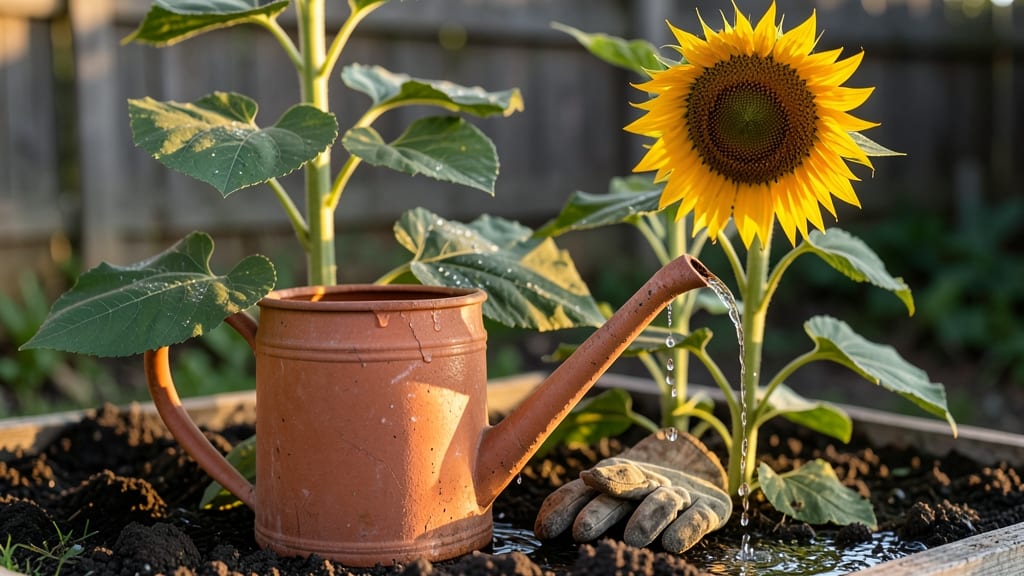
To water sunflowers effectively, deep-soaking the soil once or twice a week is the secret to their towering growth — not daily sprinkles that leave roots thirsty.
Picture this: your 🌻 sunflowers start wilting by noon, their once-sturdy stems bending under the weight of their own blooms. That’s not just a sunflower problem; it’s a watering problem. Too little, and they’ll flop. Too much, and you’ll drown their roots before they ever reach the sky.
Here’s the game-changer: deep watering—soaking the soil until it’s moist 6-8 inches down—triggers stronger roots and bigger blooms. In Zone 6a, where spring showers turn to summer heat, timing matters just as much as technique.
You’ll learn exactly how often to water at each stage (seedlings, budding, flowering), how to spot over- or under-watering before it’s too late, and the mulching tricks that keep moisture locked in—so your sunflowers drink deeply, grow tall, and stay standing.
How often to water sunflowers for maximum growth and stability
Sunflowers might look like they thrive on nothing but sunshine, but their watering schedule is the secret weapon for growing those giant, sturdy stems and vibrant blooms. Too little water leads to floppy stems, while too much causes root rot—neither helps your sunflowers reach their full potential.
Understanding the science behind sunflower hydration ensures your plants grow tall, strong, and healthy from seedling to full bloom.
Your sunflower’s water needs change dramatically as it matures. Young seedlings require consistent moisture to establish roots, while mature plants develop deep taproots that make them surprisingly drought-tolerant. The key is deep, infrequent watering that encourages roots to grow downward rather than staying shallow.
This approach not only saves time but also builds sturdy stems capable of supporting those massive flower heads.
| Growth Stage | Watering Frequency | Water Amount | Key Notes |
|---|---|---|---|
| Seedlings (0-2 weeks) | Every 2-3 days | 1/2 inch per week | Keep soil evenly moist; avoid soggy conditions |
| Vegetative Growth (3-6 weeks) | Every 5-7 days | 1-1.5 inches per week | Encourage deep root growth with deep soaks |
| Budding (7-10 weeks) | Every 7-10 days | 1.5-2 inches per week | Critical for flower development; reduce frequency if rain occurs |
| Flowering (11+ weeks) | Every 10-14 days | 1-1.5 inches per week | Mature plants are drought-tolerant; prioritize deep watering |
| Drought Conditions | Every 2-3 weeks | 2-3 inches per soak | Deep watering strengthens roots in dry climates |
For seedlings, the first 2-3 weeks are the most critical. Their shallow root systems can’t reach deep water, so I keep the soil consistently moist—about 1/2 inch of water per week. Use a spray bottle or gentle watering can to avoid disturbing the delicate sprouts.
If the top inch of soil feels dry, it’s time to water. During this stage, morning watering is ideal because it gives leaves time to dry before evening, reducing the risk of fungal diseases.
Once your sunflowers hit the vegetative growth stage (around 3-6 weeks), you can gradually space out watering to every 5-7 days. This is when their taproots begin developing, and deep watering becomes essential.
I aim for 1-1.5 inches of water per week, delivered in one deep soak rather than frequent light watering. This encourages roots to grow downward, creating a sturdier stem that won’t flop under the weight of a large flower head.
When sunflowers enter the budding stage (around 7-10 weeks), their water needs peak as they prepare to bloom. This is the phase where flower size is determined, so I increase the water to 1.5-2 inches per week, still delivered in deep soaks every 7-10 days.
If you notice buds drooping or wilting, it’s a sign they need water immediately. However, avoid overwatering—soggy soil can cause buds to rot before they open.
Mature sunflowers in the flowering stage (after 11 weeks) are surprisingly drought-tolerant thanks to their deep roots. At this point, you can reduce watering to every 10-14 days, providing 1-1.5 inches of water per week.
The goal is to maintain soil moisture without creating waterlogged conditions. If you live in a hot, dry climate, deep watering every 2-3 weeks can be sufficient, especially if you’ve added mulch to retain moisture.
Regional adjustments are key to sunflower success. In arid climates like the Southwest, sunflowers thrive with infrequent, deep watering—think 2-3 inches per soak every 2
Deep-soaking techniques: how to water sunflowers like a pro
Sunflowers thrive when their roots dive deep into moist soil, not just when the surface stays damp. Deep-soaking encourages strong stems and vibrant blooms by mimicking natural rainfall patterns. Unlike shallow watering, which only wets the top inch, deep-soaking sends water 6-12 inches deep where roots actively grow.
This method reduces stress on your plants and prevents the weak stems that lead to flopping flowers.
Timing matters just as much as technique. Watering in the early morning (before 10 AM) gives leaves time to dry, preventing fungal diseases like powdery mildew. Evening watering can leave moisture on foliage overnight, creating ideal conditions for pests and rot.
I've seen my 6-foot sunflowers stand twice as tall when watered consistently in the morning compared to those watered at dusk.
Before reaching for your hose, check soil moisture with your finger. Insert it 2-3 inches deep—if it feels dry, it's time to water. For container-grown sunflowers, lift the pot; if it's light, water thoroughly.
In garden beds, use a soil moisture meter for accuracy, especially in sandy soils that dry faster. I keep one near my sunflower patch to avoid guesswork.
⚠️ callout-warning ⚠️
Sunflowers hate soggy roots! Overwatering causes root rot and weak stems that snap under their own weight. Signs: Yellow leaves, mushy stems, or wilting despite wet soil. Fix: Let soil dry slightly between waterings and improve drainage with compost or perlite.
💧 Pro Tip: Water deeply 1-2 times per week (more in extreme heat) rather than daily shallow drinks.
For large sunflower patches, use a soaker hose or drip irrigation to deliver water slowly at the base. These tools prevent runoff and ensure even moisture distribution.
I've planted 50 sunflowers in a row and used a soaker hose set on a timer for 30 minutes daily—no wilting, no wasted water. Avoid overhead sprinklers, which can spread diseases and waste up to 50% of water through evaporation.
Mulch plays a crucial role in deep-soaking success. Apply 2-3 inches of mulch (straw or wood chips) around each plant to retain moisture and regulate soil temperature. This reduces watering frequency by 30-40% while keeping roots cool.
I mulch my sunflowers immediately after planting and replenish it monthly. The difference in growth is noticeable—my mulched sunflowers reach maturity 2 weeks faster than unmulched ones.
Adjust your watering routine based on your sunflowers' growth stage. Seedlings need consistent moisture to prevent drying out, while mature plants can handle slightly drier soil. During peak summer heat, increase watering to every 5-7 days and monitor for wilting by midday.
I group my sunflowers by size and water each group separately to meet their specific needs.