
Flowers
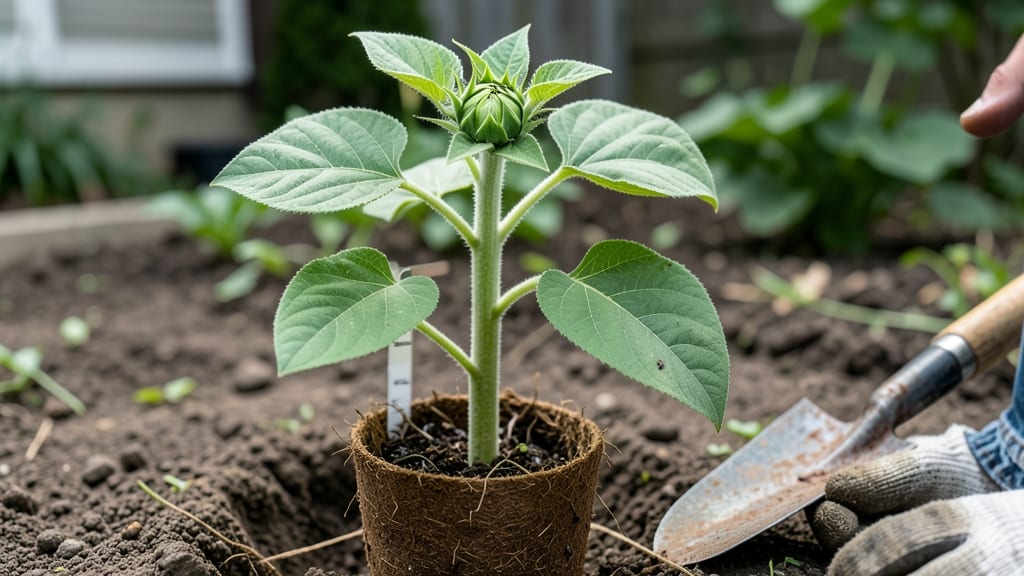
To transplant sunflowers at the right depth means digging just deep enough to protect their delicate taproots while keeping stems sturdy against wind 🌻 — and getting it wrong can mean floppy plants or stunted growth.
Picture this: you’ve nurtured your seedlings for weeks, only to watch them lean or topple after transplanting. The issue? Too shallow, and the roots struggle; too deep, and the stem rots. Finding that sweet spot is the key to sunflowers that grow tall and proud.
Sunflowers thrive when planted 2-3 inches deep, with the soil level matching the seedling’s original depth. This ensures roots anchor properly without smothering the stem. Below, I’ll break down how soil type, seedling age, and even your local wind patterns affect the perfect planting depth.
You’ll also learn how to spot common mistakes—like planting too deep for dwarf varieties or too shallow for giants—and how to adjust for rocky soil, clay, or sandy conditions. Ready to get it right the first time?


Optimal sunflower transplanting depth by seedling age and soil type
Transplanting sunflowers at the right depth ensures strong root development and prevents toppling in windy conditions. The taproot system of sunflowers makes depth critical—too shallow, and roots struggle; too deep, and seedlings suffocate.
Your seedling age (2-4 weeks) and soil type (sandy vs. clay) determine the perfect placement for sturdy stems.
Sunflowers thrive when transplanted with their root ball intact and buried just below the first true leaves. For 2-week-old seedlings, aim for a depth of 1-2 inches, while 4-week-olds need 2-3 inches of soil coverage.
The key is balancing root exposure with stability—shallow planting risks weak stems, while over-deepening can strangle growth.
| Seedling Age | Soil Type | Optimal Depth (inches) | Notes |
|---|---|---|---|
| 2 weeks | Sandy | 1 inch | Loose soil; roots spread fast—deeper risks suffocation. |
| 2 weeks | Clay | 1.5 inches | Compact soil; deeper ensures stability for young stems. |
| 3 weeks | Sandy | 1.5 inches | Roots lengthen; balance depth with airflow needs. |
| 3 weeks | Clay | 2 inches | Heavier soil needs extra support for taller seedlings. |
| 4 weeks | Sandy | 2 inches | Sturdier stems; deeper root ball prevents toppling. |
| 4 weeks | Clay | 2.5 inches | Max depth for clay; avoid burying leaves to prevent rot. |
Sandy soil drains quickly, so shallower depths (1-1.5 inches) work best for young seedlings. The loose texture allows roots to expand faster, but over-deepening can trap moisture, leading to root rot.
For clay soil, the denser composition requires deeper planting (1.5-2.5 inches) to anchor seedlings and prevent wind damage.
When transplanting, loosen the root ball gently to encourage root spread into the surrounding soil. Avoid disturbing the taproot, as damage can stunt growth for weeks. For giant varieties (like 'Mammoth'), bury the stem slightly deeper (3 inches max) to support their heavier heads.
After transplanting, water deeply to settle the soil and eliminate air pockets. Mulch around the base with 2-3 inches of organic matter (straw or shredded leaves) to retain moisture and regulate soil temperature.
This step is critical for preventing transplant shock, especially in hot climates where soil dries out quickly.
Monitor your sunflowers for signs of stress like yellowing leaves or wilting, which may indicate overwatering or underwatering. Adjust your depth strategy based on soil drainage tests: if water pools after transplanting, reduce depth by 0.5 inches for sandy soil or 1 inch for clay.
Pro tip: Use a soil moisture meter to check depth consistency. Aim for soil that’s moist but not soggy at the transplant depth. Over time, sunflowers will develop stronger root systems, but early depth precision sets the stage for taller, healthier plants.
For container-grown sunflowers, adjust depth slightly—1 inch less than in-ground plants since pots dry out faster. Ensure drainage holes are present to prevent root suffocation, and use a well-draining potting mix with perlite or vermiculite.
Remember, transplanting depth isn’t set in stone—adjust based on your local climate and sunflower variety. Dwarf types (like 'Teddy Bear') tolerate shallower depths (1 inch), while tall varieties need the extra support of deeper planting.
With the right depth, your sunflowers will reward you with bold blooms and resilient stems. 🌻
Common transplanting mistakes that kill sunflowers (and how to fix them)
Transplanting sunflowers at the wrong depth is a silent growth killer. Too shallow, and their taproots struggle to anchor—too deep, and they suffocate. I've seen sunflower seedlings lean dramatically or develop yellowing leaves because of these mistakes. The good news? Fixing them is simple once you know the warning signs.
One of the first red flags is a leaning stem. This happens when sunflowers aren't planted deep enough to develop a sturdy root system.
Compact varieties like 'Teddy Bear' need 2-3 inches of soil coverage, while giant varieties like 'Russian Giant' require 4-5 inches to prevent toppling in wind. Ignoring this can turn your dream sunflowers into floppy flops.
Another mistake is burying the stem too deep, which can cause the lower leaves to rot. Always plant so that the root ball sits just below the soil line, with the top of the root ball visible.
For sunflowers, this means the first set of true leaves should be above soil level. This small adjustment prevents transplant shock and encourages healthy growth.
🌱
Sunflowers need specific soil depth to thrive. Planting too shallow (less than 2 inches) causes weak stems, while burying too deep (more than 5 inches) suffocates roots. Always match depth to variety: compact (2-3"), standard (3-4"), or giant (4-5").
For transplant shock prevention, water thoroughly before and after transplanting. Loosen soil around the root ball to encourage root spread.
Yellowing leaves are another clue that something's off. If the lower leaves turn yellow first, your sunflowers might be too deep. If the yellowing starts at the tips, it could signal underwatering or poor drainage.
Adjust your watering schedule to 1-2 gallons per plant every 3-5 days, and ensure the soil drains well. A mix of compost and native soil works best for sunflowers.
For giant sunflower varieties, like 'Mammoth' or 'Autumn Beauty,' deeper planting is key. Their taproots can grow 6 feet deep, so give them extra space to establish. Dig a hole twice as wide as the root ball and 4-5 inches deep.
Gently place the seedling in, ensuring the root ball is fully covered but the stem remains upright. Pat the soil lightly to remove air pockets.
Don’t forget to stake tall varieties if you're in a windy area. Use 3-foot stakes for standard sunflowers and 5-foot stakes for giants. Bury the stake halfway and tie the sunflower stem loosely with soft fabric to avoid cutting into the stem as it grows.
This extra support helps prevent leaning, even with proper depth.
Finally, always transplant on a cloudy day or in the early evening to reduce stress. Keep the soil consistently moist for the first 2 weeks after transplanting. With these fixes, your sunflowers will grow tall, strong, and ready to brighten your garden all season long.
🌻