
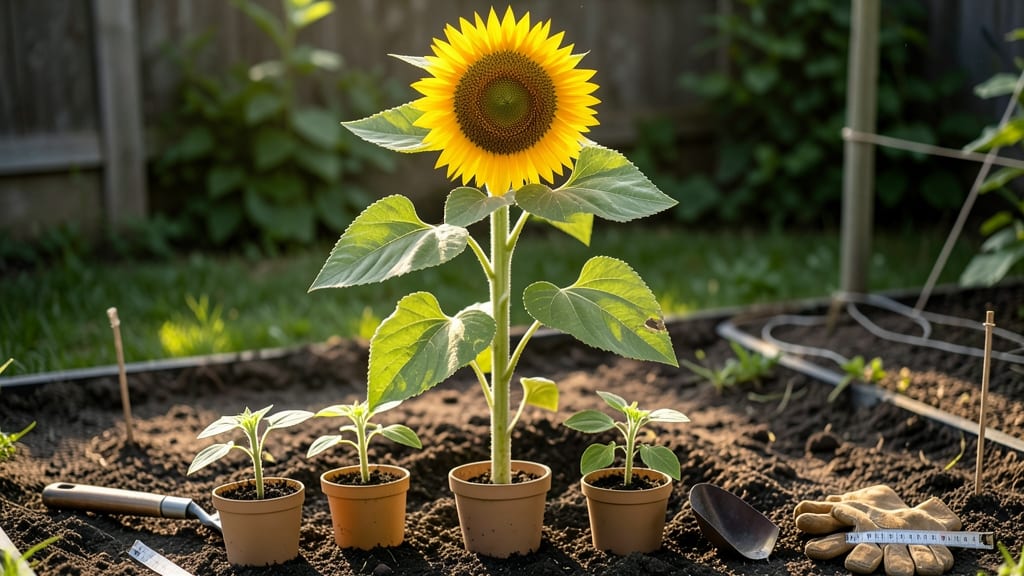
How Far Apart to Plant Mammoth Sunflowers: Spacing Secrets for Towering Stems Without Flopping

Planting

How Far Apart to Plant Mammoth Sunflowers: Spacing Secrets for Towering Stems Without Flopping

Planting mammoth sunflowers 12–18 inches apart is the key to avoiding floppy stems and maximizing those towering 10–15-foot blooms.

Struggling to grow mammoth sunflowers that stand tall instead of leaning like drunken giants? The secret isn’t just in the soil—it’s in the spacing. Plant them too close, and you’ll end up with a tangled mess of floppy stems; too far apart, and you’ll waste precious garden space.

These giants need room to stretch their legs—literally. With full sun and well-drained soil, proper spacing ensures strong stems that support their massive 8–15-foot height without bending under their own weight.

Below, I’ll break down the exact spacing rules, how to adjust for windy climates, and companion plants that keep your sunflowers standing proud all season.

🌻 When to Plant Mammoth Sunflower Sunflower
Jan ❄️
Feb ❄️
Mar 🌱
Apr 🌻
May 🌻
Jun 🌱
Jul ☀️
Aug ☀️
Sep 🍂
Oct 🍂
Nov 🍂
Dec ❄️
Ideal Time
Also Good

Optimal spacing for mammoth sunflowers by variety and growth habits

Mammoth sunflowers like 'Mammoth Russian' and 'American Giant' can grow up to 15 feet tall, but their towering stature comes with spacing challenges. The key to preventing flopping and maximizing airflow is understanding how each variety’s stem thickness and maturity height influence spacing needs.

For example, 'Mammoth Russian' requires more room than 'American Giant' due to its thicker stems and taller growth habit.

Spacing isn’t one-size-fits-all—it depends on whether you’re growing single stems or clustered plantings. Single stems need wider spacing to prevent competition for nutrients, while clustered plantings (like in bouquet gardens) can be closer but still require careful planning.

Below, we break down the ideal distances for each variety, including adjustments for wind resistance and soil fertility.

Here’s the science: Mammoth sunflowers develop lateral roots that spread 18–24 inches wide by maturity. Planting them too close forces roots to compete, weakening stems and causing them to flop over under their own weight. Conversely, spacing them too far apart wastes garden space and reduces yield potential.

For single-stemmed varieties, aim for 24–36 inches apart in rows spaced 36–48 inches apart. This gives each plant enough room to develop a strong taproot system and sturdy stem.

In contrast, clustered plantings (like those for cut flowers) can be spaced 12–18 inches apart in rows 24–30 inches apart, but only if you’re willing to stake or cage the plants for support.

Now, let’s dive into the specifics with a comparison table for the most popular mammoth sunflower varieties. This will help you visualize the differences in spacing based on stem thickness, maturity height, and growth habit.

Variety Mature Height Stem Thickness Single Stem Spacing Clustered Spacing Row Spacing Wind Resistance
Mammoth Russian 12–15 ft Thick (2–3 inches) 24–36" 18–24" 36–48" Moderate (needs staking)
American Giant 10–14 ft Medium (1.5–2 inches) 18–24" 12–18" 24–36" Low (best for sheltered areas)
Russian Giant 14–18 ft Very Thick (3+ inches) 36–48" 24–30" 48–60" High (needs heavy staking)
Autumn Beauty 10–12 ft Medium (1.5–2 inches) 18–

How to adjust spacing for windy climates and crowded gardens

When mammoth sunflowers face high winds or crowded conditions, their 12-foot stems can become unstable, leading to flopping or breakage. The key is adjusting plant spacing to balance yield and stem stability.

In windy areas, wider gaps reduce competition for nutrients while allowing airflow to strengthen stems. For small gardens, vertical training and companion planting can maximize space without sacrificing health.

Start by assessing your garden’s wind exposure and available space. If your area experiences consistent winds (like coastal or open-field gardens), increase spacing to 24–36 inches between plants. This mimics natural windbreaks and prevents stems from rubbing together.

In crowded urban gardens or containers, reduce spacing to 12–18 inches but pair sunflowers with shorter companions like borage or cosmos to minimize competition.

For staggered planting in windy zones, use a grid pattern with rows spaced 3 feet apart. Plant sunflowers in alternating offset rows to create a natural windbreak while allowing airflow.

In small-space gardens, opt for vertical supports like bamboo stakes or trellises to train stems upward, freeing up ground space for other plants.

  1. Windy Climates: Space 24–36" apart in offset rows to reduce wind damage and improve airflow.
  2. Crowded Gardens: Use 12–18" spacing with vertical supports or companion plants like beans or lettuce.
  3. Small Containers: Plant 1 sunflower per 5-gallon pot and stake immediately to prevent toppling.
  4. Soil Prep: Amend soil with compost to improve root anchorage in windy conditions.
  5. Pruning Tip: Remove lower leaves to reduce wind resistance and improve stem strength.

Companion planting is another game-changer for space efficiency. Pair mammoth sunflowers with nitrogen-fixing plants like peas or clover to enrich the soil without overcrowding. Avoid planting near competitive roots such as corn or squash, which can stunt sunflower growth.

In container gardens, interplant sunflowers with trailing plants like nasturtiums to utilize vertical space and deter pests.

To test your garden’s wind resistance, observe how nearby plants behave during storms. If grasses or shrubs bend significantly, your sunflowers will need extra spacing or physical supports.

For added stability, bury stakes 18 inches deep at planting and tie stems loosely with soft plant ties as they grow. This mimics the natural support of wild sunflowers in open fields.

Remember, soil quality plays a critical role in stem strength. Amend your soil with organic matter like compost or aged manure before planting to ensure deep root development. Well-anchored roots are far more resilient to wind than shallow ones.

Finally, monitor your sunflowers weekly for early signs of stress, such as yellowing leaves or leaning stems, and adjust spacing or supports as needed.

★★★★★4.8(8 reviews)
Categories Planting