
Watering
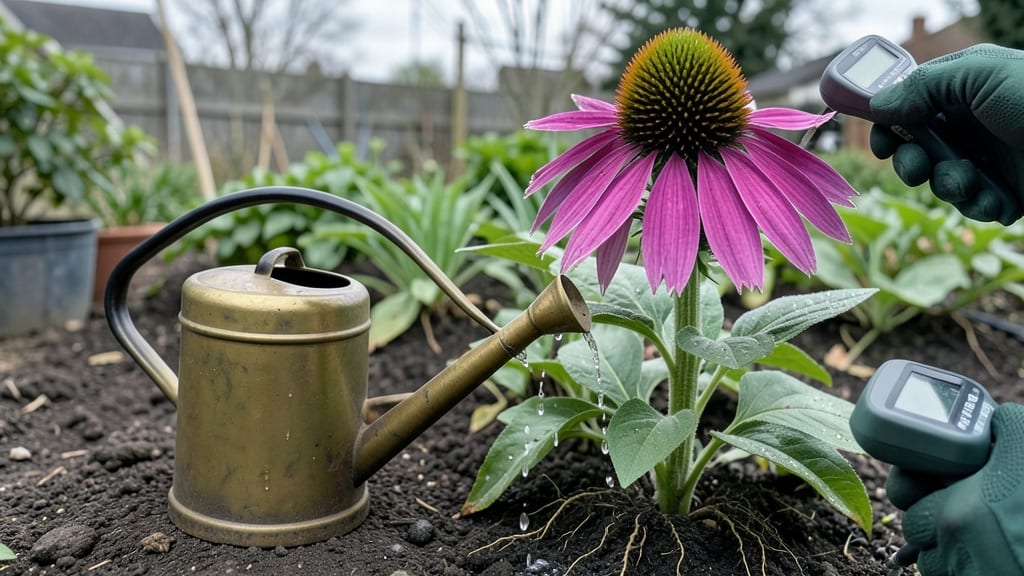
How often to water coneflowers the right way means giving them just enough to thrive without drowning their roots—think deep but infrequent soaks rather than frequent light sprinkles.
Struggling to keep your 🌼 coneflowers vibrant and blooming? Overwatering or underwatering can turn your drought-tolerant beauty into a sad, wilted mess. The key isn’t guessing—it’s checking the soil first. A simple finger test tells you exactly when to water, saving you from both root rot and thirsty stems.
Coneflowers are tough once established, but their first year is critical. Too much water and you’ll smother their roots; too little and they’ll bolt before blooming. Your goal? Keep the soil evenly moist but never soggy—especially in 6a zones where summer heat can dry out the ground fast.
Here’s what you’ll learn: the exact watering schedule by season, how to read your soil like a pro, and 5 pro tips to keep your coneflowers blooming all summer long—no guesswork required.
Coneflower watering schedule by season: what the soil says
Mastering the coneflower watering schedule is easier than you think—once you learn to read your soil. These drought-tolerant beauties thrive when you water just enough to keep roots happy without drowning them.
The key? A simple soil-dry test that works for every season and USDA climate zone 3-10. Let’s break it down so your Echinacea stays vibrant all year.
Coneflowers are famously resilient, but their water needs change dramatically with the seasons. In spring, they need steady moisture to establish roots, while summer heat demands deeper, less frequent watering. Fall slows growth, and winter often requires almost no water at all.
The soil’s moisture level—not a calendar—should dictate your watering schedule. Here’s how to adjust for peak blooms.
🌼 Pro Tip: Always water at the base of the plant in the morning. This prevents fungal diseases and ensures roots absorb moisture before the heat of the day. Avoid wetting the foliage, especially in humid climates.
For climate zones 3-6, where winters are colder, coneflowers often enter dormancy early. Reduce watering in late summer to signal the plant to prepare for winter. In zones 7-10, where winters are milder, you might see new growth in late fall, so adjust your watering accordingly.
Always prioritize deep watering over frequent shallow sessions—this encourages strong root systems.
Here’s how to perform the soil-dry test like a pro: Stick your finger 1-2 inches deep into the soil near the plant’s base. If it feels dry, it’s time to water.
In sandy soil, which drains quickly, you’ll need to check daily during heatwaves. Clay soil, on the other hand, holds moisture longer, so you can water less frequently. Mulch with 2-3 inches of organic matter (like straw or shredded leaves) to retain moisture and regulate soil temperature.
💧 Warning: Overwatering is the #1 killer of coneflowers. Yellowing leaves or mushy stems are red flags for root rot. If you’re unsure, always err on the side of underwatering—coneflowers will bounce back faster from drought than from soggy roots.
In summer’s peak heat, especially in zones 7-10, increase watering frequency but reduce the amount per session.
Aim for 1-2 gallons per plant every 5-7 days, delivered slowly at the soil line. Drip irrigation or soaker hoses work best—they deliver water directly to the roots without wetting the leaves, reducing disease risk.
If you’re using containers, check the soil daily, as potted plants dry out faster.
As fall arrives, coneflowers slow their growth, and their water needs drop significantly. By October, most plants in zones 3-6 will need little to no water unless there’s a prolonged dry spell.
In zones 7-10, where frost comes later, you might water lightly until the first freeze. Always stop watering entirely once the ground freezes to prevent heaving and root damage.
Winter watering depends entirely on your climate. In s
Signs of overwatering vs. underwatering coneflowers (and how to fix it)
Coneflowers are famously drought-tolerant, but even these hardy plants can suffer when watering goes wrong. Yellow leaves or drooping stems might seem like the same problem, but they often point to opposite watering issues. The key is learning the subtle differences—and how to fix them fast before your plants decline.
Overwatering and underwatering both cause stress, but the symptoms and solutions couldn’t be more different. Moldy soil or mushy stems scream "too much water!" while crispy edges or wilting in the heat mean your coneflowers are thirsty.
Let’s break down the signs so you can diagnose and rescue your plants before it’s too late.
Overwatering vs. Underwatering: Quick Fixes
Overwatering
- Yellow leaves (lower first)
- Mushy stems or blackened roots
- Moldy soil or foul smell
- Slow growth despite moist soil
Underwatering
- Crispy leaf edges or brown tips
- Drooping stems (wilting in heat)
- Dry, cracked soil around roots
- Slow recovery after watering
If your coneflowers show yellow leaves with mushy stems, you’re likely overwatering. These plants hate soggy roots—even in humid climates. Pull back immediately and let the top 2-3 inches of soil dry out completely before watering again. For established plants, this might mean skipping a week in rainy seasons.
On the flip side, crispy brown edges or wilting despite moist soil signals underwatering. Coneflowers thrive on deep but infrequent watering. When you water, soak the soil until it’s damp 6 inches down.
A simple test: stick your finger in the soil—if it’s dry by your first knuckle, it’s time to water.
Mulching is your best friend for coneflowers. A 2-3 inch layer of organic mulch (like shredded bark) locks in moisture and regulates soil temperature. This reduces both overwatering risks and underwatering stress. Just keep mulch 2 inches away from stems to prevent rot.
One last tip: Morning watering is non-negotiable. Watering at night leaves foliage damp all evening, inviting fungal diseases like powdery mildew. If you’ve already overwatered, stop immediately and improve drainage. For underwatered plants, a slow deep watering session (10-15 minutes) revives them faster than quick spritzes.