
Watering
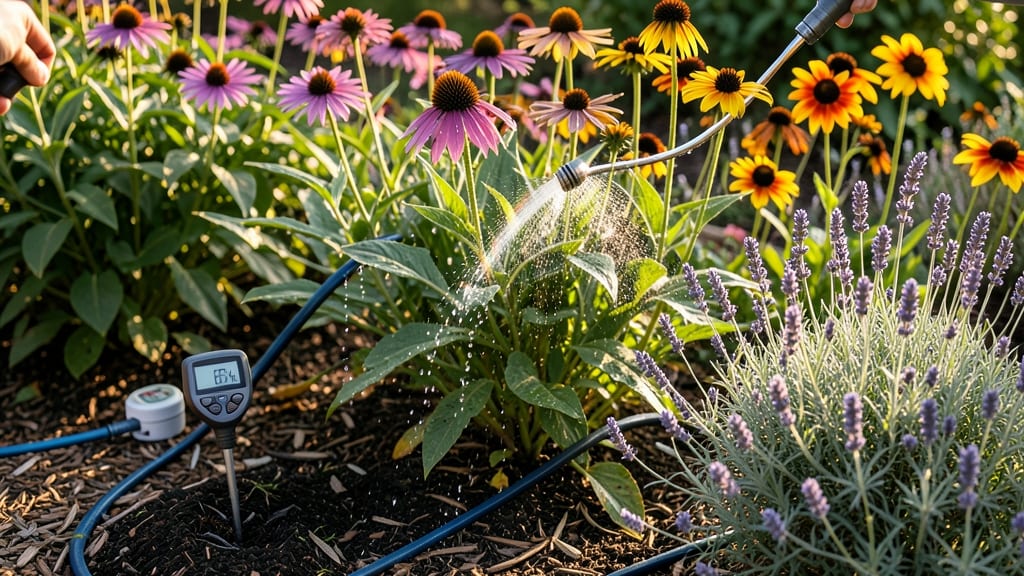
Figuring out how often to water your flower garden keeps your 🌸 blooms thriving without wasting a drop—and the secret isn’t guessing how often, but checking soil moisture like a pro.
Overwatering or underwatering your flower garden can silently kill your plants—yet most gardeners guess instead of measuring. The secret to lush blooms lies in understanding your soil’s thirst signals and adjusting your watering schedule like a pro.
Think about it: Sandy soil drains fast, while clay holds moisture for days, and summer heat demands daily checks in some zones. Without knowing your garden’s unique needs, you risk drowning roots or stressing plants with too little water.
In this guide, I’ll break down the 3-step soil test to water with precision, plus climate-specific schedules so you never over- or underdo it again. Let’s get those flowers drinking just enough!
How often to water flower gardens based on soil type and climate
Watering your flower garden isn’t a one-size-fits-all task—it depends on your soil type, local climate, and even the season. Sandy soil drains quickly, while clay holds moisture longer, and loamy soil strikes a balance.
Throw in heatwaves, droughts, or rainy spells, and your watering schedule needs to shift like a chameleon. Let’s break down the science so you can water like a pro and keep your blooms thriving.
Most gardeners water based on a schedule, but the real secret is checking soil moisture before reaching for the hose. Overwatering suffocates roots, while underwatering stresses plants. The key is understanding how your soil behaves.
For example, sandy soil may need watering every 1-2 days in summer, while clay soil might only need it every 3-5 days because it retains moisture longer. Climate plays a huge role too—drought-prone areas demand deeper, less frequent watering, while humid regions benefit from morning watering to reduce fungal risks.
Here’s a quick guide to adjust your watering based on your garden’s unique conditions:
To test your soil’s moisture, stick your finger about 1-2 inches deep after watering. If it feels dry, it’s time to water. For sandy soil, you’ll notice dryness faster than in clay soil, where moisture lingers.
In loamy soil, the ideal moisture level feels like a damp sponge—not soggy, not bone-dry. Pro tip: Use a soil moisture meter for precision, especially in containers where roots are more vulnerable to overwatering.
Climate shifts demand flexibility. During heatwaves, water deeply in the early morning to reduce evaporation and fungal diseases. In droughts, focus on deep watering every 5-7 days to encourage roots to grow downward.
Conversely, during rainy periods, reduce watering by half and let nature do the work. Always check for standing water—a red flag for overwatering.
Mulching is your best friend for maintaining soil moisture. A 2-3 inch layer of mulch (straw, wood chips, or shredded leaves) locks in moisture and regulates temperature. For sandy soil, organic mulch helps retain water longer, while clay soil benefits from mulch to prevent cracking and improve drainage.
In loamy soil, mulch balances moisture and nutrients perfectly.
Adjust your watering based on plant type too. Succulents and lavender thrive on infrequent, deep watering, while impatiens and petunias need consistent moisture. Group plants with similar water needs together to simplify your routine. For example, place drought-tolerant roses near yarrow and keep thirsty geraniums together.
Watch your plants for signs of stress. Wilting leaves or yellowing foliage often signal underwatering, while mushy stems or gray leaves mean overwatering. If you’re unsure, the finger test is foolproof: push your finger into the soil. If it comes out clean, water again. If it’s damp, wait another day.
Remember, the goal isn’t a rigid schedule but a responsive routine. Observe your garden’s unique conditions, adjust as seasons change, and soon you’ll have a watering rhythm that keeps your flowers blooming beautifully year-round. Happy gardening!
The 3-Step soil-moisture test to avoid overwatering or underwatering
Mastering the art of watering your flower garden starts with understanding your soil’s moisture levels. Too much water drowns roots, while too little stunts growth—both can silently kill your plants. The key? A simple, 3-step soil-moisture test that takes just minutes and saves hours of guesswork.
This method works for all flower types, from drought-tolerant lavender to thirsty impatiens, by combining depth checks, texture analysis, and plant response observation.
Most gardeners water on a schedule, but soil conditions change daily with weather, season, and even plant maturity. Instead of relying on a one-size-fits-all approach, use this test to adjust your watering like a pro.
You’ll learn when to hold back (clay soil retains moisture longer) and when to drench deeply (sandy soil drains fast). The best part? No fancy tools required—just your hands and eyes.
- Step 1
- Step 2
- Step 3
💧 Pro Tip: Use a moisture meter for precision, but start with your finger—it’s free and teaches you to "read" your soil!
For container gardens, the rules shift slightly because pots dry out faster. Check moisture daily in summer heat and every 2-3 days in cooler months.
If the soil feels dry at the surface, it’s already too late—dig deeper with a wooden skewer or your finger to avoid shallow watering, which encourages weak roots. Pro tip: Group containers together to create a microclimate that retains moisture longer.
Seasonal shifts demand extra attention. In spring and fall, your flowers may only need water every 3-5 days, while summer heatwaves can demand daily checks. Pay close attention to rainfall: Skip watering if you’ve had 1 inch of rain in the past 24 hours.
A simple rain gauge or even a tuna can buried in the soil helps track accumulation.
Signs of overwatering often mimic underwatering, so don’t rely on wilting alone. Look for mushy stems, fungal spots on leaves, or roots peeking above soil—these are red flags. If your soil smells sour or rotten, you’ve overwatered.
For underwatering, leaves may curl inward, turn brown at the edges, or drop prematurely. Adjust your schedule immediately and water deeply to revive stressed plants.
Once you master this test, you’ll water with confidence—no more drowning your dahlias or letting your roses wilt. Start today with just one section of your garden, track your results, and expand.
Your flowers will thank you with vibrant blooms and stronger growth all season long. Happy gardening! 🌸