
Watering
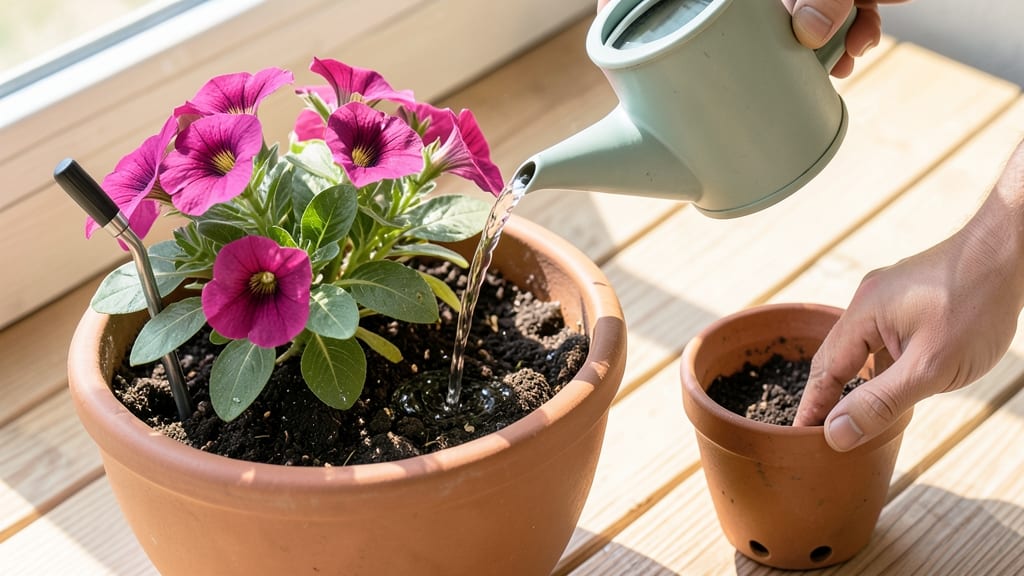
How often to water potted flowers the right way means checking soil moisture every 2-7 days—but that number changes with the season, pot size, and even your home’s humidity.
Struggling to keep your 🌸 potted flowers alive? Overwatering or underwatering are the silent killers of houseplants—and the right watering schedule is the key to thriving blooms.
Most gardeners guess, but there’s a science-backed method to get it perfect: the finger test. Stick your finger an inch deep into the soil—if it feels dry, it’s time to water.
Below, I break down how often to water by plant type, climate, and season, plus how to spot the warning signs before it’s too late.
The 3-Step soil test method to determine watering frequency for potted flowers
Watering your potted flowers can feel like a guessing game—too much and you risk root rot, too little and your blooms wilt. The key is understanding your plant's moisture needs through a simple soil test method that combines tactile, visual, and weight-based cues.
This foolproof approach lets you adjust your watering schedule based on real-time conditions rather than rigid timelines.
Most gardeners make the mistake of sticking to a fixed schedule, but container size, plant type, and even seasonal shifts dramatically change how often your flowers need hydration.
For example, a 6-inch pot of petunias in summer may need daily watering, while a 12-inch orchid pot might only require water every 10 days. Let's break down the exact steps to master this skill.
Container size plays a huge role in how quickly soil dries out. A small 4-inch pot can dry out in just 24 hours on a sunny windowsill, while a large 12-inch planter might hold moisture for 5-7 days.
Always match your watering frequency to the pot's drainage capacity—terracotta pots dry faster than plastic, and hanging baskets evaporate moisture twice as quickly as ground-level containers.
Seasonal adjustments are non-negotiable. In summer's heat, I water my geraniums every morning, but in winter's dormancy, the same plants might only need water every 2 weeks.
Pay attention to your local humidity levels—dry air (common in winter) speeds up evaporation, while high humidity (like summer afternoons) slows it down. A hygrometer can help track these shifts.
Plant type dictates your soil test frequency. Succulents like echeveria thrive on the "soak and dry" method—water deeply, then wait until the soil is completely dry before repeating. In contrast, tropical flowers like hibiscus prefer consistently moist (but not soggy) soil, requiring daily checks during peak growing months.
Always tailor your watering routine to the specific needs of your blooms.
Pro tip: Use a moisture meter for precision, especially if you're new to this method. These $10 tools give instant readings and help you calibrate your finger's touch over time. For organic gardeners, a wooden skewer works too—insert it into the soil and check for moisture on the tip.
The goal is to develop an intuitive sense of when your plants are truly thirsty.
Remember, the drainage hole is your best friend. If water isn't draining freely, your soil stays waterlogged, and roots suffocate. Elevate pots on feet or saucers to improve airflow, and always use a well-draining potting mix with perlite or vermiculite.
This simple adjustment can cut your watering frequency by 30-50% while keeping roots healthy.
Start today by testing your current potted flowers with this method. Keep a watering journal for a week—note the date, soil conditions, and how often you watered. You'll quickly spot patterns and adjust before problems like root rot or wilting appear.
Your flowers will thank you with vibrant blooms and lush foliage all season long.
💧
Watering frequency cheat sheet: how often to water by plant type and climate
Watering potted flowers isn't one-size-fits-all—your succulents need far less than your petunias, and indoor humidity changes everything. Climate plays a huge role too: hot summers dry soil faster than cool winters.
Let's break down the science so you can water with confidence, whether your plants bask in sunlight or thrive in shaded corners.
First, consider your plant type. Succulents like echeveria store water in their leaves, while ferns need consistently moist soil. Then factor in your location: outdoor pots get wind and sun exposure that indoor plants never see.
Below, we’ve created a quick-reference guide tailored to common potted flowers and their ideal watering schedules.
Your local climate is the wild card here. In arid regions, even succulents may need watering every 10 days instead of 14. Meanwhile, humid climates can double the watering needs for ferns and herbs.
Always adjust based on your soil type: sandy soil drains faster than clay, so test with your finger—if the top 1-2 inches feel dry, it’s time to water.
Pro tip: Group plants with similar needs together. Place your succulents near the window and your ferns in a humidity tray. This way, you’ll spend less time running back and forth with your watering can.
And remember—overwatering is the #1 killer of potted plants, so when in doubt, wait another day before watering again.
🌱 For outdoor pots, morning watering prevents evaporation and fungal growth. If your plants are wilting by midday, they’re thirsty—adjust your schedule immediately. In winter months, cut back by half, as most plants enter dormancy and need far less moisture.