
How To
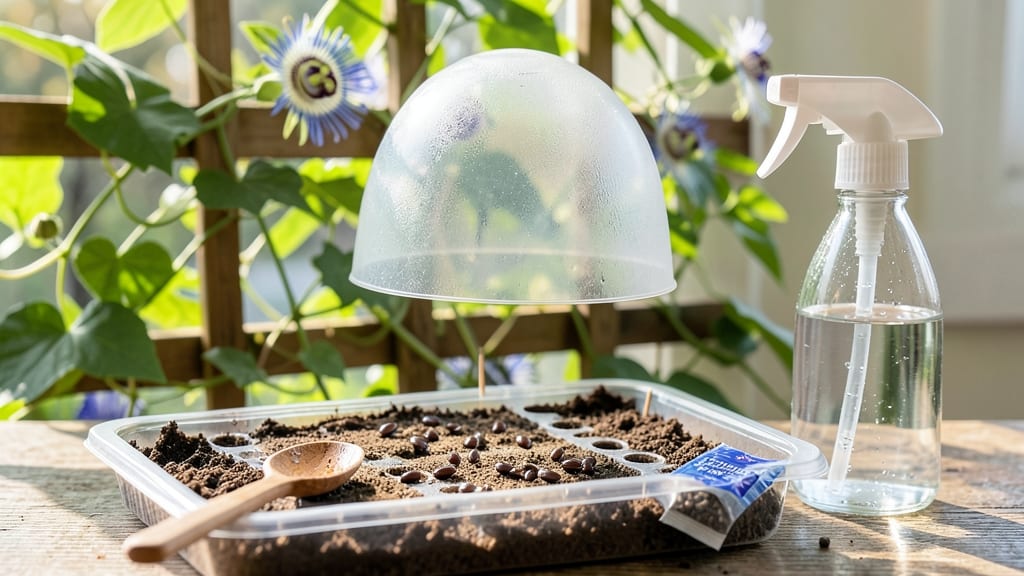
Planting passion flower seeds 🌸 requires patience and a few tropical-inspired tricks to coax those stubborn little seeds into sprouting.
If you’ve ever stared at a tray of passion flower seeds and wondered why they refuse to germinate, you’re not alone. The key isn’t just in the planting—it’s in creating the right conditions to mimic their warm, humid origins.
In this guide, I’ll walk you through the exact steps to prepare your seeds, soil, and environment for faster germination, plus common pitfalls that even experienced gardeners overlook.
By the end, you’ll know how to give your passion flower seeds the best possible start—so you can enjoy those dramatic, fragrant blooms sooner than you think.
Passion flower seed germination requirements: soil temperature, moisture, and light secrets
Passion flower seeds are notorious for their stubborn germination—many gardeners give up after weeks of waiting. The key to success? Recreating their native tropical environment. These vines thrive in warmth, humidity, and indirect light, but most of us don’t live in the rainforests of South America.
Here’s how to hack their ideal conditions for reliable sprouting.
First, let’s address the biggest myth: passion flower seeds don’t need darkness to germinate. Unlike many tropical seeds, they actually require bright, indirect light (think dappled sunlight through a sheer curtain).
Too much direct sun can dry out the soil too quickly, while too little light leads to leggy, weak seedlings. Balance is everything.
The soil temperature is where most gardeners fail. Passion flowers demand warmth—75-85°F—to break dormancy. If your soil is cooler than 70°F, germination can take 6-12 weeks or never happen at all.
That’s why I use a seedling heat mat set to 80°F for my tropical vines. Even in summer, nighttime temps can drop too low for these sensitive seeds.
Moisture is another critical factor. Passion flower seeds need consistent, bottom-watering to prevent drying out. Unlike cacti, these seeds hate crusting on the soil surface, which blocks air and water.
I fill a tray with pebbles and water, then place my seed pots on top to maintain high humidity without soggy soil. A clear plastic dome or humidity tent works too—just remember to ventilate daily to prevent mold.
Here’s the summary table breaking down the exact conditions your passion flower seeds need to thrive:
Now, let’s talk about the light spectrum. Passion flowers need blue and red light wavelengths to trigger germination. If you’re using artificial lights, a full-spectrum LED grow light is your best bet.
Place it 12 inches above your seed trays and run it for 14–16 hours daily. Avoid cheap white bulbs—they emit too much heat and not enough of the right light spectrum.
One common mistake I see is overwatering. While passion flower seeds need moisture, they’ll rot in waterlogged soil. I use a spray bottle with fine mist to keep the soil damp but never soggy.
Test moisture by sticking your finger an inch deep—if it’s dry, water lightly. If it’s damp, wait another day. A moisture meter ($10 from garden centers) takes the guesswork out of this.
For gardeners in cooler climates, consider pre-soaking seeds for 24 hours in lukewarm water. This mimics the tropical rain showers they’d experience in the wild. After soaking, plant them ½ inch deep in a well-aerated mix (50% potting soil, 50% perlite or coconut coir).
The goal is to mimic their natural forest floor environment, where seeds are lightly covered by leaf litter.
Finally, patience is key. Some passion flower varieties, like Passiflora caerulea, germinate in as little as 2 weeks, while others, such as Passiflora edulis (granadilla), can take up to 3 months.
If you’ve provided the right conditions and still see no sprouts after 6 weeks, try scarifying the seeds—lightly sanding the outer shell with fine-grit sandpaper to help water penetrate.
Remember, passion flowers are tropical survivors. By giving them the warmth, moisture, and light they crave, you’re not just planting seeds—you’re creating a microclimate for their wildest dreams. Soon, those first delicate tendrils will emerge, and you’ll know you’ve cracked the code. 🌱
Step-by-step passion flower seed planting process with pro tips for faster sprouting
Passion flower seeds are notorious for their slow germination, but with the right approach, you can coax them to sprout in as little as 2-4 weeks instead of months. The key is replicating their tropical habitat—warm soil, high humidity, and gentle light.
I’ve planted hundreds of passion flower seeds, and these pro tips will help you skip the trial-and-error phase.
Start by gathering your supplies: passion flower seeds, a seed-starting mix, a heat mat (or warm location), plastic wrap or a humidity dome, and a spray bottle. Passion flowers thrive in well-draining, slightly acidic soil (pH 6.0–7.0), so avoid heavy garden soil.
If you’re using store-bought mix, blend it with perlite or vermiculite to improve aeration.
How to Plant Passion Flower Seeds for Faster Germination
- 1 Scarify the seeds: Passion flower seeds have a hard outer shell. Rub them gently with sandpaper or nick them with a knife to break dormancy. Soak them in warm water for 24 hours afterward.
- 2 Plant the seeds: Fill seed trays with moist soil and press seeds ½ inch deep. Space them 2 inches apart to avoid overcrowding. Label your trays—passion flowers can look like weeds when young!
- 3 Create warmth: Place trays on a heat mat set to 75–85°F. If you don’t have a mat, set trays on top of a refrigerator or in a sunny windowsill (south-facing). Warmth is critical—cold soil delays germination by weeks.
- 4 Cover for humidity: Seal trays with plastic wrap or a humidity dome. Mist the soil lightly every 2–3 days to keep it moist but not soggy. Condensation on the plastic is a good sign—it means humidity levels are ideal.
- 5 Provide gentle light: Once seeds sprout (usually in 2–4 weeks), remove the plastic and move trays to bright, indirect light. Avoid direct sun—young seedlings are sunburn-prone. A grow light on a 12-hour cycle speeds up growth.
- 6 Thin seedlings: When seedlings reach 2 inches tall, thin them to 1 plant per 4-inch pot. Use scissors to snip unwanted seedlings at soil level—this reduces transplant shock. Keep the strongest seedling with the most vibrant leaves.
Avoid these common mistakes that stall germination: Overwatering (which causes rot), planting seeds too deep (they need light to sprout), or using cold soil (slows growth by 50%). I once waited 3 months for seeds to sprout because I didn’t use a heat mat—don’t make that mistake!
Once seedlings have 2–3 sets of true leaves (not just cotyledons), they’re ready for transplanting. Harden them off by gradually exposing them to outdoor conditions over 7–10 days. Choose a sunny, sheltered spot with a trellis nearby—passion flowers are vigorous climbers and need support from day one.
With these steps, you’ll go from seed to lush passion flower vine in record time. The first blooms might take a year, but the journey is worth it—imagine exotic flowers and edible fruits growing in your garden! 🌸