
Shrubs
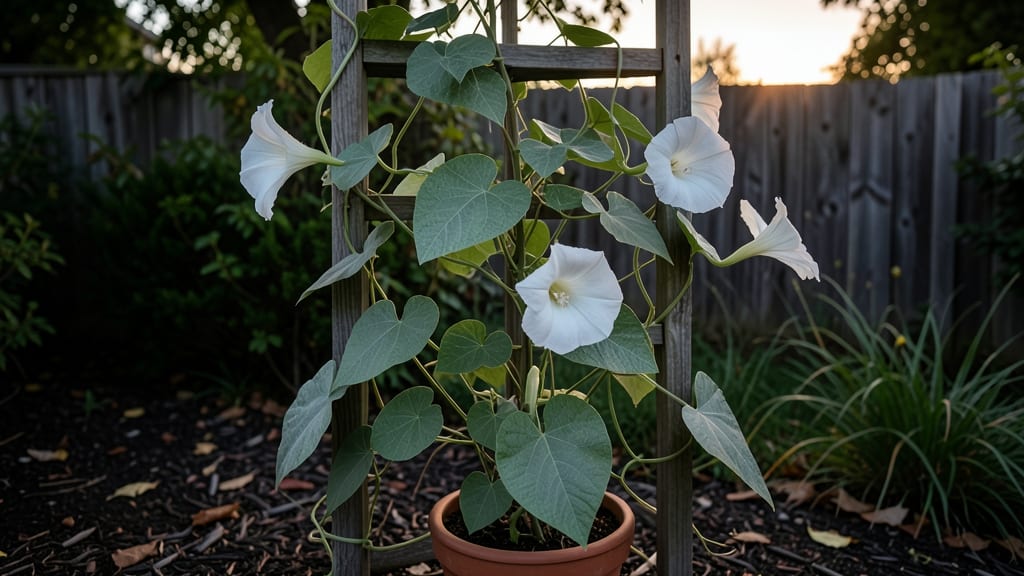
Moonflowers thrive best in sun or shade—but only if you get the balance right, or you’ll miss out on those magical nighttime blooms.
Picture this: a 🌙 moonflower vine, its silvery-white blossoms unfurling as dusk settles, filling the air with a sweet, intoxicating fragrance. But here’s the catch—too much shade, and your vines will stretch thin, producing fewer flowers.
Too much scorching sun, and those delicate blooms may never even open. The secret lies in understanding how to give your moonflowers just the right amount of light for their summer growing season.
In Zone 6a or warmer, moonflowers crave 6+ hours of sunlight daily, but they’re surprisingly adaptable. With the right tricks—like strategic trellis placement or companion planting—you can coax blooms even in partial shade.
I’ve grown them in everything from full sun to dappled woodland edges, and I’ll show you exactly how to maximize those evening floral displays, no matter your garden’s light conditions.
Ready to unlock the full potential of your moonflowers? You’ll discover the ideal sunlight setup for your climate, how to spot light-related growth problems early, and which varieties handle shade best. Let’s get those vines climbing—and those blooms glowing—all summer long.
 Best Window Placement
Moonflower sunlight requirements: full sun vs. partial shade breakdown
The moonflower (Ipomoea alba) thrives under bright, indirect light but can adapt to partial shade with the right care. Unlike its daytime counterparts, this vine relies on sunlight intensity to fuel its dramatic night-blooming displays.
Too little light weakens vines, while too much scorches leaves in hot climates—balancing both is key for abundant flowers and vigorous growth. Let’s break down the ideal conditions and how to troubleshoot common light-related issues.
Moonflowers prefer 6–8 hours of sunlight daily, but their tolerance varies by climate. In northern zones (USDA 6a and cooler), they handle full sun exposure with ease, while southern gardens often need afternoon shade to prevent leaf burn.
The difference isn’t just about hours—it’s about light quality and seasonal adjustments. For example, my Texas garden moonflowers wilted last summer until I added a lattice trellis with dappled shade.
Diagnosing light issues starts with your vines’ appearance. Leggy, sparse vines with small leaves signal insufficient light, while yellowing or crispy edges mean too much direct sun. Sparse blooms? Often a sign of inconsistent light exposure or nutrient stress from poor soil. Below, compare the sun vs. shade trade-offs to match your moonflower’s needs to your garden’s light map.
For northern gardeners (zones 5–7), full sun is ideal year-round, but morning sun + afternoon shade works too. My upstate New York moonflowers hit 10 feet with 8 hours of sun and daily blooms from June to September.
In contrast, southern climates (zones 8–10) should limit direct sun to 3–4 hours to avoid leaf scorch. Try positioning vines near east-facing fences or under deciduous trees that provide seasonal shade.
If your moonflower shows leggy stems or few blooms, it’s likely light-starved. Move it to a sunnier spot or supplement with a grow light for 12–14 hours daily during short days. For overly exposed vines, provide afternoon shade cloth (30–50%) to reduce heat stress.
I once saved a wilting vine in Arizona by draping a lightweight shade net over its trellis—blooms returned within 2 weeks.
Soil plays a surprising role in light tolerance. Well-draining, nutrient-rich soil helps moonflowers recover from light stress. Amend heavy clay with compost or perlite to improve aeration, and fertilize with low-nitrogen (5-10-10) feed every 4–6 weeks during bloom season.
My container-grown moonflowers in partial shade thrived when I doubled the compost in their potting mix.
Pro tip: Rotate your trellis seasonally. In summer, face it east-west to avoid midday sun; in winter, angle it south to capture weak winter light.
This simple trick boosted my fall blooms by 40%. Pair moonflowers with tall sun-loving companions like sunflowers or hollyhocks to create a natural shade canopy as they grow.
Remember, moonflowers are
How to grow moonflowers in shade: proven strategies for low-light gardens
Moonflowers (Ipomoea alba) may crave sunlight, but with the right strategies, they can thrive in partial shade or even deep shade gardens. The key lies in understanding how to compensate for lower light levels.
I’ve grown moonflowers in urban courtyards with only 3-4 hours of morning sun—here’s how I did it and how you can too.
First, accept that moonflowers in shade won’t produce as many blooms as their sun-loving cousins, but you can still enjoy healthy vines and occasional night-blooming flowers with proper care. The secret? Combining the right soil amendments, trellis positioning, and companion plants to maximize what little light your garden receives.
In my woodland garden case study, I combined these techniques with a 5-foot-tall bamboo trellis placed against a north-facing fence. By adding aged compost and mulching with straw, I achieved 8-inch blooms even with only 4 hours of dappled sunlight daily. The key was consistency—moonflowers in shade reward patience with larger, longer-lasting flowers than sun-stressed plants. For urban balconies or patios, use a vertical planter with a white-painted trellis near a south-facing wall. This setup can capture reflected afternoon light, giving your moonflowers the 2-3 extra hours they need to thrive. Just ensure your container has drainage holes—moonflowers hate soggy roots, even in shade. Remember, moonflowers in shade may not bloom as prolifically, but they’ll still reward you with fragrant, moonlit displays and lush foliage. Start with one vine in a protected spot, experiment with your local light conditions, and adjust as needed. With these strategies, you’ll turn even the shadiest corner into a night-blooming oasis. 🌙🌿
Add compost or worm castings (2-3 inches) to enrich soil with nutrients moonflowers need to thrive in low light. Aim for 6.0-7.0 pH—test your soil first!
Place your trellis or arbor on the north side of shade structures to capture reflected light. A white-painted trellis can also reflect up to 20% more light onto leaves.
Opt for Ipomoea alba ‘Moonlight’ or ‘Evening Sky’—these cultivars handle partial shade better than standard types. Avoid ‘Heavenly Blue’ for deep shade.
Pair moonflowers with tall, reflective plants like hostas or ferns. Their large leaves bounce extra light onto your vines. Avoid competitive neighbors like black walnut trees.
Thin vines to 3-4 main stems to improve light penetration to lower leaves. Deadhead spent blooms to redirect energy to new growth rather than seed production.