
Pests and Diseases
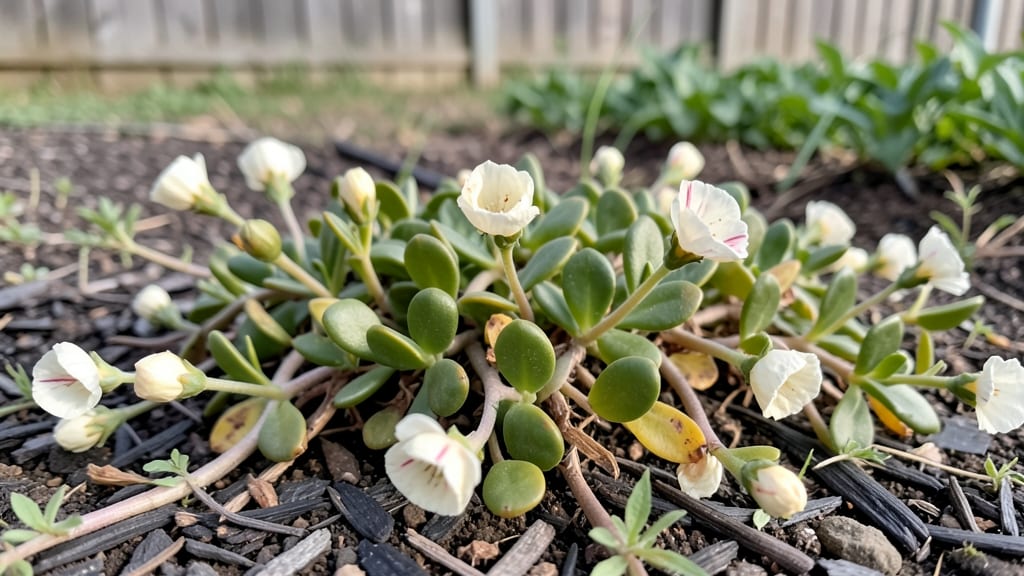
Small pink-flowered weeds like chickweed or clover thrive in lawns and gardens, often spreading quickly. Identify them by leaf shape and growth pattern, then pull by roots or use organic vinegar spray to avoid harming nearby plants.
These delicate-looking invaders might seem harmless, but their shallow root systems let them outcompete desirable plants for nutrients and sunlight. 🌱 I’ve found that clover, for example, forms dense mats that choke out grass roots, while chickweed’s rapid spread can smother young seedlings—both are especially aggressive in moist, nitrogen-rich soil.
The key to stopping them early is catching them before they set seed, which is why I always inspect my garden edges and shady corners first.
If you’re dealing with a larger infestation, organic vinegar spray (a 1:1 mix with water) works best on sunny days—just avoid spraying desirable plants, as the acidity can damage foliage.
For stubborn patches, a simple hand weeder with a forked tip lets you dig out roots without bending over too much. My go-to trick? Pull weeds when the soil is damp but not soggy, which makes the roots easier to extract.
💡 In This Article
- Identifying Common Pink-Flowered Weeds
- Safe Removal Methods for Pink Flower Weeds
Identifying common pink-flowered weeds
Here's what's actually happening when you spot those tiny pink blooms: chickweed and clover have distinct leaf structures that tell you everything about their growth habits.
Chickweed leaves form oval shapes with smooth edges, growing in pairs along the stem, while clover leaves have three leaflets arranged in a trifoliate pattern. 🌿 The key difference lies in their root systems—chickweed spreads through shallow, fibrous roots that create dense mats, whereas clover develops deep taproots that anchor it firmly in the soil.
This explains why clover can survive drought better than chickweed.
Sunlight exposure dramatically affects their spread. Chickweed thrives in partial shade, often popping up between stepping stones or under shrubs where light filters through. Clover, however, prefers full sun and can dominate lawns by outcompeting grass through its nitrogen-fixing abilities.
The soil type matters too: both weeds favor moist, well-drained soil with moderate fertility. In sandy soils, chickweed spreads faster due to its rapid germination rate (up to 100 seeds per plant), while clover dominates in heavier clay soils where its taproot can penetrate deeper.
What most people don't realize is how these weeds use their flowers strategically. Chickweed's delicate pink flowers appear in spring and transform into tiny seed pods that can produce 500-1,000 seeds per plant—each seed weighing just 0.0001 grams.
Clover's spherical flower heads contain 20-50 individual flowers, each capable of producing multiple seeds. This explains why a single plant can become a thousand-plant problem in just one growing season. The flowers also attract pollinators, which helps them reproduce even more efficiently.
Look closely at the stem structure for clues: chickweed stems are hairy and spread horizontally along the ground, while clover stems grow upright with hairy leaves. The texture difference is noticeable too—chickweed leaves feel slightly fuzzy, whereas clover leaves are smooth.
These physical differences help explain why they respond differently to removal methods: chickweed's horizontal growth makes it more vulnerable to surface treatments like vinegar, while clover's deep roots require more aggressive extraction.
Consider these key factors when identifying them in your garden:
- Leaf shape: Chickweed (oval pairs) vs. clover (trifoliate)
- Growth pattern: Chickweed (ground-hugging) vs. clover (upright)
- Root depth: Chickweed (shallow) vs. clover (deep taproot)
- Preferred habitat: Chickweed (shade) vs. clover (sun)
Here's a pro tip: examine the base of the plant where it meets the soil. Chickweed often shows a rosette pattern of leaves at the base, while clover forms a more compact cluster.
This root-crown difference explains why clover regrows more vigorously after cutting, as its energy reserves are stored deeper in the soil. 💫