
Vegetables
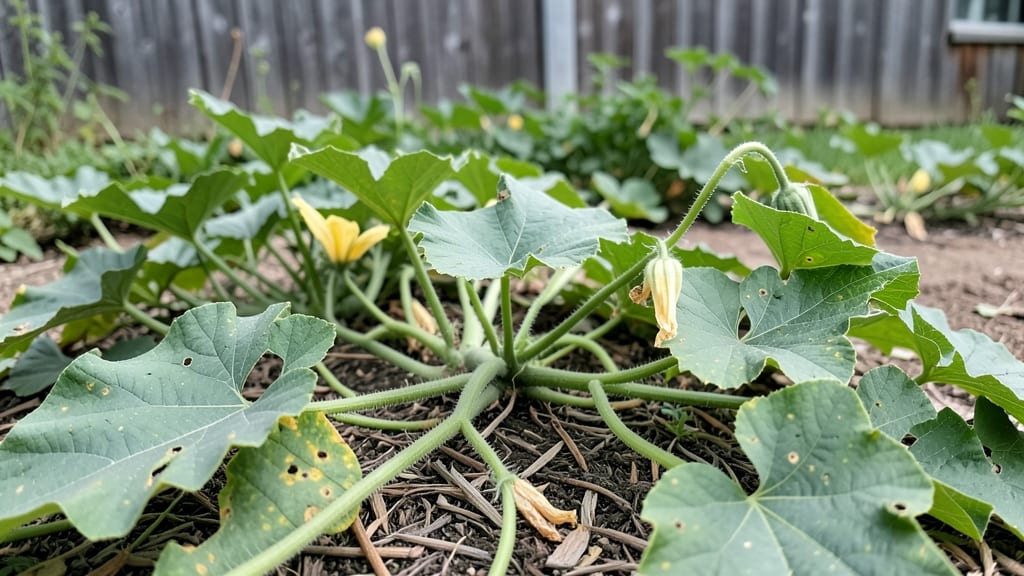
A female pumpkin flower looks like a male pumpkin flower but has a small, round, bulbous base at its center where the fruit will develop. This swollen ovary distinguishes it from male flowers, which lack this feature and have a slender stem instead.
Spotting the difference between male and female pumpkin blooms is all about that telltale bulbous base—think of it as nature’s tiny fruit starter kit. 🌱 While male flowers sport a sleek, skinny stem, female flowers cradle their ovary like a little pouch, ready to swell into a pumpkin once pollinated.
This swollen section is your key clue, especially when you’re hunting for the best candidates to hand-pollinate for bigger harvests.
Here’s the pro tip: Female flowers also tend to appear slightly later in the season, giving you a two-for-one signal—both the swollen base and their timing can help you zero in on the most productive blooms. Once you master this visual trick, you’ll never miss a pollination opportunity again!
💡 In This Article
- How to Identify Female Pumpkin Flowers by Anatomy
- Tips for Pollinating Female Pumpkin Flowers for Better Yields
How to identify female pumpkin flowers by anatomy
Female pumpkin flowers develop a distinctive swollen ovary at their base—this bulbous structure is your first visual clue. Think of it as nature’s way of preparing for fruit development: the ovary contains the ovules that will eventually grow into pumpkin seeds and flesh.
Under close inspection, this swollen section measures roughly 0.25 to 0.5 inches in diameter when young, growing larger as the flower matures. 🌿 The ovary’s texture feels slightly firmer than the delicate petals, almost like a tiny marble nestled at the flower’s center.
Male flowers, in contrast, have a slender stem that tapers smoothly into the flower without any bulbous base. This stem is typically 1/8 to 1/4 inch thick and extends straight from the vine, while female flowers’ stems appear thicker near the ovary due to the developing fruit’s weight.
The positioning also differs: female flowers often grow on secondary vines rather than the main stem, giving them a slightly lower or sideways orientation compared to male flowers.
Here’s what’s actually happening botanically: the swollen ovary contains the plant’s reproductive organs, including the stigma (where pollen lands) and the ovary wall that will become the pumpkin’s rind. When pollinated, this ovary begins producing hormones that trigger fruit development, causing it to expand rapidly within 24-48 hours.
This growth is visible even before the flower wilts, making it a reliable marker for gardeners. 🌱 The ovary’s size and shape can even hint at the pumpkin’s potential—larger ovaries often correlate with bigger fruit.
Don’t overlook the flower’s petal arrangement either. Female flowers tend to have slightly larger petals (about 2-3 inches wide) that spread wider to expose the ovary, while male flowers’ petals are more uniform and tightly clustered. This wider opening helps capture pollen more efficiently once the ovary is fertilized.
The color difference—while subtle—can also be a clue: female flowers sometimes exhibit a slightly deeper yellow hue near the ovary base due to increased sap flow during fruit initiation.
For practical identification, try this test: gently press the base of the flower between your thumb and forefinger. If you feel a rounded, firm bump, it’s female. Male flowers will feel hollow or tapered at the base.
This tactile check works even in low light when visual cues are harder to spot. 💡 The bump’s presence isn’t just about appearance—it’s a physical indicator of the plant’s reproductive investment in fruit production.
One common mistake gardeners make is confusing young female flowers with male flowers that haven’t fully opened. Pay attention to the stem attachment point: female flowers’ stems often have a slight kink or thickening where the ovary begins, while male stems remain uniformly straight.
This subtle detail can save you from missing your best pollination candidates.