
Planting
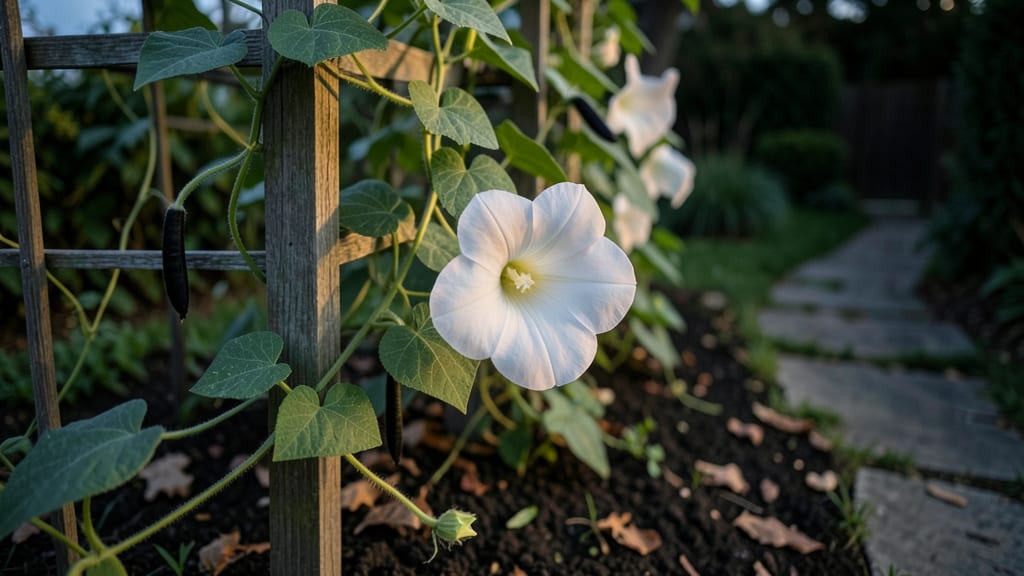
The moonflower plant looks like a ghostly, giant white trumpet unfurling only under the cover of night 🌙 — its petals can stretch up to 12 inches wide, making it one of the most dramatic blooms in any garden.
Imagine a plant that stays dormant all day, only to unfurl stunning, ghostly-white blooms under the moonlight—this is the moonflower, a rare and enchanting vine that turns your garden into a nocturnal spectacle.
Unlike its daytime counterparts, this vine has heart-shaped leaves with serrated edges that climb aggressively, reaching 10 feet in a single season. The blooms aren’t just big—they’re fragrant too, filling the evening air with a sweet, honey-like scent that peaks around midnight.
Here’s what makes it stand out: its waxy petals, the way it closes by dawn, and how it differs from morning glories or other night-bloomers. I’ll break down every detail so you can spot one in seconds—even in the dark.
Moonflower plant identification: key visual traits of its flowers and leaves
The moonflower plant (Ipomoea alba) is one of nature's most dramatic night-bloomers, with flowers that can reach an astonishing 10-12 inches wide. These blooms are your first clue to identification - their trumpet-shaped form and ghostly white petals create an otherworldly appearance that's unmistakable under moonlight.
The petals have a slightly waxy texture that gives them a velvety sheen when fully open.
What truly sets moonflowers apart is their nocturnal blooming cycle. During the day, the buds remain tightly closed, preserving their delicate structure. Only as dusk approaches do they begin to unfurl, revealing their full 5-inch-wide throats that emit a honey-like fragrance that attracts night-flying pollinators like moths.
This unique behavior helps distinguish them from similar plants that bloom during daylight hours.
| Feature | Description | Distinguishing Traits |
|---|---|---|
| Flower Size | 10-12 inches wide | Larger than most night-bloomers |
| Flower Shape | Trumpet-shaped | Distinctive funnel form |
| Petal Color | Pure white | May have faint purple veins |
| Leaf Shape | Heart-shaped | Serrated edges, 3-5 inches long |
| Blooming Time | Dusk to midnight | Closed by dawn |
| Scent | Strong honey fragrance | Most intense at night |
The heart-shaped leaves of moonflowers are another key identification feature, measuring about 3-5 inches long with serrated edges that create a gentle sawtooth pattern. These leaves grow alternately along the rapidly climbing vines, which can reach 10 feet or more in a single season.
The leaves have a smooth, slightly glossy surface that contrasts with the fuzzy texture of some similar vines like morning glories.
One common point of confusion is distinguishing moonflowers from evening primrose (Oenothera biennis), another night-blooming plant. While both bloom at night, evening primrose flowers are smaller (1-2 inches wide) and have four yellow petals arranged in a cross shape.
Moonflowers, by contrast, have five large white petals that create their signature trumpet shape. The evening primrose also has lance-shaped leaves rather than the heart-shaped foliage of moonflowers.
Another helpful identification clue is the vine structure. Moonflower vines grow clockwise as they climb, which is opposite to the counterclockwise twining pattern of morning glories. This directional difference can be crucial when identifying young plants before they've produced flowers.
The moonflower's vines are also more delicate and less woody than those of morning glories, which develop thicker stems as they mature.
When examining the flower structure, look for the five distinct petal lobes that create the trumpet shape. The center of a fully open moonflower bloom reveals five stamens with white filaments and yellow anthers.
This central structure is often hidden in closed buds but becomes visible as the flower opens at night. The waxy texture of the petals is another distinguishing feature - they feel slightly slick to the touch, unlike the softer petals of many daytime bloomers.
If you're trying to identify moonflowers in your garden, pay attention to the blooming pattern. True moonflowers will open only at night and close completely by mid-morning.
Some gardeners mistakenly identify white morning glories (Ipomoea nil) as moonflowers, but these daytime bloomers have smaller flowers (3-4 inches wide) and more delicate stems. Morning glories also typically bloom for multiple days once opened, while moonflowers have a single-night bloom cycle before wilting.
For the best identification results, examine plants in the evening hours when moonflowers are at their peak. The intense fragrance and visible movement of the petals as they unfurl are unmistakable signs.
Keep in mind that moonflowers are annual plants that complete their life cycle in one season, so you'll need to replant them each year to enjoy their nocturnal beauty continuously.
Understanding these visual traits will help you correctly identify moonflowers in your garden and distinguish them from similar night-blooming plants. This knowledge is particularly valuable if you're trying to control their spread or preserve their unique characteristics through selective breeding.
The more you observe these enchanting plants, the easier it becomes to recognize their distinctive features at a glance.
How moonflowers change throughout the night: from bud to bloom
Watching a moonflower transform through the night is like witnessing nature's own fireworks display. These nocturnal bloomers begin their magical journey as tight, waxy buds that look like oversized pearls clinging to their vines.
As evening approaches, something extraordinary happens—the buds start to swell and soften, preparing for their nightly debut.
The real magic begins when dusk arrives. That's when the buds start to unfurl their ghostly-white petals, revealing their full 10-12 inch glory. The transformation happens surprisingly fast—sometimes within just 30 minutes—as the petals spiral outward like a delicate, luminous fan.
This nocturnal ritual makes moonflowers one of the most captivating plants for gardeners who love unique nighttime displays.
- 1
- 2
- 3
- 4
- 5
One of the most fascinating aspects of moonflowers is how their scent evolves throughout the night. When they first open, they release a subtle sweetness that grows intensely honey-like by midnight. This powerful fragrance is their secret weapon for attracting night-flying pollinators like sphinx moths.
By dawn, however, the scent has completely dissipated, leaving behind only the memory of their nocturnal perfume.
Sunlight plays a crucial role in this nightly ritual. If moonflowers receive even a few hours of direct sunlight during the day, their blooms will open more vigorously at night. But here's the catch: excessive sunlight can cause them to wilt prematurely or even close early.
For the best nightly show, plant your moonflowers in a spot that gets full sun but with some afternoon shade protection during the hottest hours.
I've found that the most spectacular displays come from moonflowers grown on trellises or arbors, where their vines can climb and their flowers hang dramatically. When illuminated by string lights or moonlight, they create a whimsical garden scene that feels like stepping into a fairy tale.
The key to maintaining this beauty is to water them deeply in the evening—this helps their roots absorb moisture before the night's cooling temperatures set in.
If you've ever wondered why moonflowers seem to disappear during the day, now you know! Their nocturnal nature makes them a unique gardening challenge and reward. The best time to observe or photograph them is between 9 PM and 2 AM, when they're at their peak.
Just be prepared for a surprise when you step outside at dawn—your stunning nighttime garden will have vanished by morning, leaving you eager for the next evening's show! 🌙✨🌸