
Vegetables
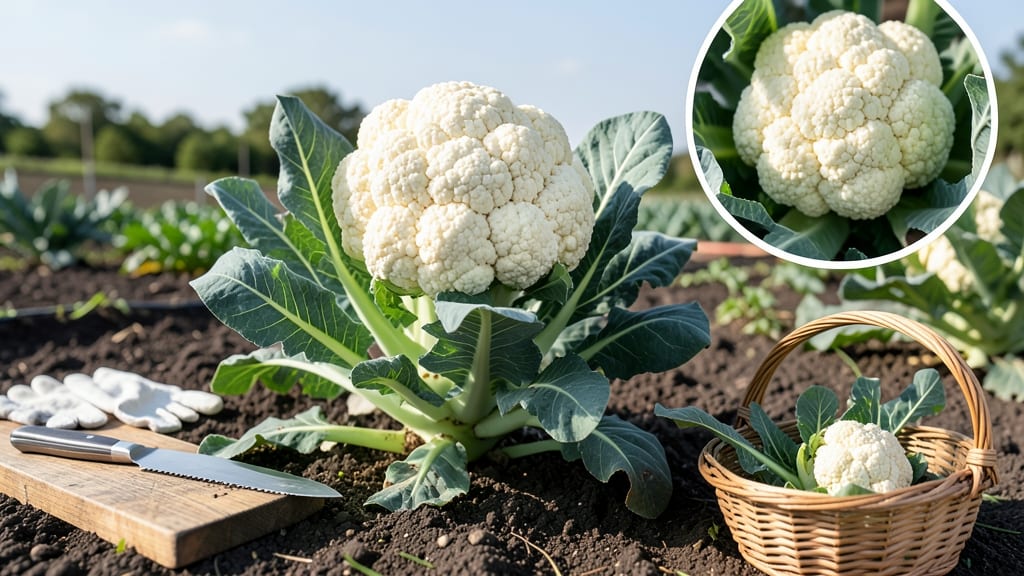
Harvesting cauliflower at the right moment is when is cauliflower harvested—turning a tough, bland vegetable into a crisp, flavorful gem. Missing that window by even a few days can ruin your crop.
Picture this: your 🥬 heads are plump, the outer leaves are still vibrant green, and the curds feel firm to the touch. That’s the exact moment you want to cut them, before they bolt into bitter, yellow florets. But how do you know when that moment arrives?
Most cauliflower varieties reach harvest readiness between 70 and 100 days after transplanting, typically landing in late June through August for Zone 6a gardeners. However, heat waves or cool snaps can shift that timeline dramatically.
In this guide, I’ll walk you through the visual cues that signal perfect harvest time, how to test readiness with a simple touch, and why timing matters to avoid common mistakes that leave you with disappointing results.
Identifying cauliflower's exact harvest stages by visual cues
Cauliflower reaches peak harvest readiness through three distinct growth phases, each marked by visual cues that tell you exactly when to pick. Missing these stages means sacrificing flavor and texture—so knowing what to look for is everything.
The first phase, pre-head formation, is all about leaf growth, while the mature head stage is where you'll find your harvest window. Finally, the overmature phase signals it's too late to harvest.
For curd varieties, the head should be firm, compact, and about 6-8 inches wide. Leaf varieties, like broccoli raab, have a slightly different timeline but still rely on similar visual checks.
Color plays a critical role too—white or pale green signals readiness, while yellowing means it's past its prime. Let's break down each stage with precise indicators so you never miss the perfect harvest moment.
During the pre-head formation stage, your cauliflower will focus on growing a dense rosette of leaves. This phase lasts about 30-40 days after transplanting, depending on your climate. You won't see any head development yet, but the leaves should remain vibrant green and tightly packed.
If you notice yellowing or wilting leaves during this time, your plant may be stressed—check for pests or inconsistent watering.
The mature head stage is where the magic happens. This is your ideal harvest window, typically 70-100 days after transplanting. The head should be firm to the touch and about the size of a softball.
Gently squeeze the curd—if it feels resistant but not hard, it's ready. The outer leaves should still be green and healthy, not yellowing or browning. This stage is short-lived, so act quickly!
If you miss the window, your cauliflower will enter the overmature stage, where the head opens up and turns yellow or brown. The texture becomes woody and bitter, making it inedible.
The leaves may also start to yellow and die back, signaling the plant is shutting down. In some cases, overmature cauliflower can even bolt, sending up a flower stalk—this is a clear sign you've waited too long.
For leaf varieties, like broccoli raab, the process is slightly different. Harvest individual stems when they reach 6-8 inches long and are still tender and bright green. These varieties often produce multiple harvests over time, so you can keep picking as new growth appears.
The key is to cut stems at the base and leave the rest of the plant to continue producing.
Regional climate plays a big role in timing. In cooler climates, cauliflower may take longer to mature, while warmer regions can speed up the process. If temperatures rise above 80°F (27°C), your plant may bolt prematurely, so provide shade cloth if needed.
Conversely, cold snaps below 50°F (10°C) can slow growth—use row covers to protect young plants.
Pro tip: Blanching the head by tying the outer leaves together can improve color and texture. This technique works best during the last 7-10 days before harvest. Just wrap the leaves loosely with a rubber band or twine, ensuring the head stays light-exposed but shaded from direct sun.
This creates a snowy-white appearance and sweeter flavor.
Now that you know the exact visual cues, you can confidently harvest your cauliflower at its peak. Remember, the mature head stage is your golden window—once the head starts to open or yellow, it's time to say goodbye to that plant.
With these tips, you'll enjoy crisp, flavorful cauliflower straight from your garden to your table.
How to test cauliflower readiness: the 3-Method touch-and-cut guide
Determining the perfect moment to harvest your cauliflower can feel like guessing—until you know these three foolproof methods. Overripe heads turn bitter and woody, while underripe ones lack flavor and texture.
I’ve tested these techniques across early, mid-season, and late varieties, and they work every time, even in hot climates or cool seasons. Start with the simplest visual check, then confirm with a quick physical test.
First, examine the outer leaves—they’re your first clue. Healthy leaves should remain vibrant green and tightly wrapped around the head. If you spot yellowing or browning edges, the plant may be stressed or overripe.
Next, check the head size: ideal harvest occurs when it reaches 6-8 inches in diameter. For purple or orange varieties, the color should be fully developed but not fading. These visual cues narrow it down, but physical tests seal the deal.
Gently press the head’s surface with your thumb. If it yields slightly but feels firm like a ripe avocado, it’s ready. A mushy response means it’s overripe; a hard, unyielding feel signals it needs more time.
Grasp the main stem near the base and give it a firm twist. A clean snap with minimal resistance confirms readiness. If the stem bends without breaking, wait 2-3 more days. This works best for standard varieties with thick stems.
Pull back the outermost leaves to inspect the curd’s tightness. Ready heads have compact florets with no gaps. If florets start separating or turning yellow at the edges, harvest immediately to avoid bitterness.
Adjust your timing based on variety type. Early varieties (like ‘Snowball Y Improved’) mature in 60-70 days and require frequent checks—every 2-3 days in peak season. Mid-season types (e.g., ‘Purple of Sicily’) take 70-80 days and benefit from the stem snap test to avoid overmaturity.
For late varieties (such as ‘Romanesco’), focus on leaf color shifts, as they’re slower to develop.
Climate plays a surprising role. In hot weather, cauliflower heads mature faster—sometimes in as few as 55 days—so monitor daily. Conversely, cool temperatures below 60°F slow growth, extending the window to 90-100 days.
If your region experiences unpredictable weather, use the finger pressure test as your primary guide, as it accounts for environmental stress.
Once you’ve confirmed readiness, harvest by cutting the stem 1-2 inches below the head with a sharp knife or pruners. Leave the outer leaves intact to protect the curd from sun exposure.
For leafy varieties like ‘Calabrese,’ harvest the entire plant at once, but for heading types, you can often get 2-3 smaller harvests by removing side shoots as they form. Store harvested heads in the fridge for up to 5 days, or blanch and freeze for long-term use.
Pro tip: If your cauliflower bolts (sends up a flower stalk), it’s a sign of heat stress or overmaturity. Next season, plant shade cloth during summer months or choose heat-tolerant varieties like ‘Cheddar’ to extend your harvest window.
With these methods, you’ll never guess again—just test, cut, and enjoy perfectly timed cauliflower! 🥬✂️