
Planting
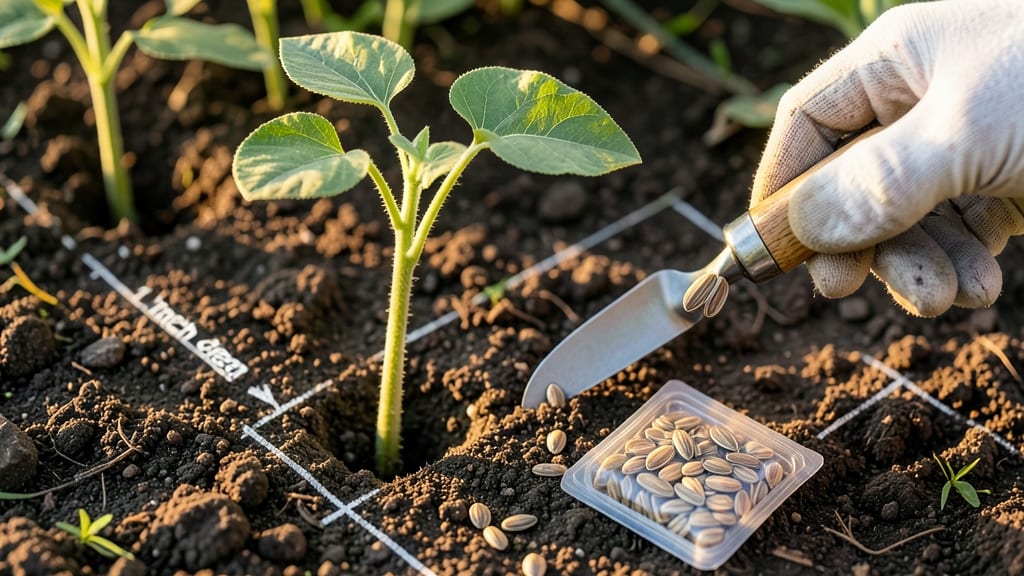
Planting sunflower seeds the right way up speeds germination and gives your 🌻 towering plants a strong start—most gardeners miss the simple trick that makes all the difference.
Struggling to grow sunflowers? Planting them the wrong way can delay germination by days—or even kill your seeds. The secret to faster, stronger sunflowers starts with a simple trick most gardeners miss.
Think of the seed like a tiny egg: the pointy end should face upward to encourage roots to grow downward naturally. This small detail makes a huge difference in how quickly your seeds sprout and how tall your sunflowers grow.
Below, I’ll show you exactly how to identify the correct orientation, the best depth to plant, and other pro tips to ensure your sunflowers thrive from day one.
How to identify the correct way up for sunflower seeds
Planting sunflower seeds the wrong way can leave you waiting weeks for sprouts—or worse, no sprouts at all. The good news? Identifying the correct orientation is easier than you think.
Most sunflower seeds have a flat side and a slightly rounded side, and knowing which side goes down makes all the difference for faster germination. Let’s debunk the "pointy end up" myth and learn how to plant them like a pro.
First, grab a handful of seeds and examine their shape closely. Sunflower seeds typically have one flatter side (where the seed attaches to the flower) and one slightly curved side. The flat side should always face downward in the soil.
This isn’t just a random rule—it’s about giving the seed’s taproot the best chance to grow straight down into the earth, where it can access moisture and nutrients efficiently.
Here’s the trick: Imagine the seed as a tiny egg. The rounded side (like the top of an egg) should point upward, while the flatter side (like the bottom) should face down.
This orientation ensures the seedling emerges with a strong, vertical root system instead of struggling to correct its position later. If you’re still unsure, gently press the seed between your fingers—the softer side is usually the rounded top.
| Seed Feature | Correct Orientation | Why It Matters |
|---|---|---|
| Flat Side | Down | Allows the taproot to grow straight down into moist soil. |
| Rounded Side | Up | Positions the shoot upward toward sunlight for faster emergence. |
| Seed Coat Texture | Smoother side up | The smoother side often indicates the shoot side, which should face up. |
| Taproot Location | Bottom of flat side | The taproot emerges from the flat side, so it must face down. |
Now, let’s tackle the "pointy end up" myth. While some seeds (like beans) have a clear pointy end, sunflower seeds don’t. Their shape is more oval with subtle curves, not pointed.
If your seeds look like they have a tiny point, that’s likely just a natural imperfection—not a directional clue. Trust the flat vs. rounded rule instead. Pro tip: If you’re still unsure, plant a few seeds both ways and watch which ones sprout first!
Once you’ve oriented your seeds correctly, plant them 1 inch deep in well-draining soil. Press them gently but firmly into the soil to ensure good soil-to-seed contact, which helps with moisture absorption.
Avoid overwatering immediately after planting—just keep the soil lightly moist until you see sprouts. Within 7-14 days, you should start seeing those familiar sunflower sprouts pushing through the soil.
For gardeners who struggle with seed orientation, try this hack: Place your seeds on a dark surface (like a piece of black paper) under a bright light. The lighter side of the seed will often indicate the rounded top, making it easier to spot.
This works because the seed’s natural color variation can hint at its structure. Practice with a few seeds before planting your entire batch to build confidence.
Remember, sunflowers are forgiving plants, but proper orientation still gives them a head start. Even if you mix up a few seeds, most will still germinate—just not as quickly or strongly.
The key is consistency. Once you master this trick, you’ll see faster germination, healthier seedlings, and taller sunflowers all season long. Happy planting!
🌱
The science behind planting sunflower seeds upright for faster germination
Sunflower seeds aren't just tiny—planting them the right way can mean the difference between fast germination and weeks of waiting. The seed's natural shape isn't random; it's designed to absorb moisture efficiently and send roots downward while the shoot reaches upward.
When planted upright, the radicle (embryonic root) faces down, ready to break through the seed coat first.
Think of a sunflower seed like a tiny egg with a built-in compass. The flat side contains the embryo, while the pointed end houses the radicle. Planting it pointy-side-down ensures the root grows toward gravity, while the shoot naturally follows light.
This orientation maximizes moisture absorption and reduces the risk of the seed drying out before sprouting.
🌱 Key Takeaway: How to Plant Sunflower Seeds Upright
Soil temperature plays a critical role in germination speed. Sunflower seeds need soil that's at least 60°F (15°C) for optimal growth, but 70-75°F (21-24°C) is ideal. Cooler soils slow down the metabolic processes that trigger sprouting.
If you're planting early in the season, consider using black plastic mulch to warm the soil faster and create a microclimate for your seeds.
Another often-overlooked factor is oxygen availability. Planting seeds too deep (more than 2 inches) can suffocate the radicle, preventing it from breaking through the seed coat. The 1-2 inch depth rule ensures the seed has enough air while staying protected from drying out.
Loose, well-draining soil is key—compacted soil can trap excess moisture, leading to seed rot instead of germination.
Once planted correctly, sunflower seeds typically germinate in 7-14 days, depending on soil conditions. The first sign of success? A tiny hook-shaped shoot breaking through the soil, followed by the seed leaves (cotyledons) unfolding.
This is when you’ll see the magic of proper orientation pay off—strong roots anchoring the plant and a shoot reaching for the sun.
For best results, keep the soil consistently moist but not soggy during germination. A light misting every 2-3 days (or when the top inch of soil feels dry) encourages even sprouting.
Avoid overwatering, as this can lead to fungal diseases that attack young seedlings before they’ve had a chance to establish themselves.