
Blooming
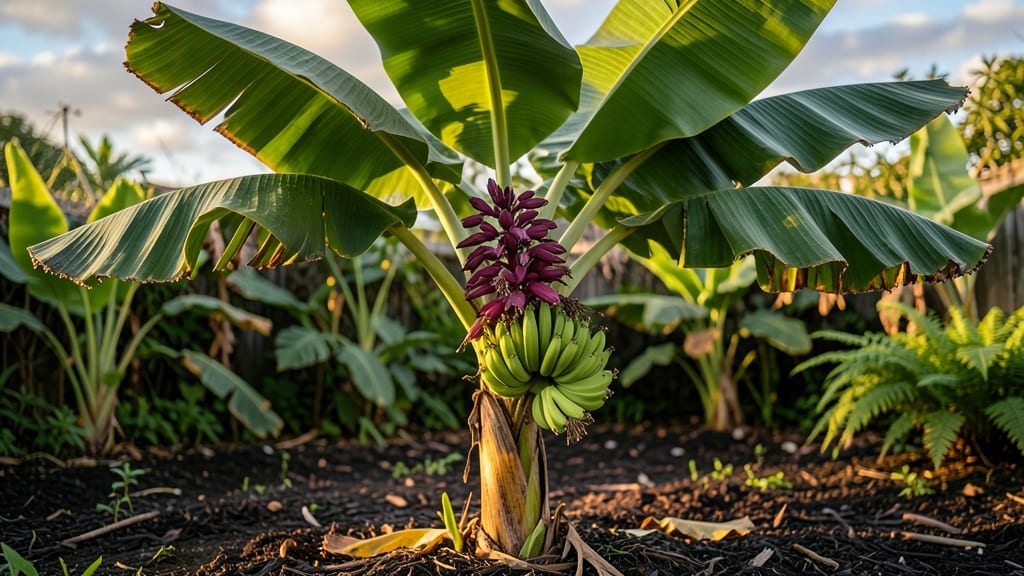
Recognizing the banana flowering stage is your first clue that a harvest is on the way—but many growers miss the subtle signs or wonder why their 🍌 plant refuses to bloom.
Picture this: your banana’s massive leaves suddenly slow their growth, the pseudostem starts splitting, and a strange, purple-tinged bud emerges at the base.
That’s not just a weird growth spurt—it’s your plant’s way of saying, “I’m ready.” Yet without knowing what to look for, you might prune too soon or panic when blooms don’t appear.
Timing matters too. Some varieties need 12-18 months to mature before flowering, while others bloom faster in warm, humid climates. Even then, factors like pruning, fertilizer, or stress can delay—or trigger—this critical phase. The good news? You can nudge your banana along with simple, science-backed techniques.
In this guide, I’ll walk you through how to spot the flowering stage, what it means for your plant’s health, and the easiest ways to encourage blooms naturally—whether you’re in a tropical paradise or a suburban microclimate.
How to identify banana flowering stage signs & their meaning
Spotting the banana flowering stage is like catching a rare glimpse of your plant’s hidden potential. Most gardeners overlook early signs because they focus on the leafy pseudostem instead of subtle changes in growth patterns.
The key is understanding that bananas don’t bloom like traditional flowers—they produce an inflorescence (a cluster of flowers) that emerges from the center of the plant.
This stage reveals whether your banana is healthy, mature, and ready to fruit. Missing these cues can mean delayed harvests or even no blooms at all. For example, a Cavendish banana may take 12-18 months to flower, while tropical varieties like Red Dacca can bloom faster under ideal conditions.
Let’s break down the visual and physical signals you should watch for.
| Stage | Visual Cues | Plant Health Indicator | Action to Take |
|---|---|---|---|
| Early Growth | Tall, upright leaves (3-5 ft); no visible changes in pseudostem | Healthy but immature; needs more time | Increase potassium-rich fertilizer |
| Pre-Bloom | Top leaves yellow slightly; pseudostem swells at base | Signals readiness to flower within weeks | Reduce water slightly to trigger stress |
| Inflorescence Emergence | Purple or red ‘hands’ (flower clusters) appear from center | Confirms active blooming; plant is mature | Protect from wind; monitor for pests |
| Fruit Development | ‘Hands’ turn green; small bunches form | Healthy fruit set; continue balanced care | Apply mulch to retain moisture |
| Post-Flowering | Pseudostem collapses; new suckers emerge | Cycle completes; prepare for next harvest | Remove old stem; select strongest sucker |
The first clue that your banana is nearing the flowering stage appears in its leaf patterns. Healthy banana leaves are long, arching, and a vibrant green.
But when the plant is ready to bloom, the top leaves may yellow slightly or develop brown tips—a sign of nutrient redistribution from leaves to the inflorescence. This is your plant’s way of saying, “I’m shifting energy to produce fruit!”
Pay close attention to the pseudostem, which isn’t a true stem but a layer of leaf sheaths. As the banana matures, the pseudostem will swell at the base and develop a slightly woody texture.
This is a clear indicator that the plant is storing energy for the inflorescence to emerge. If you notice the pseudostem splitting or leaking a sap-like substance, it’s a sure sign the flowering process has begun internally, even if you haven’t seen the flower yet.
One of the most exciting (and unmistakable) signs is the emergence of the inflorescence, often called the “banana heart” or “hands.” This structure starts as a purple or red bud that slowly unfurls into a cluster of small, tubular flowers.
In tropical climates, this can happen within 2-4 weeks after the pseudostem swells. If your banana is in a cooler subtropical zone, like Zone 9b, the process may take longer—sometimes up to 6 months—due to slower growth rates.
The color and shape of the inflorescence also tell you about your plant’s health. A vibrant purple or red bud is a good sign, indicating strong energy reserves.
However, if the bud appears pale, wilted, or fails to unfurl, it could mean nutrient deficiencies (like low potassium) or environmental stress (such as inconsistent watering). In this case, a balanced fertilizer with higher potassium can help revive the process.
Once the ‘hands’ emerge, the next phase is fruit development. Each “hand” will eventually turn green and form banana bunches. This is when your plant needs consistent moisture and protection from wind, as strong breezes can damage the delicate flower clusters.
If you’re growing bananas in a container, ensure the pot is stable—top-heavy inflorescences can tip over easily.
After flowering, the pseudostem will collapse, and new suckers (baby plants) will sprout at the base. This is a natural part of the cycle and means your banana has completed its productive phase.
The strongest sucker should be selected to replace the mother plant, ensuring continuity for future harvests. If no suckers appear, it might indicate poor health
Banana flowering timeline: when to expect blooms based on variety
Knowing when your banana plant will flower is crucial for planning your harvest, but timing varies dramatically between varieties and climates. Most banana plants take 12-18 months to reach flowering maturity, but Cavendish bananas often bloom faster in ideal conditions, while Red Dacca varieties may take nearly twice as long.
Understanding these differences—and how your local climate affects them—can help you anticipate blooms and adjust care accordingly.
The banana flowering stage begins when the plant reaches mature height (typically 10-15 feet) and produces a visible inflorescence (the "hand" of bananas). In tropical climates, this often happens year-round, while subtropical gardeners may see blooms concentrated in spring or fall.
Let’s break down the expected timelines for three popular varieties and how to optimize conditions for faster flowering.
If you’re growing bananas in subtropical climates, like Zone 9b or 10a, expect delays in flowering due to cooler winters. For example, a Cavendish banana might take 18 months instead of 12 if temperatures drop below 50°F (10°C) for extended periods.
To accelerate blooming, provide warmth protection (like row covers or greenhouses) during winter months.
In tropical climates, where temperatures stay above 75°F (24°C) year-round, bananas often flower faster and more frequently. However, even in these conditions, nutrient availability plays a critical role. A deficiency in potassium or phosphorus can delay flowering by up to 6 months.
Use a balanced fertilizer (6-6-6 or 8-3-9) every 2 months during the growing season to support healthy blooming.
One common misconception is that larger plants flower faster, but size alone isn’t the deciding factor. Instead, focus on maturity signals, like a slowing leaf growth or pseudostem splitting. These signs indicate the plant is ready to shift energy toward flowering.
Pay close attention to these cues, especially if you’re growing Red Dacca, which often requires additional time to mature before blooming.
For gardeners in cooler subtropical zones, timing your planting is key. Start with container-grown bananas in late winter or early spring to give them a head start before summer heat.
This strategy can shave off 2-4 months from the flowering timeline. Pair this with morning sun exposure and evening shade to prevent heat stress, which can stall blooming entirely.