
Flowers
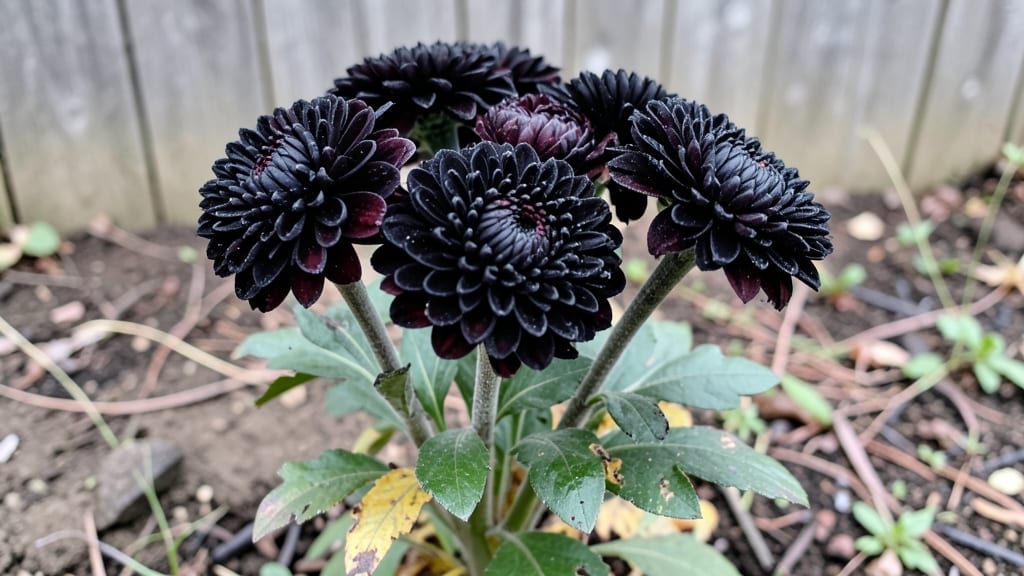
Growing black mums flowers 🌸 means you’ll never run out of drama in your garden—these deep, velvety blooms steal every show, whether planted in beds or containers.
But here’s the catch: most gardeners treat them as seasonal players, pulling them out after fall. The secret? With the right soil, light, and a few smart tricks, you can coax them into blooming well into spring—or even year-round in warmer zones.
Think of black mums as the divas of the garden: they demand attention but reward you with bold, long-lasting color if you meet their needs. Below, I’ll walk you through the exact conditions they crave, from soil prep to pruning hacks that keep them flowering like clockwork.
Ready to turn your yard into a dark, velvety masterpiece? Let’s get started—your spring garden will thank you.
How to extend black mums blooms year-round: seasonal care guide
Black mum flowers (Chrysanthemum) naturally shine in fall, but with strategic seasonal adjustments, you can coax them into blooming through winter and even into spring. The key lies in understanding their dormancy cycles and adjusting care to match your climate zone.
Whether you're in a cold USDA Zone 5 or a mild Zone 9, these steps will keep your dark velvety blooms thriving year-round.
Most gardeners assume black mums die back after frost, but with proper pruning, lighting adjustments, and soil management, you can trick them into a second—or even third—bloom cycle.
The secret? Mimicking their natural fall-to-winter transition while preventing stress. Let's break down the seasonal care routine that works in both cold and warm climates.
🌿 Seasonal Care Routine for Year-Round Black Mum Blooms
- 🌱 Early Fall (September-October): Begin light pruning to remove spent blooms and weak stems. Reduce watering frequency to prepare for dormancy.
- 🍂 Late Fall (November-December): In cold zones, mulch heavily with straw or leaves (4-6 inches). In warm zones, move pots to partial shade and reduce water to every 2-3 weeks.
- 🌨 Winter (January-February): Keep soil slightly moist (not soggy) in warm climates. In frost-prone areas, cover plants with burlap or frost cloth during hard freezes.
- ☀️ Early Spring (March-April): Remove mulch and prune back 1/3 of growth to encourage new shoots. Increase sunlight exposure gradually to avoid shock.
- 🌸 Late Spring (May-June): Fertilize with balanced 10-10-10 and deadhead regularly to promote continuous blooming. Monitor for pests like aphids and treat early.
- 🌞 Summer (July-August): Provide afternoon shade in hot zones to prevent leaf scorch. Water deeply early in the morning to avoid fungal issues.
For gardeners in USDA Zones 8-10, black mums can bloom year-round with minimal adjustments. Focus on consistent moisture and light pruning every 6-8 weeks to maintain their dark, velvety appearance.
In colder zones (5-7), overwintering requires more protection—consider container growing so you can move plants to a garage or shed during freezing months.
The biggest mistake I see is over-fertilizing in winter, which encourages weak, leggy growth instead of hardy blooms. Black mums need dormancy cues—like reduced water and cooler temps—to rebloom successfully.
Even in warm climates, a 2-3 week "rest" period with less water and shade can trigger spring reblooming.
Light plays a crucial role in extending blooms. While black mums tolerate partial shade, they need at least 4-6 hours of morning sun to produce vibrant blooms. In winter, supplement with a grow light for 6-8 hours daily if natural light drops below 4 hours.
This mimics longer daylight periods and signals the plant to bloom again.
Pruning isn't just about aesthetics—it's a bloom extension strategy. After the first flush of fall blooms, cut back spent stems to 2-3 inches above ground. This encourages new lateral shoots that will produce smaller but abundant blooms in spring.
For container-grown mums, prune more aggressively in late winter to shape the plant and stimulate growth.
Soil health is often overlooked but critical for year-round blooms. Amend your garden soil with compost and perlite to improve drainage—a common issue that leads to root rot. In containers, use a well-draining potting mix with 10-20% perlite or sand.
Test your soil's pH (6.0-7.0 is ideal) and adjust with lime or sulfur if needed. Healthy soil means stronger roots, which translates to longer bloom cycles.
One pro tip: Divide mature clumps every 2-3 years to rejuvenate plants. This stimulates new growth and prevents the center from becoming woody and bare. Simply dig up the plant, separate the outer stems with roots, and replant in fresh soil.
Your divided sections will bloom even more vigorously in their second year.
With these seasonal adjustments, your black mums can become a year-round garden star, offering dark elegance in every season. Start with just one pot this year, and soon you'll be surrounded by velvety black blooms from fall to spring—a gardener's dream! 🌸
Best soil, light, and watering conditions for black mums flowers
Black mums (Chrysanthemum) thrive when you mimic their natural habitat—moist but well-draining soil with bright, indirect light. These deep-hued beauties despise soggy roots or scorching afternoon sun, which can bleach their petals.
Let’s break down the perfect conditions to keep your black mums lush and blooming year-round, avoiding the most common pitfalls that turn velvety blooms into sad, wilted stems.
For soil, aim for a mix that’s 60% organic matter (like compost or peat) and 40% perlite or sand to prevent compaction. Black mums prefer a slightly acidic to neutral pH (6.0–7.0)—test your soil and amend with lime or sulfur if needed.
Container growers should use lightweight potting mixes with added orchid bark for aeration. Avoid heavy clay soils, which suffocate roots and invite root rot during wet spells.
| Condition | Specification | Notes |
|---|---|---|
| Soil Type | Well-draining loam | 60% organic, 40% perlite/sand |
| pH Level | 6.0–7.0 | Test annually; amend with lime/sulfur |
| Sunlight | Partial shade (4–6 hrs/day) | Morning sun, afternoon shade |
| Watering | 1 inch/week (adjust for climate) | Morning watering; avoid wetting foliage |
| Mulch | 2–3 inches organic mulch | Retains moisture; prevents weeds |
When it comes to light, black mums love bright, indirect sunlight—think 4–6 hours daily with morning sun and afternoon shade. Harsh afternoon rays (especially in USDA Zones 7–10) can scorch leaves and fade their signature deep maroon-black hues.
If growing indoors, place them near an east-facing window or under grow lights for 12–14 hours/day. In containers, rotate pots weekly to ensure even light exposure and prevent lopsided growth.
Watering is where many gardeners trip up—black mums need consistent moisture but hate soggy feet. Water deeply once a week (or every 5–7 days in summer) and avoid overhead sprinkling to prevent powdery mildew on leaves. Instead, use a soaker hose or water at the base of the plant in the morning. In winter, reduce watering to every 2–3 weeks unless you’re in a frost-free zone. Yellowing leaves? You’re likely overwatering; crispy edges? Time to hydrate more.
Two common mistakes sabotage black mum health: over-fertilizing (which burns roots) and planting in full shade (which stunts blooms). If your mums look leggy or sparse, they’re craving more light. For containers, ensure pots have drainage holes—black mums cannot tolerate waterlogged roots.
And if your blooms fade too quickly? Deadhead spent flowers every 2–3 days to encourage longer-lasting blooms and prevent seed formation.
Pro tip: Mulch with 2–3 inches of shredded bark or straw to lock in moisture and regulate soil temperature. This simple step reduces watering frequency by 30% and keeps roots cool in summer.
For year-round blooms, pair your black mums with silver foliage plants (like lamb’s ear) to create a dramatic, high-contrast garden bed that thrives in partial shade.