
Flowers
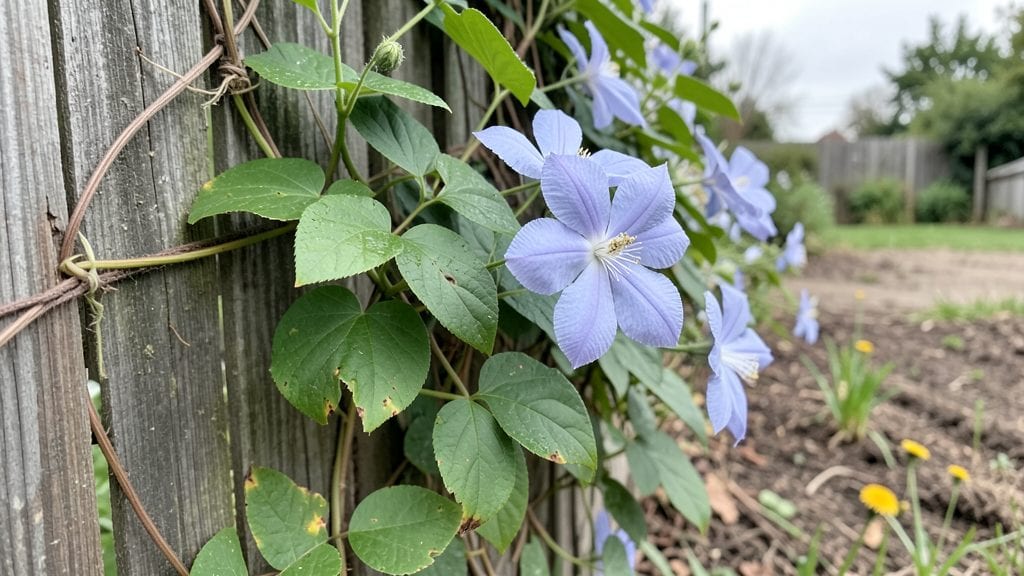
The stunning blue flowering clematis 🌸 adds a dreamy touch to any garden, but its delicate beauty demands smart care to keep those blooms coming.
Imagine waiting all spring for your clematis to burst into color, only to watch it fade by summer—frustrating, right? The secret isn’t just water or soil; it’s pruning at the right time.
One wrong cut can mean fewer flowers next season, but mastering the technique turns this vine into a nonstop showstopper.
From choosing the perfect spot in USDA Zone 6a to timing your cuts for maximum blooms, I’ll walk you through every step—no green thumb required. You’ll learn which varieties like Clematis 'Perle d'Azur' thrive with minimal fuss and how to avoid the pruning mistakes that leave your vine looking sad.
Ready to transform your garden into a blue-flowered paradise? Let’s get started—your clematis will thank you with year-round blooms.
How to prune blue flowering clematis for maximum blooms
Pruning your blue flowering clematis isn't just about cutting back—it's about unlocking its full potential for abundant blooms. These stunning vines fall into three pruning groups, each requiring different techniques.
Understanding which group your clematis belongs to is the first step to year-round color. Early bloomers, late bloomers, and continuous bloomers all need tailored care to thrive.
Timing is everything when pruning clematis. Cut too early or too late, and you risk missing the blooming season entirely. Most gardeners prune in late winter or early spring, but your specific variety dictates the exact schedule.
For example, Clematis 'Jackmanii' (a popular blue variety) blooms on old wood, so pruning too aggressively can mean fewer flowers. Let’s break down the process step by step.
Step-by-Step Pruning Guide for Blue Clematis
-
Step 1: Identify Your Clematis Type
Check bloom time: early (spring), late (summer/fall), or continuous (year-round). Early bloomers (Group 1) need minimal pruning, while late bloomers (Group 3) thrive with heavy cuts.
-
Step 2: Gather the Right Tools
Use sharp bypass pruners for clean cuts. Disinfect tools with rubbing alcohol to prevent disease spread. A measuring tape helps mark pruning heights accurately.
-
Step 3: Prune Group 1 (Early Bloomers)
Trim only dead or weak stems after blooming. Avoid cutting back more than 1/3 of the plant to preserve next year’s buds. Focus on shaping rather than reducing size.
-
Step 4: Prune Group 2 (Continuous Bloomers)
Light pruning in early spring and again after first flush of blooms. Remove spent flowers and overcrowded stems to encourage new growth. Aim to keep 2-3 strong stems per vine.
-
Step 5: Prune Group 3 (Late Bloomers)
Cut back hard in late winter to 12-18 inches from the base. Remove all but 2-3 strong stems to redirect energy to new growth. This group produces blooms on new wood, so aggressive pruning is key.
-
Step 6: Clean Up and Support
Remove all pruned debris from the base to prevent disease. Secure remaining stems to trellises or arbors to encourage upward growth. Mulch around the base to retain moisture.
One of the most common mistakes is pruning at the wrong time. For Group 3 clematis, like 'Perle d'Azur', cutting back in fall or early winter can leave your plant vulnerable to frost damage.
Always wait until late winter when new growth is just beginning. If you’re unsure which group your clematis belongs to, check the plant tag or nursery notes—this info is golden!
After pruning, your clematis will need extra care to bounce back. Apply a balanced fertilizer (like 10-10-10) in early spring to fuel new growth. Water deeply at the base, avoiding the leaves to prevent fungal issues.
Within weeks, you’ll see lush green shoots and, eventually, those coveted blue blooms you’re dreaming of.
For continuous bloomers, like 'Nelly Moser', regular deadheading spent flowers encourages more blooms. Pinch back new growth tips in early summer to promote bushier, more abundant flowering.
This technique works wonders for keeping your clematis in bloom from spring to frost. The key is consistency—don’t skip a season!
If your clematis isn’t blooming as expected, it might be root-bound or lacking sunlight. Blue clematis thrives in full sun to partial shade, so ensure it gets at least 6 hours of sunlight daily.
Pair it with low-growing companions like heuchera or ajuga to keep the base shaded and roots cool. This combo is a game-changer for bloom longevity.
Remember, pruning is an ongoing conversation with your plant. Observe how it responds each year and adjust your approach. Over time, you’ll develop a rhythm that keeps your blue clematis thriving and bursting with color.
With the right cuts at the right time, your garden will become a blue floral paradise that neighbors envy.
🌸
Common pruning mistakes that kill blue clematis blooms
Your blue flowering clematis may look stunning now, but pruning mistakes can quickly turn those vibrant blooms into sparse, weak growth. Many gardeners accidentally stifle their vines by cutting at the wrong time or removing too much foliage.
The key is understanding your clematis' growth habit—whether it blooms early, late, or continuously—and pruning accordingly. Without proper technique, you risk reduced blooms or even vine death.
Even experienced gardeners make costly errors when pruning clematis varieties like 'Perle d'Azur' or 'Jackmanii'. The most common mistakes involve timing, cutting techniques, and ignoring the vine's age.
These errors can leave your clematis struggling to recover, with fewer blooms and weaker stems. Let's explore the five fatal mistakes—and how to fix them before it's too late.
⚠️ Warning: These Cuts Will Kill Your Blue Clematis Blooms
Blue clematis is delicate—aggressive pruning in the wrong season or removing too many budding stems can starve your plant of energy. Never cut back more than 1/3 of the vine in a single session, and avoid pruning dormant stems unless they're dead. Over-pruning forces the plant to redirect energy to new growth instead of blooms, leaving you with a leggy vine and few flowers.
First on the list: pruning at the wrong time. Many gardeners cut back their clematis in late fall or winter, assuming the plant is dormant. However, early-blooming varieties set buds on old wood—meaning last year's stems hold next year's flowers.
If you prune these stems too early, you'll sacrifice next season's blooms. Always wait until after flowering for these types.
Another deadly mistake is cutting too close to the base. When pruning, leave at least 2-3 healthy buds on each stem. Cutting back to bare wood removes potential growth points and weakens the vine.
Use clean, sharp pruning shears and make cuts just above a bud or joint at a 45-degree angle. This ensures new shoots emerge strong and healthy.
Ignoring the vine's age is another silent bloom-killer. Young clematis plants need minimal pruning—focus on removing only dead or diseased stems. Older vines, however, benefit from rejuvenation pruning, where you cut back 1/3 of the oldest stems to encourage new growth.
Skipping this step can lead to overcrowded stems and fewer blooms as the vine competes for resources.
Finally, neglecting post-pruning care can undo all your hard work. After pruning, apply a balanced fertilizer (like 10-10-10) to support new growth. Keep the soil moist but well-draining and mulch around the base to retain moisture.
Without proper care, your clematis may struggle to recover, leading to sparse blooms or stem dieback.
If you've already made one of these mistakes, don't panic! Many clematis can recover with proper care. Focus on hydration, fertility, and light pruning in the following season. With time, your blue clematis can bounce back—and next year, you'll enjoy even more stunning blooms. 🌸