
Blooming
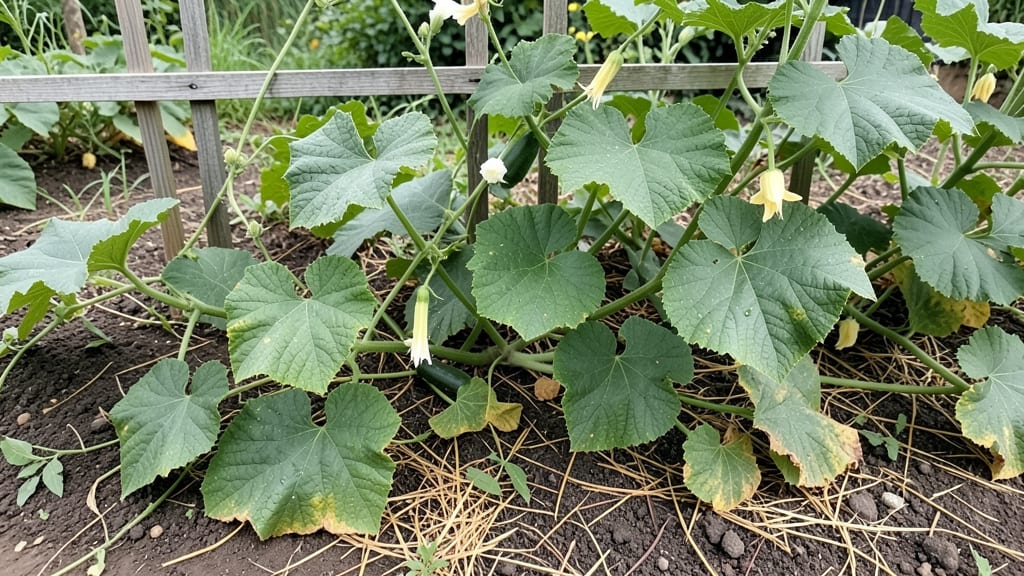
Even when your cucumber plants are thriving, the not flowering problem still crashes the party—no blooms mean no fruit, and I’ve seen this happen more times than I can count, even with experienced gardeners. 🌱 The good news?
Most of the time, it’s a simple fix tied to light, heat, or nutrients—none of which require a degree in botany.
Here’s the thing—cucumbers need full sun (6+ hours daily) and warm soil (at least 65°F) to trigger flowering. Too much nitrogen? Your plants grow lush leaves but skip the flowers entirely.
Even pruning too aggressively can confuse them. I’ve had cucumbers bounce back within 2-3 weeks of adjusting just one of these factors.
You’ll see those first delicate yellow blooms appear within 7-10 days of making the right tweaks—hand-pollinating helps if bees aren’t visiting. The key is acting fast before vines get too leggy. Trust me, once you spot those flowers, the rest is just waiting for the harvest.
Works for all cucumber varieties, from slicers to picklers, and in containers or ground beds. Let’s troubleshoot step by step—your future salads are counting on it.
Why it happens
Cucumbers are prolific producers—but only when they’re happy! If your plants are putting out lush green leaves but no flowers, the culprit is likely one (or more) of these common environmental or biological stressors.
Understanding the root causes of cucumber flowering failure is the first step to reviving your harvest. Let’s dig in!
🌡️ Temperature Stress: Too Hot or Too Cold
Cucumbers are warm-season crops, thriving in temperatures between 70–90°F (21–32°C) during the day and 60–70°F (15–21°C) at night. When temperatures dip below 50°F (10°C) or climb above 95°F (35°C), flowering grinds to a halt.
- Cold shock: Chilly nights (<50°F) disrupt pollination hormones, causing buds to drop before opening. Early spring or late fall plantings often suffer.
- Heat stress: Above 90°F, pollen production weakens, and flowers may form but fail to set fruit. High humidity in heatwaves can also promote fungal diseases that kill blooms.
- Solution: Use row covers for early plantings or shade cloth (30–50%) in peak summer. Choose heat-tolerant varieties like ‘Straight Eight’ or ‘Marketmore 76’.
☀️ Insufficient Sunlight: The Energy Crisis
Cucumbers are sun-worshippers, needing 6–8 hours of direct sunlight daily to fuel flowering. Shade—from trees, buildings, or even dense foliage—starves plants of the energy needed to produce blooms.
- Signs: Leggy vines, pale leaves, and buds that form but abort. Plants may also produce male flowers only (which don’t bear fruit) in low light.
- Solution:
- Move containers to sunnier spots or prune nearby obstacles.
- Use reflective mulch (white plastic) to bounce light onto vines.
- Supplement with a grow light (12–14 hours/day) if growing indoors.
💧 Watering Woes: Too Much or Too Little
Water stress—whether from drought or soggy soil—disrupts cucumber flowering. These plants need consistent moisture to develop blooms and fruit, but extremes throw a wrench in the process.
| Issue | Effect on Flowering | Fix |
|---|---|---|
| Underwatering | Plants conserve energy by dropping buds. Soil cracks and wilting leaves appear. | Water deeply 1–2 inches when the top inch of soil is dry. Use drip irrigation for steady moisture. |
| Overwatering | Root rot blocks nutrient uptake, leading to weak or no flowers. Yellow leaves and mushy stems signal trouble. | Ensure well-draining soil (amend with compost or perlite). Water only when the top 2 inches are dry. |
| Inconsistent watering | Fluctuating moisture confuses the plant, causing buds to abort mid-development. | Mulch with straw to retain even moisture. Stick to a schedule (e.g., every 2–3 days in heat). |
🌱 Nutrient Imbalances: Starving for the Right Fuel
Cucumbers are heavy feeders, and a skewed nutrient profile can halt flowering. The biggest offenders?
- Low phosphorus (P): Phosphorus powers flower and fruit development. Symptoms: Dark green leaves with purple stems or leaf undersides. Buds form but drop.
- Excess nitrogen (N): Too much N fuels leafy growth at the expense of flowers. Symptoms: All leaves, no blooms; vines grow long but weak.
- Solution:
- Test soil with a DIY kit or send a sample to a lab. Aim for a balance like 10-10-10 or 5-10-10 NPK.
- Add bone meal (for P) or composted manure at planting. Side-dress with kelp meal mid-season for a phosphorus boost.
- Avoid fresh manure—it can burn roots and disrupt flowering.
🐝 Pollination Problems: Missing the Matchmakers
Cucumbers rely on bees, butterflies, or wind to pollinate flowers. Without these helpers, blooms may appear but fail to set fruit.
- Male vs. female flowers: Cucumbers produce male flowers first (small, with a stem) and female flowers later (with a tiny cucumber at the base). If bees aren’t around, female flowers won’t pollinate.
- Solutions:
- Hand-pollinate: Use a soft paintbrush to transfer pollen from male to female flowers in the morning (when they’re open).
- Attract pollinators: Plant bee-friendly flowers nearby (e.g., marigolds, borage, or nasturtiums). Avoid pesticides!
- Choose parthenocarpic varieties: These (like ‘Diva’ or ‘Sweet Success’) produce fruit without pollination.
🌿 Plant Age and Stress: Too Young or Overburdened
Cucumbers need time to mature before flowering. If plants are too young or overcrowded, they’ll focus on survival—not reproduction.
- Seedlings: Wait until plants have 5–7 true leaves and are at least 3–4 weeks old before expecting flowers.
- Overcrowding: Plants spaced too closely (less than 12–24 inches apart) compete for nutrients, leading to weak growth and no blooms.
- Solution:
- Thin seedlings to the strongest plant per hill.
- Use trellises to elevate vines—this improves air circulation and reduces stress.
- If transplanting, harden off seedlings gradually to avoid shock.
🦠 Disease and Pest Pressure: Silent Flower Killers
Pathogens and pests can drain a cucumber’s energy, leaving it too weak to flower. Keep an eye out for:
- Powdery mildew: White fungal growth on leaves blocks sunlight, weakening the plant. Fix: Spray with <
Quick Fixes for Stubborn Cucumbers
If your cucumber vines are throwing a tantrum by refusing to flower, don’t panic—there’s a solution for every stubborn case! Below, we’ve mapped out the most common causes of cucumber flowering failures and the practical fixes to get those blossoms popping.
Plus, we’ll share prevention tips to keep your plants happy and productive all season long.
🌡️ Temperature Troubles? Adjust the Climate
Cucumbers are warm-weather babies—they need consistent temps between 70–90°F (21–32°C) to set flowers. If nights dip below 55°F (13°C) or days stay too cool, they’ll sulk and skip flowering.
How to Fix It:
🔥 Extend the growing season – Use row covers or cloches to shield plants from chilly nights. 🍳 Move potted cucumbers – If growing in containers, relocate them to a sunny, sheltered spot during cool mornings. 👨🍳 Warm the soil – Bury a black plastic mulch or use soil warming cables (especially in early spring). 🌡️ Avoid late planting – Start seeds 2–3 weeks after your last frost when soil is reliably warm.
💡 Prevention Tip:
> Plant heat-loving varieties like ‘Straight Eight’ or ‘Marketmore’—they tolerate warmth better than others!
☀️ Not Enough Sun? Give Them Light Love
Cucumbers are sun-worshippers—they need 6–8+ hours of direct sunlight daily. Shady spots = no flowers, just lush (but useless) leaves.
How to Fix It:
🔥 Prune nearby plants – Trim back tall trees, bushes, or competing veggies blocking sunlight. 🍳 Rotate containers – If growing in pots, turn them daily so all sides get equal light. 👨🍳 Use reflective surfaces – Place white reflective mulch or mirrors near plants to bounce extra light. 🌞 Choose the sunniest spot – Even a south-facing window or greenhouse corner works for container grows.
💡 Prevention Tip:
> Avoid planting cucumbers under permanent shade (like under eaves or dense fences).
💧 Water Woes? Keep It Consistent
Fluctuating moisture stresses cucumbers, causing them to drop buds before they open. Too much or too little water = no flowers!
How to Fix It:
🔥 Water deeply & regularly – Aim for 1–2 inches (2.5–5 cm) per week, keeping soil evenly moist (not soggy). 🍳 Use drip irrigation – Soaker hoses or drip lines deliver water straight to roots without wetting leaves (which can cause disease). 👨🍳 Mulch heavily – Spread straw or wood chips to retain moisture and cool roots. ⏰ Water in the morning – Avoid evening watering to prevent fungal issues.
💡 Prevention Tip:
> Check soil moisture with your finger—if the top 1 inch (2.5 cm) is dry, it’s time to water!
🌱 Poor Soil or Nutrients? Feed Them Right
Cucumbers need rich, fertile soil packed with phosphorus (for flowers) and potassium (for fruit). If the soil is lacking, they’ll focus on leaves instead.
How to Fix It:
🔥 Test your soil – Use a DIY soil test kit or send a sample to your local extension office. 🍳 Add compost or manure – Work in 2–3 inches of compost before planting. 👨🍳 Use a balanced fertilizer – Switch to a 5-10-10 or 3-4-6 formula (high in phosphorus) when flowers appear. 🌱 Top-dress with banana peels – Bury chopped peels near plants for a potassium boost.
💡 Prevention Tip:
> Avoid over-fertilizing with nitrogen—it promotes leafy growth at the expense of flowers!
🐝 No Pollinators? Hand-Pollinate Like a Pro
Even if flowers appear, lack of bees or wind can prevent pollination. Cucumbers are self-pollinating but need a little help sometimes.
How to Fix It:
🔥 Invite pollinators – Plant bee-friendly flowers (like marigolds or nasturtiums) nearby. 🍳 Hand-pollinate – Gently tap flowers with a paintbrush or shake plants lightly in the morning. 👨🍳 Try a fan – Place a small fan on low near plants to mimic wind pollination.
💡 Prevention Tip:
> If growing indoors, place a small bowl of sugar water near plants to attract fruit flies—nature’s pollinators!
🌿 Overcrowded or Stressed? Give Them Space
Cucumbers need room to breathe. Overcrowding leads to poor air circulation, disease, and skipped flowers.
How to Fix It:
🔥 Thin seedlings – Space cucumbers 12–24 inches apart (check variety needs). 🍳 Prune aggressively – Remove suckers (side shoots) to focus energy on main vines. 👨🍳 Train vines – Use trellises or cages to improve airflow and sunlight penetration.
💡 Prevention Tip:
> Plant bush varieties (like ‘Bush Champion’) if space is limited—they stay compact!
With these fixes, your cucumber plants should burst into bloom in no time! 🌸 Remember, consistency is key—once they start flowering, keep up the care to ensure plump, productive cucumbers all season.
Frequently asked questions
Why are my cucumber plants growing leaves but no flowers?
This usually happens when your plants are getting too much nitrogen or not enough phosphorus. Nitrogen promotes leafy growth while phosphorus encourages flowering. Try switching to a balanced fertilizer with equal parts NPK or add bone meal to boost phosphorus. Also check your sunlight—cucumbers need 6-8 hours of direct sun daily to trigger blooms!
How do I encourage my cucumber plants to flower faster?
Start by ensuring consistent warmth—cucumbers thrive in 70-90°F temperatures. Move potted plants to sunnier spots, water deeply 1-2 inches weekly, and avoid over-fertilizing with nitrogen. For extra help, hand-pollinate with a soft brush if bees aren't visiting. You should see flowers in 7-10 days with these adjustments!
Can I fix my cucumber plants if they've been flowering but then stopped?
Yes! Sudden stops usually mean temperature stress or water issues. Check your soil moisture—fluctuations cause buds to drop. If nights are too cool (55°F or below), use row covers. For heat stress (above 95°F), provide afternoon shade. Re-establishing consistent conditions often revives flowering within 2 weeks.
Why do some cucumber varieties flower but not others?
Heat-tolerant varieties like 'Straight Eight' or 'Marketmore 76' often flower better in hot climates, while sensitive types may struggle. Also, some varieties are bred to produce more male flowers first, which don't bear fruit. Try planting parthenocarpic varieties like 'Diva' that produce fruit without pollination—great for indoor growing!