
Flowers
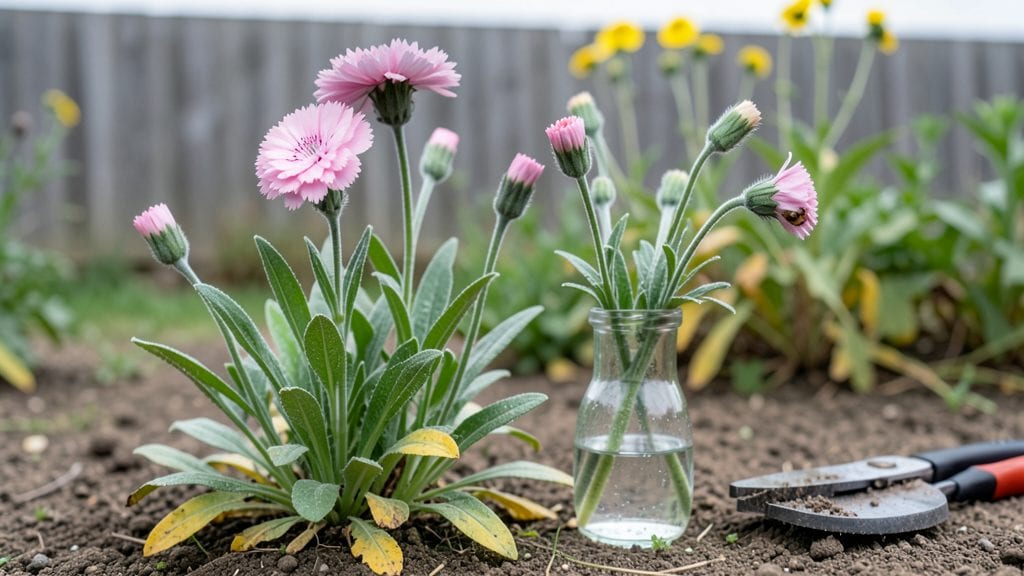
Dianthus cut flowers thrive longest when stems are recut at an angle, placed in lukewarm water with floral preservative, and kept away from direct sunlight or ethylene-producing fruits. Removing lower leaves and changing water every 2-3 days maximizes their 7-10 day vase life while preserving their signature fragrance and vibrant color.
These delicate blooms are surprisingly resilient when you understand their needs—like how their stems act as tiny straws, drawing up water to keep petals plump and fragrant. 🌸 The key is mimicking their natural environment: a slightly angled cut increases water absorption, while avoiding ethylene (found in fruits like apples) prevents premature wilting.
I’ve found that adding a splash of lemon juice to the water can also boost longevity by slowing bacterial growth.
What’s fascinating is how dianthus handles humidity differently than roses. They actually prefer slightly drier air to prevent mold, which is why I always trim those lower leaves—less debris means fewer bacteria in the water.
For styling, pairing them with statice or eucalyptus creates a stunning contrast while keeping the arrangement lightweight and airy.
💡 In This Article
- Science Behind Dianthus Flower Preservation
- Creative Dianthus Arrangement Ideas for Long-Lasting Beauty
Science behind dianthus flower preservation
Here's what's actually happening when you extend your dianthus blooms' life: their stems function like capillary tubes, drawing water upward through microscopic xylem vessels to hydrate every petal. Unlike roses, dianthus stems have a higher transpiration rate, meaning they lose water faster through their leaves and petals.
This is why a 45-degree angled cut exposes more surface area for water uptake—similar to how a straw works more efficiently when cut diagonally. The optimal water temperature is 68-72°F, as cooler water slows transpiration while warmer water speeds up hydration.
What most people don't realize is that dianthus are extremely ethylene-sensitive—this natural plant hormone, released by fruits like apples and bananas, accelerates aging by triggering cell breakdown. Even small amounts can cause petals to yellow in just 24 hours.
Their pigment retention also depends on pH balance: acidic water (pH 4-5) helps preserve those vibrant magenta and pink hues, while alkaline water causes fading.
Compared to roses, which can last 7-14 days with proper care, dianthus typically have a 7-10 day vase life due to their thinner stems and higher moisture demands.
Temperature plays a critical role in cell hydration—keeping arrangements at 65-70°F maintains optimal metabolic activity. Direct sunlight creates a heat stress effect, causing petals to wilt faster by increasing transpiration rates by up to 30%.
The ideal light condition is indirect, bright light, similar to what they'd receive under partial shade in a garden. Humidity matters too: 40-50% relative humidity prevents petal edges from drying out, while higher humidity promotes bacterial growth in the vase water.
This is why removing lower leaves creates a bacterial barrier—those submerged leaves rot quickly, releasing toxins that clog the stem xylem. The science of floral preservatives works through three key components: sugar (for energy), acidifier (to lower pH), and biocide (to prevent bacteria).
For dianthus specifically, adding 1 teaspoon of sugar and 1 drop of bleach per quart of water can extend vase life by 2-3 additional days by providing both energy and microbial protection.
What sets dianthus apart from other cut flowers is their unique epidermal structure. Their petals have a waxy coating that helps retain moisture, but this same coating makes them more susceptible to dust and pollen accumulation.
Regularly dusting petals with a soft brush can maintain their velvety texture and vibrant color. The fragrance preservation works through volatile organic compounds that evaporate faster in dry air—this is why misting arrangements lightly (without soaking) can help maintain that signature clove-like scent for longer periods.
For the most dramatic results, consider this comparison: while roses can tolerate up to 50% ethylene exposure before showing signs of stress, dianthus begin wilting at just 10% ethylene concentration.
This makes them perfect for ethylene-sensitive environments like bedrooms or offices where you want long-lasting blooms without the risk of premature aging. The key takeaway is that dianthus require precise environmental control—think of them as delicate but resilient athletes that perform best with the right training conditions. 💫