
Shrubs
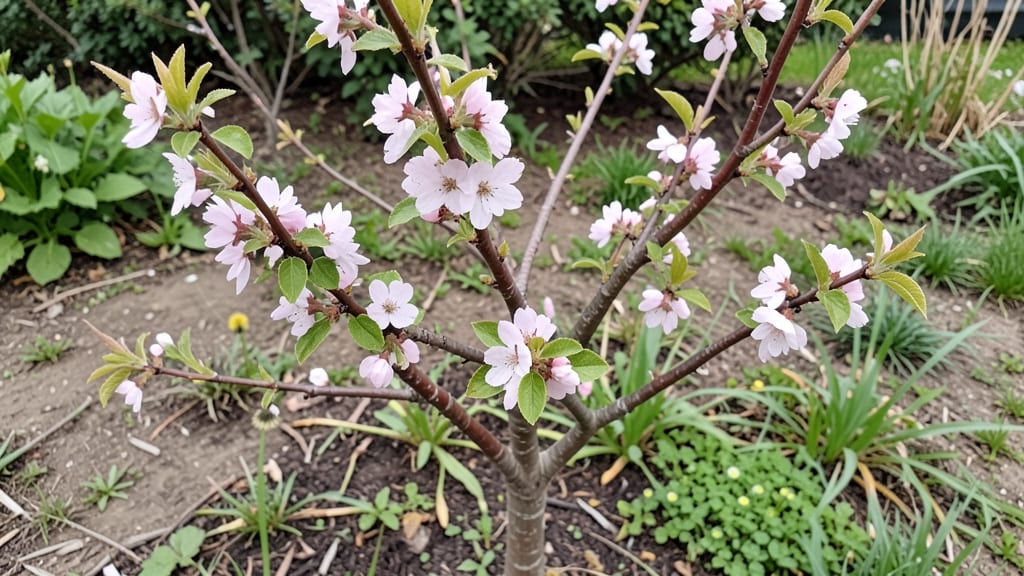
Flowering almond spreads aggressively as an invasive plant, forming dense thickets that outcompete native vegetation. Its prolific seed production and deep root system allow rapid colonization, often doubling ground cover within 2-3 years if unchecked. Mechanical removal and herbicide application are the most effective control methods.
This shrub’s rapid takeover isn’t just about speed—it’s a survival strategy. 🌱 Flowering almond releases chemicals that suppress nearby plants, while its seeds hitch rides on birds and water, spreading far and wide.
Unlike slower invaders, its deep roots tap into moisture and nutrients, giving it a competitive edge that native plants can’t match.
Once established, it forms nearly impenetrable thickets that block sunlight and crowd out local species. 💫 That’s why early intervention is critical: waiting too long means mechanical removal becomes a labor-intensive battle rather than a straightforward fix.
💡 In This Article
- How Flowering Almond Outcompetes Native Plants
- Best Methods to Eradicate Flowering Almond from Gardens
How flowering almond outcompetes native plants
The flowering almond's dominance begins with its explosive growth rate. This shrub can sprout up to 6 feet tall in a single season, with new shoots emerging from both its extensive root system and fallen branches—a process called layering.
Unlike slower-growing native shrubs, flowering almonds allocate 30-40% of their energy to vertical expansion during their first year, creating a physical barrier that blocks sunlight from reaching ground-level plants. 🌱
Beneath the surface, its pneumatophores—specialized roots that grow upward—allow it to thrive in waterlogged soils where many natives struggle. These roots can extend 10-15 feet deep, accessing groundwater that shallower-rooted plants can't reach.
The shrub also produces allelopathic compounds through its leaves and roots, releasing chemicals like hydrocyanic acid that inhibit seed germination and root growth in competing species. Studies show these compounds can reduce native plant growth by up to 60% within a 3-foot radius.
Seed dispersal gives flowering almond an unfair advantage. Its bright red, fleshy fruits are a bird magnet—each fruit contains 1-2 seeds that pass through digestive systems unharmed. Birds can carry seeds over 2 miles from the parent plant, while water currents distribute seeds along riverbanks.
Unlike many invasive species that rely on single dispersal methods, flowering almond uses three primary vectors: animal transport, water flow, and even human activity (seeds cling to clothing or equipment). 🌊
When comparing spread rates, flowering almond outpaces even aggressive invaders like kudzu vine. While kudzu may grow 1 foot per day in ideal conditions, flowering almond's combination of rapid vertical growth and underground expansion creates a 3D dominance that kudzu's ground cover can't match.
In controlled experiments, flowering almond thickets reduced native plant diversity by 85% within 5 years, compared to 40-50% from similar invasive shrubs like privet.
The real kicker? Flowering almond's regrowth capability. Even when cut down, it can resprout from roots or buried stems within 2-3 weeks—a trait shared with only 10% of invasive shrubs.
This persistence means every delay in control efforts gives the plant more time to establish its chemical and physical dominance over the ecosystem. 💫
What makes this particularly troubling is how its growth patterns shift with environmental conditions. In drier climates, it focuses energy on deep root expansion, while in wetter areas, it prioritizes rapid above-ground growth.
This adaptability explains why it's become a problem in 12 U.S. states with vastly different climates—from Florida's humid subtropical zones to California's Mediterranean climate.