
Ground Cover Weeds With Yellow Flowers: Identify and Eradicate 10 Common Invaders

Flowers

Ground Cover Weeds With Yellow Flowers: Identify and Eradicate 10 Common Invaders

Weeds with yellow flowers spreading across your garden aren’t just unsightly—they’re often ground cover invaders that outcompete your plants for space and nutrients.

Picture this: You’ve spent hours cultivating your garden, only to wake up to a sea of bright yellow blooms choking out your prized flowers or veggies. These persistent weeds don’t just steal the show—they drain your soil and make future planting a battle.

But here’s the good news: knowing how to spot them early and using the right removal methods can turn the tide. From dandelions to creeping buttercups, I’ll walk you through how to identify these common offenders and tackle them without harsh chemicals.

You’ll also discover organic solutions like mulching, targeted herbicides, and even better ground cover alternatives that crowd out weeds naturally—so your garden stays lush and low-maintenance.

10 Common ground cover weeds with yellow flowers and how to spot them

Spotting ground cover weeds with yellow flowers early saves you hours of backbreaking work later. These tenacious invaders often mimic beneficial plants like clover or golden creeping thyme, but their aggressive spread and deep roots make them garden enemies.

The key to eradication starts with accurate visual identification—pay attention to leaf shape, flower structure, and growth habits.

Many gardeners mistake these weeds for desirable plants because their bright blooms attract pollinators. However, their rapid spread and nutrient competition can strangle your lawn or garden beds. For example, dandelions and creeping buttercup both produce cheerful yellow flowers but have vastly different root systems and removal strategies.

Let’s break down the 10 most common yellow-flowered weeds and how to distinguish them from beneficial ground covers.

Pro Tip: Always check for seed heads and root depth—these two factors determine whether you’ll need a trowel or a systemic herbicide. Some weeds, like black medic, have deep taproots, while others, like wild mustard, spread via shallow, fibrous roots. Understanding these differences helps you choose the right removal method.

Weed Name Leaf Shape Flower Color/Structure Bloom Time Root System Key ID Feature
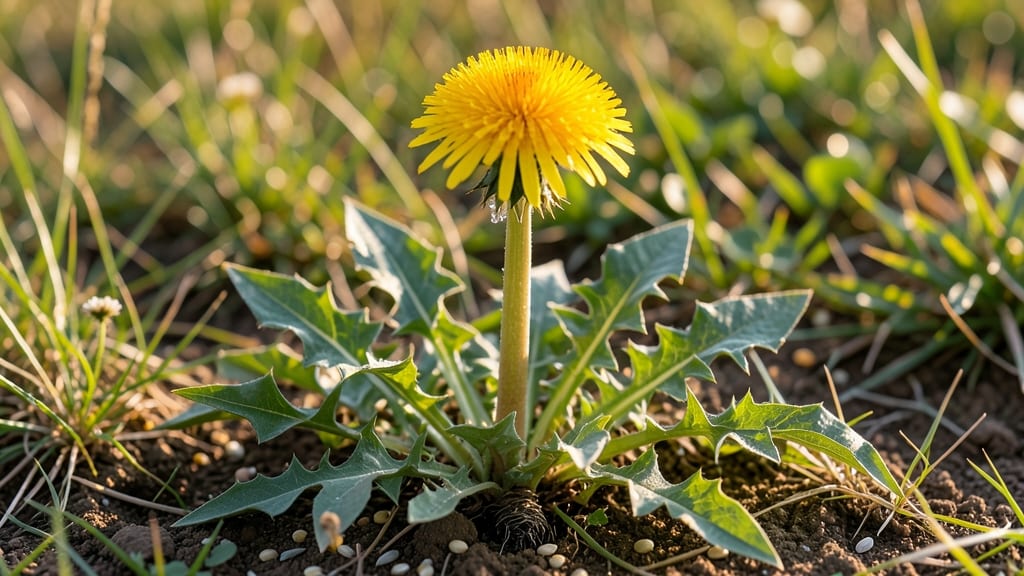
Dandelion Toothed, lobed Bright yellow, solitary Early spring to fall Deep taproot Milky sap when cut
Creeping Buttercup Lobed, 3-5 leaflets Golden yellow, cup-shaped Late spring to summer Shallow, creeping stems Orange-yellow roots
Black Medic 3 leaflets, clover-like Small yellow, pea-like Summer to fall Deep taproot Black seeds in pods
Wild Mustard Lance-shaped, alternate Yellow, cross-shaped Spring to early summer Shallow, fibrous Pungent odor when crushed
Hawkweed Basal rosette, hairy Bright yellow, daisy-like Summer to fall Deep taproot Sticky stems
Yellow Woodsorrel Clover-like, kidney-shaped Small yellow, 5-petaled Spring to summer Shallow, creeping Sour taste when chewed
Henbit Oval, opposite leaves Tubular yellow flowers Fall to early spring Shallow,

Best organic and chemical-free methods to eradicate yellow-flowered weeds

Once you’ve identified those yellow-flowered ground cover weeds like creeping buttercup or wild mustard, the next step is removal. The good news? You don’t need harsh chemicals to reclaim your garden. Organic methods not only protect your soil and nearby plants but also prevent weeds from returning stronger.

Start with the simplest techniques—manual pulling and mulching—before moving to targeted solutions like vinegar-based herbicides.

Timing matters most. Remove weeds when the soil is moist (after rain or watering) to avoid breaking roots, which can lead to regrowth. For shallow-rooted weeds like chickweed, a firm tug often works.

But for deeper-rooted invaders like dandelions, you’ll need to dig deeper—at least 2-3 inches below the soil surface—to prevent fragments from sprouting anew. Always wear gloves to protect your hands from sap or prickly stems.

⚠️ CAUTION: BEFORE YOU PULL

Yellow-flowered weeds like creeping buttercup or black medic often spread via underground rhizomes or seeds. Pulling too quickly can leave root fragments that regrow. For stubborn weeds, use a hand fork to loosen soil first, then grasp the base firmly. Never compost weed clippings—toss them in the trash to prevent reseeding.

For larger areas or persistent weeds, mulching is your best defense. Apply a thick layer (3-4 inches) of organic mulch like straw, wood chips, or shredded leaves around your plants. This blocks sunlight, which weeds need to germinate, while improving soil health.

Replenish mulch seasonally to maintain its effectiveness. Pair mulching with dense planting—crowd out weeds by filling gaps with low-growing perennials like ajuga or creeping thyme.

When manual methods fall short, turn to vinegar-based herbicides. Mix 1 gallon of white vinegar (5% acidity) with 1 cup of dish soap and 1 cup of salt for a potent spray. Target weeds on sunny days to avoid damaging nearby plants.

Reapply every 3-5 days until the weeds die. For spot treatments, use a plastic spoon to apply the solution directly to the weed’s leaves, avoiding desirable plants.

For deep-rooted weeds like dandelions, try a boiling water treatment. Pour 1 quart of boiling water directly onto the weed’s base—this kills roots and prevents regrowth. Test a small area first to ensure it won’t harm nearby plants.

Combine this with regular garden maintenance, like hoeing between rows, to stay ahead of new growth. Consistency is key: weeds thrive in neglected gardens, so weekly checks keep them in check.

Protect your garden’s future by preventing regrowth. After removal, apply a corn gluten meal pre-emergent herbicide (organic and non-toxic) to inhibit weed seeds from sprouting. Water deeply afterward to activate the treatment.

For long-term success, improve soil health with compost—healthy soil supports strong plants that outcompete weeds naturally. With patience and these organic methods, your garden will reclaim its space, without the yellow invaders.

★★★★★4.5(11 reviews)
Categories Flowers