
Pruning
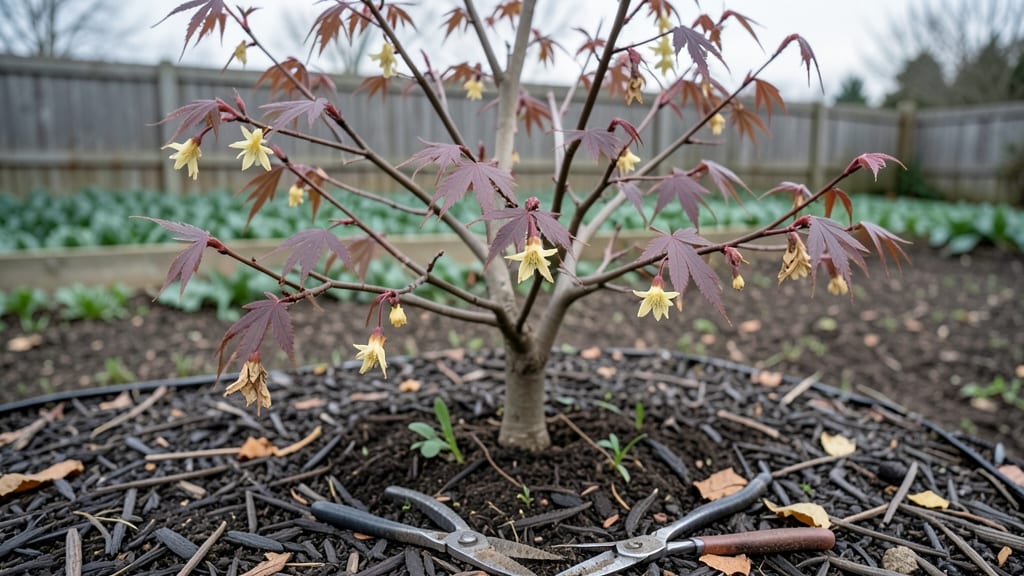
Pruning your flowering maple to keep it blooming isn’t just about cutting branches—it’s about timing cuts to preserve next year’s flowers while shaping the tree for health.
I’ve learned the hard way that wrong-season pruning can mean fewer showy blooms, so I now follow a strict schedule that keeps my tree thriving and covered in spring color. The right approach turns a routine task into a way to guarantee those vibrant blooms year after year.
You’ll need sharp pruning shears, loppers for thicker branches, and a clean saw for larger cuts—all sterilized to avoid disease. The key is working during dormancy (late fall to early spring) when the tree isn’t actively growing, but avoiding late winter cuts that could remove next year’s flower buds.
This timing ensures your tree stays productive while keeping its natural shape intact.
After pruning, you’ll notice new growth emerging within weeks, with stronger branches supporting more blooms. The tree’s canopy opens up, letting sunlight reach the center where flowers often form. Just be patient—it takes a season or two to see the full benefits, but the payoff is worth the effort.
This method works for all flowering maples, whether you’ve got a young sapling or a mature tree. The same principles apply whether you’re shaping a small patio specimen or a large landscape centerpiece. Let’s get those branches trimmed the right way!
📚 In This Guide
- What you need
- Instructions
- Tips and common mistakes
- Wrapping up and next steps
What you need
- ● Pruning shears (bypass) – Sharp, clean, and sterilized (7–10-inch blades for small branches). Required
- ● Loppers – 8–12-inch handles for thicker branches (up to 1.5 inches in diameter). Required
- ● Pruning saw – For branches over 2 inches thick (bow or folding saw with fine teeth). Required
- ● Rubbing alcohol (70% or higher) – For sterilizing tools between cuts to prevent disease. Required
- ● Garden gloves – Heavy-duty, cut-resistant (e.g., nitrile-coated). Required
- ● Step stool or ladder – Extendable, stable, and rated for your weight (if tree is tall). Required for tall trees
- ○ Disposable pruning bags – For collecting debris (1–2 bags, 15–20 gallons each). Optional but helpful
- ○ Sealant (optional) – Pruning paste or tree wound sealant (for cuts larger than 0.5 inches). Optional
- ● Weather check – Prune on a dry, calm day (avoid wind or rain).
- ● Safety glasses – Protects eyes from debris.
- ● Long sleeves/pants – Shields against scratches and sap.
- ● First-aid kit – For minor cuts or sap irritation.
- ● Notebook & pen – To sketch a pruning plan or track cuts.
Step-by-step instructions for pruning flowering maples
Here's how I keep my flowering maples thriving—blooms stay abundant, and the tree stays strong.
Prune at the Right Time for Blooms
Flowering maples bloom on old wood, so timing matters. Prune right after flowering—usually in late spring—when new leaves fully unfurl. This ensures next year's flowers form on last season's growth. If you prune too early, you risk cutting off flower buds before they open.
I use sharp bypass pruners to make clean cuts just above a bud or branch collar. Avoid tearing bark—rough cuts invite disease. For large branches, I wait until late winter when the tree's dormant, but I only remove dead or crossing branches then.
Remove Dead, Diseased, or Weak Growth
Start by scanning the tree for dead branches—they snap easily when bent. Cut these out first, then look for diseased wood (discolored, oozing sap, or fungal spots). Remove these completely, sterilizing your tools with rubbing alcohol between cuts to prevent spreading pathogens.
Next, thin out weak or crossing branches—these compete for energy and can rub against each other, creating wounds. Aim for an open canopy that lets light reach the center. I step back often to visualize the tree's shape—this helps me see what to keep and what to trim.
Shape for Balance and Airflow
Flowering maples respond well to light structural pruning. I focus on maintaining a balanced silhouette—no heavy limbs on one side. For young trees, I encourage a natural vase shape by removing lower branches that grow upward instead of outward.
Never remove more than 25% of the canopy in one season. Over-pruning stresses the tree and reduces flowering. If you're unsure, prune conservatively—you can always remove more later. I also avoid "lion's tailing" (cutting back to a stub)—this leaves ugly scars and weak regrowth.
Clean Up and Protect the Tree
After pruning, rake up all debris to prevent fungal growth in the soil. Disinfect your tools again with rubbing alcohol or a 10% bleach solution to kill lingering spores. Wipe down the tree trunk with a damp cloth to remove sap that could attract pests.
Apply a wound sealant only if the cut is larger than ½ inch—smaller cuts heal naturally. For larger wounds, I use a tree sealant to protect against decay. Water the tree deeply afterward to help it recover from the stress of pruning.
Tips & tricks for perfect flowering maple pruning
A few key strategies will help you maintain your flowering maple's health and ensure those stunning blooms year after year.
Timing is Everything: The late spring timing in Step 1 is crucial because flowering maples bloom on old wood. If you prune too early, you risk removing next year's flower buds before they develop. I always mark my calendar when the tree finishes flowering and new leaves fully unfurl—this is your perfect window. For large branches, remember that late winter pruning is only for removing dead or crossing branches, not for shaping.
Tool Maintenance Matters: Your bypass pruners should be sharp enough to make clean cuts without tearing bark. I keep a small file in my tool bag to sharpen blades between uses. For diseased branches, sterilize your tools with rubbing alcohol between cuts—this prevents spreading pathogens throughout your tree. I also keep a spray bottle of diluted bleach solution (1 part bleach to 10 parts water) for quick disinfection when needed.
Visualizing the Canopy: Step back frequently to visualize your tree's shape, especially when thinning weak or crossing branches. I often step 10-15 feet away to see the overall silhouette. This helps maintain that balanced look while ensuring light reaches the center. For young trees, focus on encouraging outward growth rather than upward branches that can create a congested center.
Wound Care Wisdom: Only apply wound sealant to cuts larger than ½ inch—smaller wounds heal naturally. I've found that using a clean, sharp pruner creates wounds that heal faster than rough cuts. After pruning, I always water the tree deeply to help it recover from the stress. For larger wounds, I use a tree sealant specifically formulated for maples to prevent decay.
Pro Tips for Flowering Maple Pruning
- A few key strategies will help you maintain your flowering maple's health and ensure those stunning blooms year after year.
- Timing is Everything: The late spring timing in Step 1 is crucial because flowering maples bloom on old wood.
- Tool Maintenance Matters: Your bypass pruners should be sharp enough to make clean cuts without tearing bark.
Frequently asked questions
Got questions about pruning your flowering maple? You’re not alone! Here are some of the most common concerns—answered simply and clearly to help you keep your tree thriving and gorgeous.
When’s the best time to prune a flowering maple?
For most flowering maples, late winter or early spring (before new growth starts) is ideal. This timing minimizes stress and reduces the risk of disease. However, if your tree blooms on old wood (like Japanese maples), you can prune lightly in summer after flowering to shape it. Always avoid heavy pruning in fall or winter—it can weaken the tree before it needs to recover for spring.
Can I prune a flowering maple in summer?
Light pruning is fine in summer, but avoid major cuts during peak heat or drought. If you must prune, do it on a cool, cloudy day to reduce stress. Focus on removing dead or diseased branches—this won’t harm blooms for next year. For heavy shaping, stick to late winter/early spring. Pro tip: Water deeply after summer pruning to help the tree recover faster!
What tools do I need for safe pruning?
You’ll want:
- Sharp, clean pruning shears (for small branches)
- Loppers (for medium-sized branches)
- Pruning saw (for thicker branches)
- Disinfectant (like rubbing alcohol) to clean tools between cuts and prevent disease spread
How do I know if I’ve pruned too much?
Over-pruning shows up as excessive leaf drop, weak or sparse new growth, or no blooms the next year. A good rule: never remove more than 25% of the tree’s foliage in one session. If your maple looks stressed (drooping leaves, yellowing), back off and let it recover. Think of pruning like a haircut—too much too soon, and your tree will look (and feel) rough!
What if my flowering maple has pests or disease after pruning?
If you notice black spots, sticky residue (aphids), or peeling bark after pruning, act fast:
- Remove all infected branches (burn or bag them)
- Apply neem oil or fungicide (like copper-based) for pests/disease
- Ensure proper airflow—thin out dense branches to reduce moisture buildup
Wrapping up and next steps
Pruning your flowering maple is a rewarding way to ensure vibrant blooms and a healthy tree year after year! 🌸 By following the right techniques—whether it’s seasonal timing, tool selection, or proper cuts—you’ll support its growth and beauty for seasons to come.
Now that you’re armed with expert tips, grab those shears and get pruning with confidence!
Ready to take it further? Document your progress with photos or sketch a simple pruning plan for next year. Happy gardening! 🌿