
Size
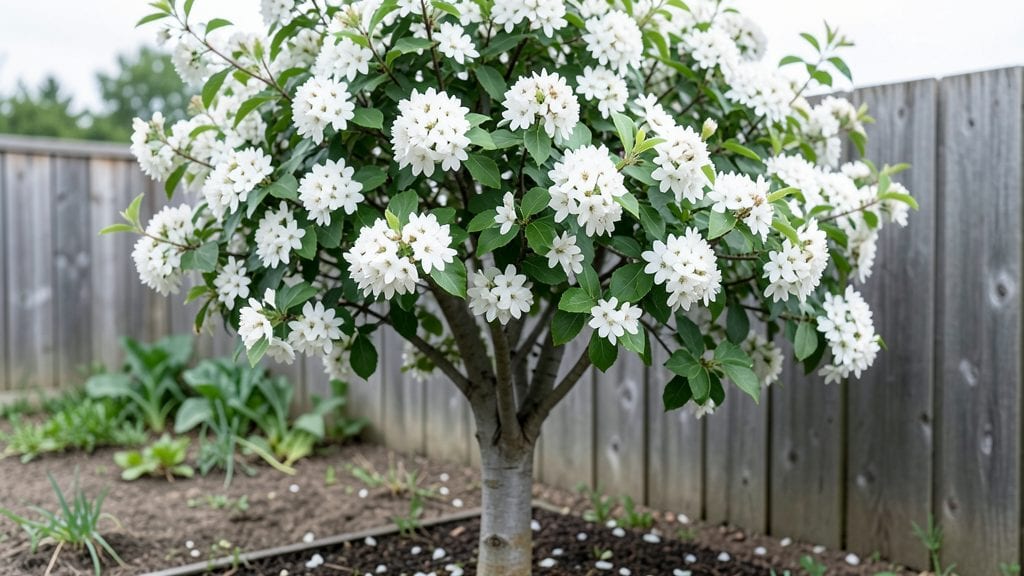
Choosing the right variety for your space makes all the difference—some flowering pears like the Chanticleer stay compact while still delivering stunning blooms, perfect for tight urban gardens where 20-foot spreads would overwhelm. 🌟 I’ve seen Bradford pears reach their full 25-foot height in just 10 years with ideal conditions, but their aggressive root systems can damage sidewalks if planted too close to structures.
For container growing, dwarf cultivars like Little Princess top out at 8 feet, making them ideal for patios or balconies where space is limited. Just remember—even smaller trees need proper drainage and regular pruning to maintain their shape and encourage those showstopping spring flowers.
💡 In This Article
- Factors Influencing Flowering Pear Tree Dimensions
- Best Flowering Pear Tree Varieties for Different Spaces
Factors influencing flowering pear tree dimensions
The dimensions of a flowering pear tree are shaped primarily by its root system development and canopy growth patterns. These trees establish deep taproots in their first 3-5 years, allowing them to access water and nutrients from 6-10 feet below ground.
This deep rooting explains why they thrive in well-drained soils but struggle in heavy clay—roots need oxygen, and compacted soil restricts their expansion. The canopy spreads through lateral roots that grow horizontally, creating the wide footprint characteristic of mature specimens. 🌱
Climate zones play a dramatic role in growth rates. In USDA Zones 5-8 (where flowering pears excel), trees in warmer southern climates (like Zone 8) can grow 24-30 inches per year, while those in colder northern zones (Zone 5) may only add 12-18 inches annually.
The difference comes from longer growing seasons—trees in Zone 8 have 180-200 frost-free days compared to Zone 5's 120-140 days. Watering habits also matter: consistent moisture during the first two years of growth can increase height by 20-30% compared to drought-stressed trees.
Pruning techniques directly control both height and spread. Central leader pruning (removing lower branches to maintain a single trunk) keeps trees narrower but taller, ideal for Bradford pears that can reach 25 feet with this method.
In contrast, open-center pruning (removing the central leader) creates a bushier, wider tree perfect for Chanticleer varieties, which naturally stay 15-20 feet tall but spread 20-25 feet. The key is timing—pruning in late winter before bud break stimulates new growth, while summer pruning slows expansion.
Soil composition affects growth in subtle but critical ways. Trees planted in loamy soil with pH 6.0-7.0 grow 15-20% faster than those in sandy or rocky soils because nutrients like nitrogen and phosphorus are more available.
Organic matter content also matters: soils with 3-5% organic material produce trees with 20% denser canopies due to improved microbial activity in the root zone. This is why amending clay soils with compost can transform a slow-growing tree into a vigorous specimen.
Seasonal growth patterns reveal another layer of control. Flowering pears experience two main growth flushes: a rapid spring burst after flowering (March-May) and a slower summer growth phase (June-August). The spring flush accounts for 60-70% of annual height increase, while summer growth focuses on canopy width.
This explains why trees planted in early spring gain 3-5 inches more height in their first year compared to fall plantings. Understanding these cycles helps gardeners time pruning and fertilization for maximum impact.
What most people overlook is how competition from neighboring plants stunts growth. A flowering pear planted within 15 feet of another tree will grow 30-40% slower due to root competition for water and nutrients.
This is why landscape designers recommend 20-foot spacing between specimens—giving roots room to establish prevents the "crowded tree" syndrome where growth becomes stunted and branches weaken. 🌿