
Pests and Diseases
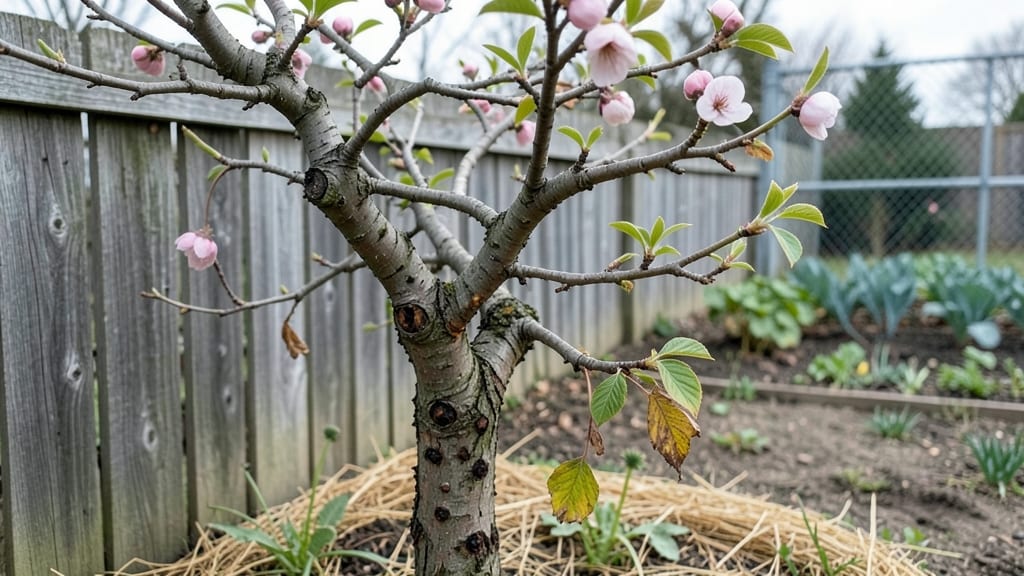
Those stunning spring blooms suddenly look sad—this is often the first sign of the flowering plum tree problems I’ve seen in my own neglected tree, and the fixes aren’t as scary as they seem.
The key is spotting the clues early: sticky leaves mean pests, brown spots mean fungus, and bare branches mean pruning mistakes.
Most problems boil down to three things: what’s eating your tree, what’s infecting it, or what you’re doing (or not doing) to care for it. Aphids cluster like tiny green snowballs, scale hides under leaves like armor, and fungal spots start as freckles before turning into ugly splotches.
Even something as simple as overwatering or pruning at the wrong time can trigger bigger issues down the road.
You’ll learn to turn those problems around with targeted fixes—sprays that actually work, pruning that encourages blooms, and soil tweaks that keep roots happy. By the end, your tree will be back to its dramatic, blossom-filled best, and you’ll spot trouble before it spreads.
Let’s get your plum tree thriving again.
This works for any flowering plum, whether it’s a mature tree or a young sapling. The same principles apply—just adjust the scale. No more guessing what’s wrong or waiting too long to act. Your tree’s next spring could be its best yet.
Root Causes Of Plum Tree Struggles
Flowering plum trees (Prunus mume) are stunning additions to any landscape, but like all plants, they’re vulnerable to stress when their needs aren’t met. Understanding why these issues arise is the first step to prevention and recovery.
Below, we break down the science behind common problems—from wilting blooms to pest infestations—so you can address them with precision.
🌡️ Environmental stress & extreme conditions
Flowering plum trees thrive in USDA Zones 5–9, but they’re sensitive to sudden shifts in temperature, humidity, and sunlight. When conditions stray from their ideal range, the tree’s physiological processes—like photosynthesis and nutrient uptake—get disrupted.
- Heat or drought stress:
The tree’s roots struggle to absorb water, causing wilting leaves or premature bloom drop.
High temperatures also accelerate transpiration (water loss through leaves), dehydrating the tree faster than it can replenish moisture. Actionable fix: Deep watering 1–2 times per week (1–1.5 inches per session) and mulching with 2–3 inches of organic matter to retain soil moisture.
- Cold damage or late frosts:
Plum trees bloom early, often in late winter or early spring, making them vulnerable to frost damage (temperatures below 28°F).
Frost can blacken buds or kill new growth, stunting the tree’s ability to photosynthesize. Actionable fix: Plant in a sheltered location (e.g., near a south-facing wall) or use frost cloth during critical bloom periods.
- Poor air circulation:
Dense foliage or planting too close to structures can trap humidity, creating a fungal-friendly environment. Poor airflow slows evaporation, leaving leaves damp longer—ideal for powdery mildew or bacterial blight. Actionable fix: Prune to open the canopy and space trees 15–20 feet apart.
🌱 Soil & nutrient imbalances
A flowering plum tree’s health hinges on balanced soil chemistry. Deficiencies, excesses, or compacted soil disrupt root function, leading to yellowing leaves, stunted growth, or susceptibility to pests.
- Nutrient deficiencies:
Plum trees need macronutrients (N-P-K) and micronutrients (iron, zinc, manganese) for vibrant blooms and strong wood. Common deficiencies include:
Symptom Likely Cause Solution Yellowing leaves (chlorosis), especially between veins Iron or manganese deficiency (common in alkaline soil) Apply chelated iron or sulfur to lower soil pH (ideal: 6.0–7.0). Use foliar sprays for quick results. Purple or red leaves Phosphorus deficiency (poor root development) Add bone meal or compost rich in phosphorus. Test soil every 2–3 years. Stunted growth, weak branches Nitrogen deficiency (pale green leaves, slow bloom) Use a balanced fertilizer (10-10-10) in early spring. Avoid over-fertilizing—excess nitrogen attracts pests. - Compacted or waterlogged soil:
Heavy clay or poor drainage smothers roots, cutting off oxygen and nutrients. This leads to root rot (a fungal infection) or nutrient leaching. Actionable fix:
- Amend soil with compost or sand to improve aeration.
- Ensure proper drainage by planting on a slight mound or using raised beds.
- Avoid overwatering—soil should be moist but not soggy.
🐛 Biological threats: pests & pathogens
Flowering plum trees attract pests and diseases when their defenses are weakened. These invaders exploit stress signals (like damaged leaves or weak roots) to colonize the tree.
- Pests (e.g., aphids, scale, borers):
Sap-sucking insects like aphids or scale inject toxins that cause curling leaves or sticky honeydew (a sign of infestation). Wood-boring beetles (e.g., plum curculio) tunnel into branches, creating entry points for fungal infections.
Why it happens: Pests target stressed trees (drought, poor nutrition) or young, tender growth. Overhead watering also encourages pests by keeping foliage damp. Actionable fix:
- Use neem oil or insecticidal soap for soft-bodied pests (aphids, mites).
- Apply dormant oil in late winter to smother overwintering eggs.
- Install tree bands to trap crawling pests before they reach the trunk.
- Diseases (e.g., bacterial blight, powdery mildew):
Pathogens like Xanthomonas (bacterial blight) thrive in wet, warm conditions, entering through wounds or natural openings (e.g., lenticels on branches). Powdery mildew, a fungal disease, spreads via wind or splashing water, coating leaves in a white, powdery film that blocks sunlight.
Why it happens: Poor sanitation (leaving fallen leaves/petals) or overhead irrigation creates ideal conditions for spores to land and germinate. Actionable fix:
- Remove and dispose of infected leaves (do not compost).
- Apply copper fungicide (for bacterial blight) or sulfur-based sprays (for mildew) at the first sign of symptoms.
- Water at the base of the tree (avoid wetting foliage).
🌿 Pruning & physical damage
Incorrect pruning or physical trauma (e.g., storm damage, lawnmower strikes) creates entry points for pathogens and disrupts the tree’s natural structure. Poor pruning practices also overstress the tree, reducing its ability to recover.
- Improper pruning cuts:
Cutting too close to the trunk (within 1/4 inch of the branch collar) or making ra
Quick Fixes for Flowering Plum Tree Troubles
When your flowering plum tree starts showing signs of stress—whether it’s drooping branches, unusual spots, or missing blossoms—acting fast can save its beauty (and even its life!).
Below, we break down the most common issues and how to tackle them with practical, step-by-step solutions. Prevention tips are included to keep your tree thriving for years to come.
🌿 Fungal Blights & Leaf Spots: Stop the Spread
🔥 Cause: Overhead watering, humid climates, or weak tree immunity invite fungal invaders like powdery mildew or bacterial leaf spot. These create white, brown, or greasy patches on leaves.
🍳 How to Fix It:
- Prune infected branches 🔪
- Use sterilized pruners (wipe with rubbing alcohol between cuts) to remove all spotted or yellowed leaves. Dispose of them in the trash (not compost).
- Cut back to healthy green tissue—never leave stubs.
- Apply fungicide 🛡️
- Spray with a
- Reapply every 7–10 days until new growth appears.
- Improve airflow 🌬️
- Thin out dense branches to let sunlight and air circulate.
- Space trees
💡 Prevention Tips:
- Water at the base (not overhead) and early in the day so leaves dry quickly.
- Avoid wetting foliage during rainy seasons—use a soaker hose instead of sprinklers.
- Plant in full sun (6+ hours/day) to reduce humidity around the tree.
🐜 Pest Infestations: Kick Out the Invaders
🔥 Cause: Aphids, scale insects, or Japanese beetles suck sap, causing sticky residue (honeydew), curled leaves, or premature leaf drop.
👨🍳 How to Treat It:
- Blast pests off 💦
- Spray leaves with a
- Introduce natural predators 🐞
- Ladybugs and lacewings
- Use systemic insecticide (last resort) 🛡️
- For severe infestations, apply
🌡️ Prevention Tips:
- Monitor weekly—check undersides of leaves where pests hide.
- Remove fallen leaves (pests overwinter in them!).
- Avoid broad-spectrum sprays (they kill beneficial bugs too).
🌸 Poor Blooming: Bring Back the Blossoms
🔥 Cause: Flowering plum trees need sun, nutrients, and dormancy to bloom. Over-fertilizing, shade, or late pruning can stunt flowers.
🥘 How to Revive It:
- Prune at the right time ⏰
- Trim
- Remove dead or crossing branches to improve air flow.
- Fertilize smartly 🌱
- Use a
- Avoid high-nitrogen (like lawn fertilizer)—it promotes leaves over flowers.
- Ensure full sun ☀️
- Move the tree if it’s in
- Thin nearby trees/shrubs blocking sunlight.
✨ Pro Tip:
- Dormant oil spray in late winter can boost next year’s blooms by protecting against pests/diseases.
🌊 Root Rot & Overwatering: Save the Roots
🔥 Cause: Soggy soil from poor drainage or overwatering suffocates roots, leading to wilting, yellow leaves, or mushrooms at the base.
🔪 How to Fix It:
- Check the soil 🏷️
- Dig 6 inches down—if it’s
- Stick a screwdriver in; if it goes in easily, the soil is too wet.
- Improve drainage 🚿
- Mix sand or perlite into heavy clay soil (or plant in a well-draining pot if in a wet area).
- Adjust watering 💧
- Water
- Use a moisture meter to avoid guesswork.
🎯 Prevention Tips:
- Plant in well-draining soil (avoid low spots where water pools).
- Mulch properly—keep mulch 2–3 inches away from the trunk to prevent rot.
⚠️ Emergency Care: When the Tree Is Dying
If your plum tree is severely infected, wilting, or completely bare, act fast:
- Prune aggressively 🪓—remove all dead/diseased wood (sterilize tools between cuts).
- Replant if roots are rotted 🌱—dig up and replant in fresh, amended soil.
- Consult an arborist 🌳—for persistent issues like canker disease or root damage.
Remember: Most flowering plum tree problems are preventable with proper care. Once you diagnose the issue, act quickly—these trees are resilient but need your help to bounce back!
Frequently asked questions
Why are my flowering plum tree leaves turning yellow?
Yellow leaves often signal nutrient deficiencies like iron or nitrogen, or poor drainage causing root stress. Test your soil—alkaline soil (pH above 7.0) blocks iron uptake, while soggy soil smothers roots. Apply chelated iron for chlorosis or amend compacted soil with compost and sand to improve aeration. Mulch helps retain moisture and nutrients!
How do I know if my tree has fungal disease?
Watch for white powdery coatings (powdery mildew), dark spots (leaf spot), or sticky residue (sooty mold). Fungal diseases thrive in damp, humid conditions, so prune infected branches first with sterilized tools and apply neem oil or copper fungicide. Always water at the base, not overhead, to prevent leaf wetness.
Can I save my plum tree if it's completely bare?
Yes! Check for signs of life like green shoots or buds—even bare trees can recover. Aggressively prune dead branches with sterilized shears, then fertilize lightly with a balanced 10-10-10 formula. Ensure proper watering (deep but infrequent) and protect from pests. If roots are rotted, replant in well-draining soil. Patience is key—new growth often appears within weeks!
What's the best way to prevent pests like aphids?
Prevention starts with strong tree health: water deeply, prune for airflow, and avoid over-fertilizing. Introduce natural predators like ladybugs or lacewings, and monitor leaves weekly for early signs. Use a strong jet of water to dislodge aphids, or apply insecticidal soap as a last resort. Neem oil sprays also deter pests while being gentle on beneficial insects.