
Blooming
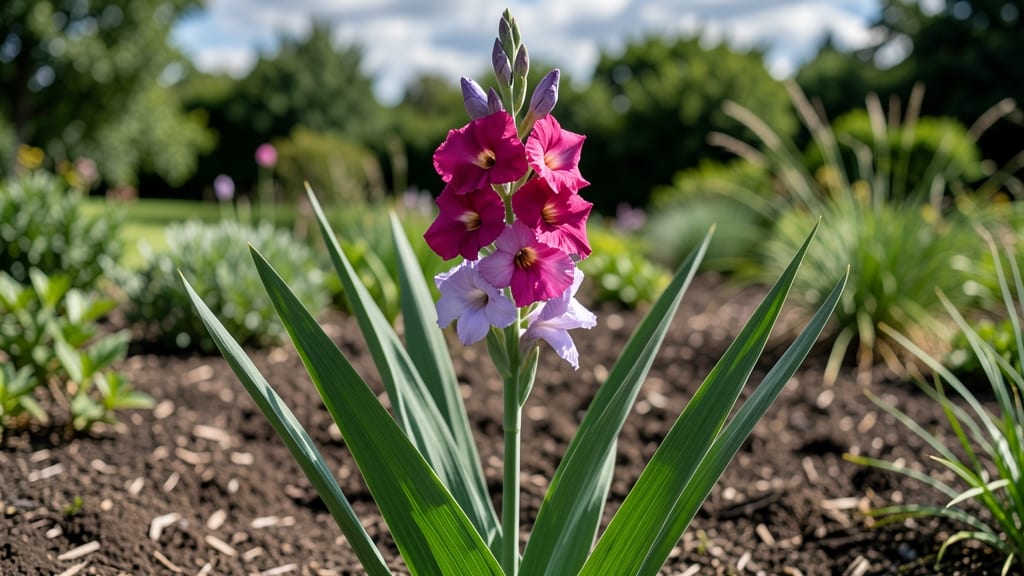
Your gladiolus flowering time depends on when you plant and which variety you choose, but the magic happens between July and September when those dramatic spikes burst into color.
Want to enjoy vibrant gladiolus blooms all season long? Timing is everything—plant too early or late, and you’ll miss their stunning displays. Here’s the exact month-by-month schedule to maximize your gladiolus flowering time by variety, so you can plan your garden like a pro.
Most gardeners in USDA Zone 6a plant gladiolus corms in April or May, but the blooming window shifts with your location.
Early varieties like 'Green Star' may start as soon as June, while late bloomers like 'Black Star' hold out until September, giving you a three-month show if you mix them right.
In this guide, I’ll break down the best planting times for your region, how to troubleshoot delayed blooms, and the five simple tricks to stretch your flowering season from summer straight into fall.
Gladiolus flowering time by variety: exact months for peak blooms
If you’ve ever planted gladiolus corms hoping for a spectacular summer display, only to be disappointed by sparse blooms, the issue likely lies in timing.
Different gladiolus varieties bloom at distinct times, and knowing their exact flowering windows lets you plan a garden that bursts with color from early summer through fall. Whether you’re a beginner or a seasoned gardener, matching the right variety to your planting schedule is the secret to consistent, show-stopping blooms.
Gladiolus flowers typically bloom 80–120 days after planting, but their exact timing depends on the variety and climate. Early bloomers like 'Green Star' might grace your garden in late June, while late-season varieties like 'Black Star' can extend your color palette into September or October.
By strategically selecting a mix of early, mid, and late-season varieties, you can create a continuous bloom sequence that keeps your garden vibrant for months.
| Variety | Bloom Time | Height (ft) | Color | Notes |
|---|---|---|---|---|
| 'Green Star' | Late June - Early July | 3-4 | Green with white | Early bloomer; great for cutting |
| 'Picasso' | Mid-July - Early August | 4-5 | Multi-colored (pink, white, yellow) | Mid-season favorite; heat tolerant |
| 'Black Star' | Late August - September | 4-5 | Deep purple-black | Late-season drama; extends fall color |
| 'White Prosperity' | Early July - Mid-July | 3-4 | Pure white | Classic choice; great for bouquets |
| 'Prelude' | Mid-July - Late July | 3-4 | Pink with white | Dwarf variety; ideal for borders |
| 'Avalanche' | Late July - Early August | 4-5 | White with pink edges | Long-lasting blooms; excellent for arrangements |
For northern climates (USDA zones 3–6), aim to plant early varieties like 'Green Star' in late April to early May, while late bloomers like 'Black Star' should go in the ground by mid-May to early June. This timing ensures they bloom before the first frost.
In warmer zones (7–11), you can extend planting into June or even early July for fall blooms, but avoid planting too late—gladiolus corms need 6–8 weeks of warm soil to establish roots before winter.
Pro tip: Succession planting is your best friend for non-stop color. Plant a new batch of corms every 2–3 weeks starting in early spring. For example, if you plant 'Green Star' in early May, follow up with 'Picasso' in late May and 'Black Star' in early June.
This staggered approach ensures fresh blooms appear every 3–4 weeks, keeping your garden lively from late June through September.
Don’t overlook soil temperature—gladiolus corms won’t sprout until the soil reaches 60°F (15°C). In cooler regions, use black plastic mulch or a cold frame to warm the soil faster. If you’re in a hot, dry climate
How to adjust gladiolus planting time for your climate Zone
Gladiolus plants thrive when planted at the right time, but the perfect window varies dramatically across the USDA climate zones 3–11. In Zone 6a, where I garden, I plant mine in early May, but gardeners in Zone 10 can enjoy fall blooms with late-summer planting.
The key is understanding your last frost date and your variety’s days to bloom—typically 90–150 days depending on the cultivar.
For example, early-blooming varieties like 'Green Star' need 90–100 days to flower, while late-season types like 'Black Star' take 120–150 days. If you plant too early, your gladiolus may bolt in heat; too late, and frost will cut blooms short.
Let’s break down how to calculate your ideal planting window step by step.
⚠️ callout warning
Many gardeners plant gladiolus corms in spring as soon as soil is workable, but this often leads to premature bolting or stunted growth. Wait until 4–6 weeks before your last frost date—this ensures roots establish before heat stress hits. In Zone 7b, that’s mid-April; in Zone 10, it’s late August for fall blooms. Pro Tip: Use a soil thermometer—gladiolus corms need 60°F+ soil temps to thrive.
Start by checking your USDA zone and average last frost date (find yours via the National Oceanic and Atmospheric Administration (NOAA) or local extension office). Subtract 100–120 days from your first frost date to find your latest planting window.
For instance, in Zone 5a (first frost: October 10), subtract 120 days to land on June 10 for late-summer blooms.
Next, adjust for your gladiolus variety. Early bloomers like 'Picasso' (90 days) can be planted 4–6 weeks earlier than late bloomers like 'White Friendship' (120 days). In Zone 8a, I plant early varieties in March and late varieties in May to stagger blooms from June to September.
Succession planting like this extends your gladiolus flowering time by months.
Don’t overlook local microclimates. A south-facing slope warms faster than a shady corner, so plant heat-loving varieties 2–3 weeks earlier in sunny spots. Conversely, in Zone 9b, where I’ve seen 100°F+ summers, I plant late varieties in September for cool-season blooms before winter.
Always monitor soil moisture—gladiolus corms rot in soggy conditions, so amend heavy soil with compost for drainage.
Finally, watch for delayed flowering signs like tall stems but no buds or pale, leggy growth. These often mean inadequate sunlight (gladiolus needs 6+ hours of full sun) or nutrient deficiencies.
Feed with a balanced 10-10-10 fertilizer every 4–6 weeks during active growth, and deadhead spent blooms to encourage secondary flower spikes. With the right timing, your gladiolus will reward you with bold, long-lasting blooms all season.