
Flowers
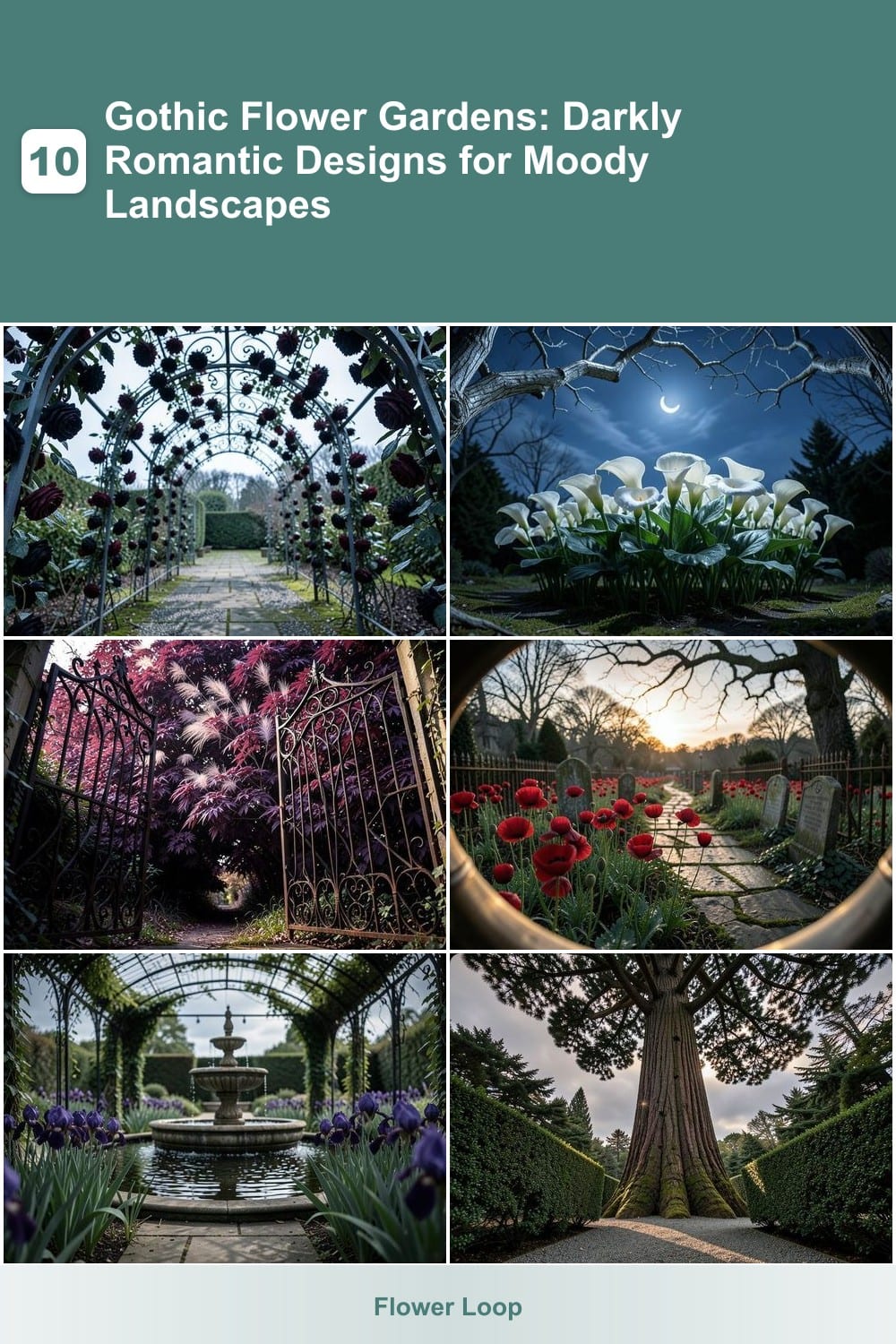
Transform your garden into a hauntingly beautiful sanctuary with these gothic flower garden designs. Perfect for lovers of dark romance, Victorian aesthetics, and dramatic landscapes, these moody gardens blend drama, history, and nature into unforgettable outdoor spaces.
Black Rose and Thorn Arbors
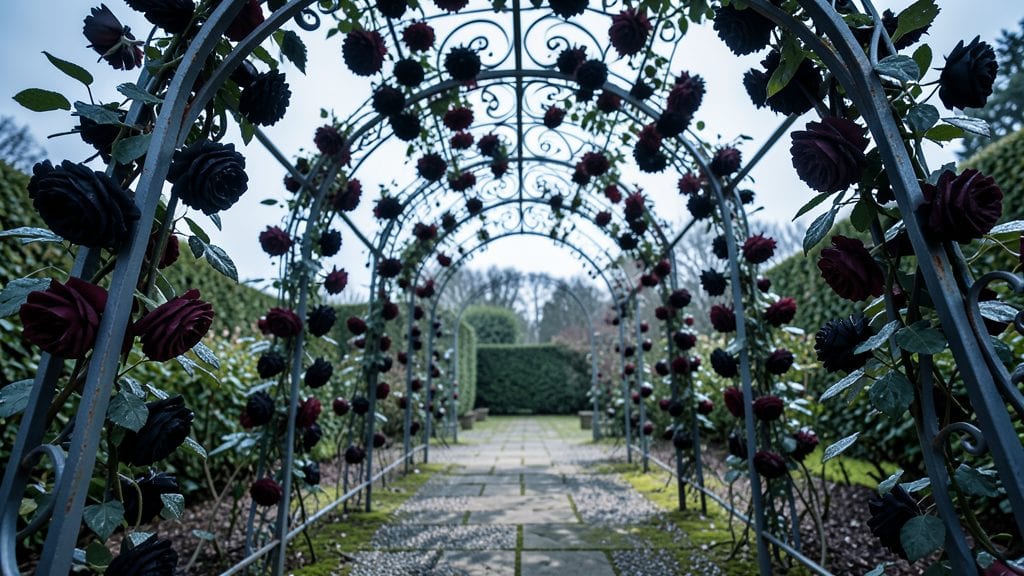
Step into a 19th-century mourning garden with black roses trained on ornate iron arbors—where every petal whispers of gothic romance. These velvety deep red-black blooms, like 'Black Baccara' or 'Black Chiffon', create a striking contrast against wrought iron arches, transforming your garden into a living fairy tale.
Plant your roses in well-draining, slightly acidic soil (pH 6.0-6.5) and provide full sun to partial shade for optimal growth. Prune in late winter to encourage dense, thorny growth that clings dramatically to the arbor. Pair with ivy or wisteria for extra texture, and let the shadows deepen the gothic mood on overcast days.
This design is perfect for gardeners who love dramatic focal points and historical charm—ideal for entryways, courtyard centers, or as a romantic backdrop for outdoor seating. Just be prepared for admiring glances (and maybe a few pricks from those thorns!). ✨
Moonlit White Lilies and Statues
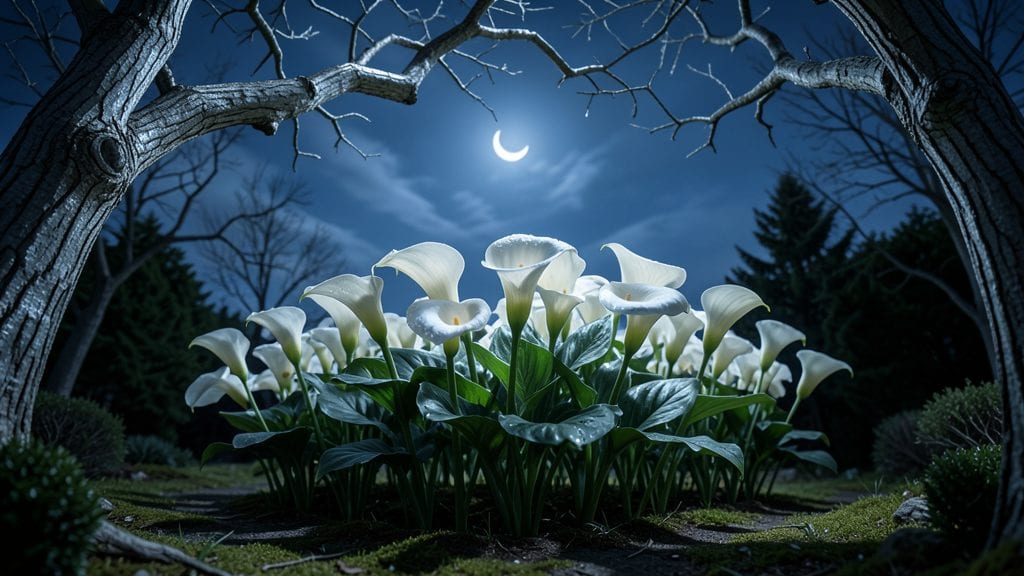
Transform your garden into a moonlit sanctuary with white lilies that glow like spectral lanterns against the night sky. These ethereal blooms—like Calla lilies or Madonna lilies—thrive in partial shade and release their intoxicating fragrance as dusk falls, making them the perfect centerpiece for evening garden strolls.
Pair them with crumbling stone statues, such as a mourning angel or an antique urn, to amplify the gothic charm. Use solar-powered uplighting or flickering LED candles to cast dramatic shadows and highlight the lilies' waxy petals. For extra drama, plant them near a dark green shrub (like boxwood) to create striking contrast.
This design is ideal for gardeners who love romantic, low-light spaces—perfect for patios, courtyard gardens, or even small urban balconies with proper lighting. The combination of soft illumination and weathered stone creates an atmosphere that feels both timeless and mysterious. ✨
Purple Smoke Bush and Iron Gates
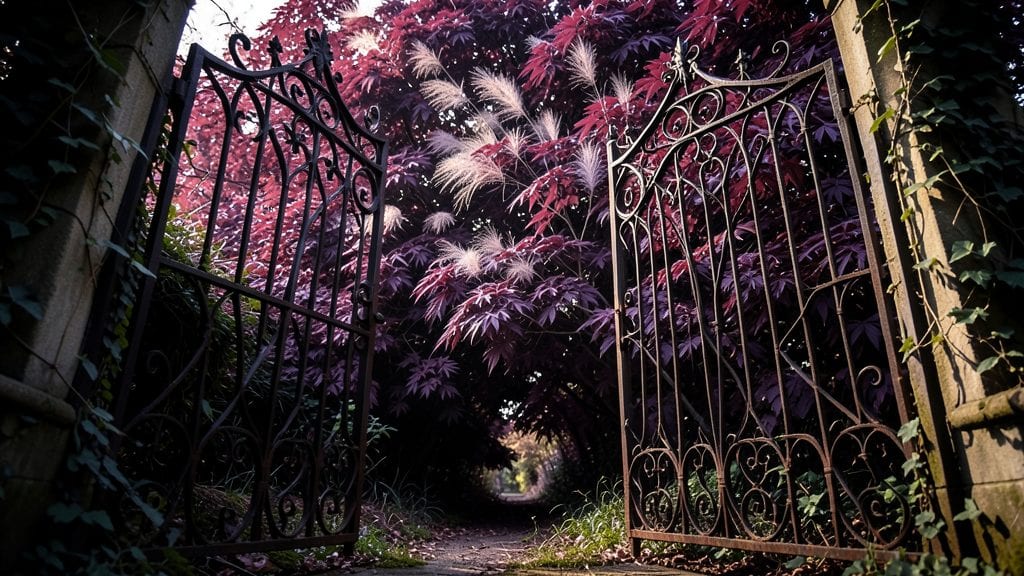
Turn your garden’s entrance into a mysterious portal with purple smoke bush (Cotinus) and wrought iron gates—a gothic duo that thrives on drama. The deep violet foliage of smoke bush creates a lush, almost supernatural backdrop, while its feathery plumes add movement to still air, perfect for framing an entryway.
Plant smoke bush in full sun for the richest color, and pair it with black iron gates to heighten the contrast. For extra texture, let ivy or clematis climb the gate pillars—both add vertical interest while softening the metal’s stark lines. This combo works year-round: purple foliage in summer, golden hues in autumn, and bare branches with winter’s iron gates creating a striking silhouette.
Ideal for gardeners who love low-maintenance yet high-impact designs, this pairing suits both grand estates and cozy urban courtyards. The gates add security, while the smoke bush’s drought tolerance means less upkeep—just pure gothic elegance. ✨
Blood-Red Poppies and Graveyard Vibes
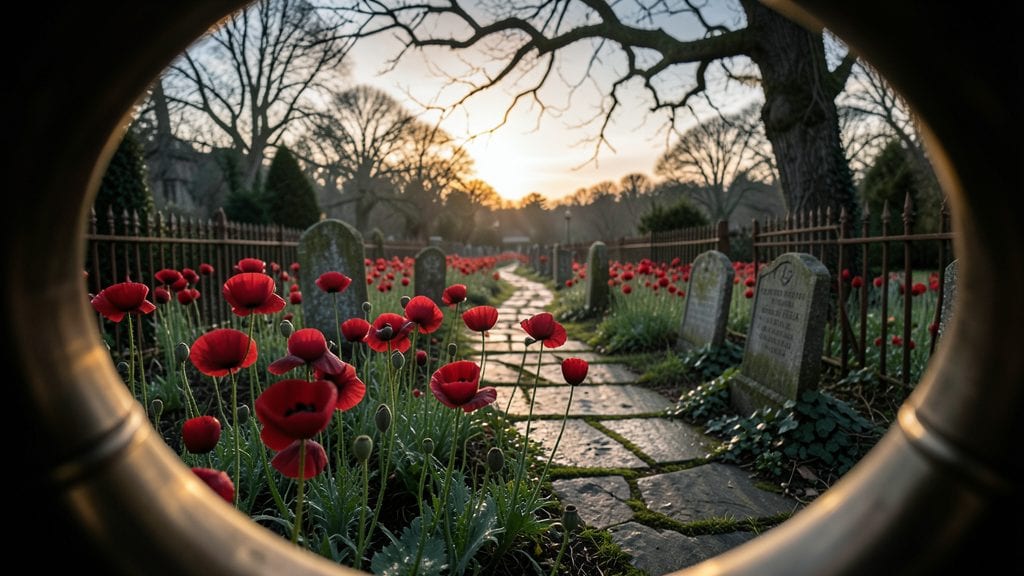
Step into a scene straight out of Edgar Allan Poe with blood-red poppies (Papaver rhoeas) planted in meticulous, cemetery-inspired rows. Their deep crimson blooms evoke both mourning and passion, creating a striking visual contrast against weathered gravestones or moss-covered paths.
For maximum impact, plant California poppies (Eschscholzia californica) or oriental poppies (Papaver orientale) in straight lines, spacing them 12-18 inches apart for a uniform look. Pair them with gray foliage plants like lamb’s ear (Stachys byzantina) or dusty miller (Jacobaea maritima) to enhance the eerie, timeless aesthetic. These poppies thrive in full sun and well-draining soil, making them low-maintenance yet dramatic.
This design works beautifully for gardeners who love literary inspiration or Victorian-era charm without the upkeep of roses. Perfect for small urban plots or larger landscapes, these poppies bring gothic romance to life with minimal effort. ✨
Dark Purple Iris and Fountain Pools
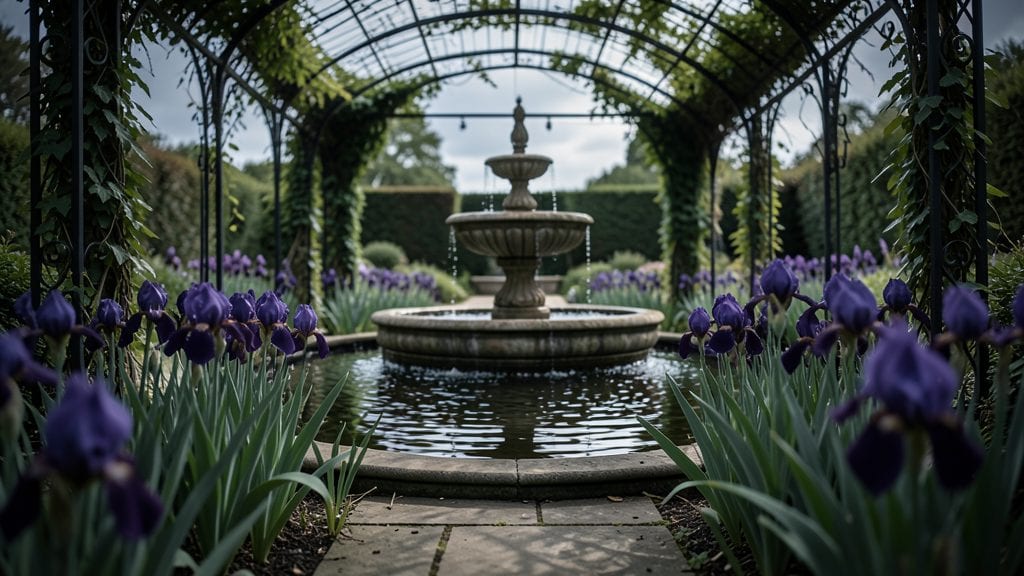
Step into a Victorian-inspired sanctuary where the soothing sound of water meets the bold elegance of dark purple irises. This pairing transforms your garden into a tranquil retreat, blending the mystique of gothic florals with the timeless charm of a fountain pool—perfect for unwinding after a long day.
Plant Iris germanica 'Florence Sullivan' or Iris ensata 'Black Game' around a small stone or metal fountain, where their velvety petals will contrast beautifully against the water's surface. Ensure your fountain receives at least 6 hours of sun daily to keep the irises thriving, while adding a few water-loving plants like hostas or ferns nearby for extra texture. The gentle trickle of water enhances the serene ambiance, making it ideal for meditation or quiet evenings.
This design is especially magical for gardeners who love romance and history—it’s like stepping into a 19th-century English garden with a gothic twist. The combination of water and deep purple blooms creates a space that feels both dramatic and deeply peaceful. ✨
Giant Sequoia and Gothic Shrubs
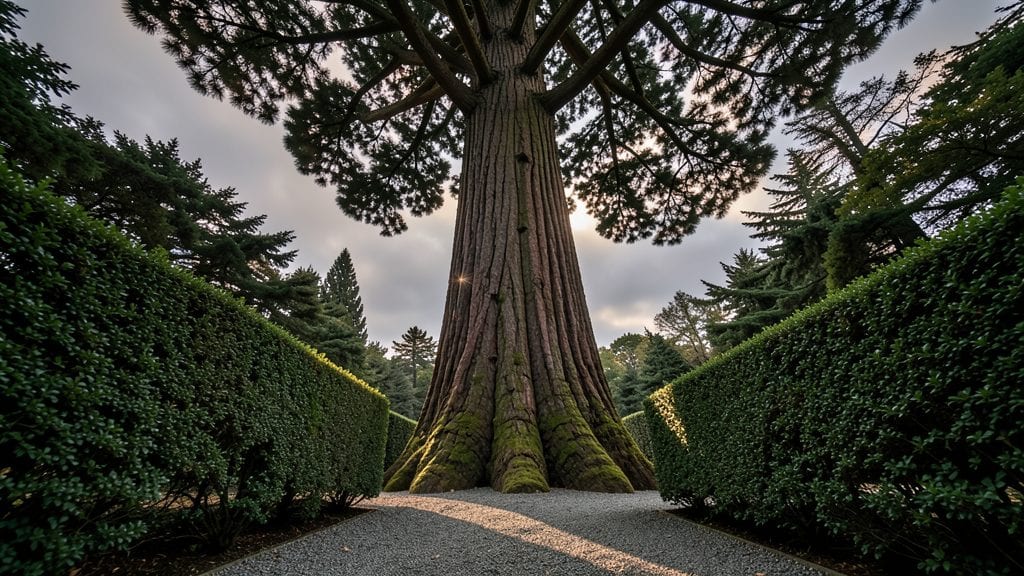
Step into a garden that feels like stepping into a grand cathedral—without the stained glass. A giant sequoia (Sequoiadendron giganteum) planted alongside dark evergreens like boxwood or yew creates an instant vertical drama, with towering trunks and dense foliage framing pathways like natural stone arches.
These trees thrive in well-drained soil with full sun to partial shade, making them ideal for larger properties where they can grow to 200+ feet tall over centuries. Pair them with evergreen shrubs like black mondo grass or inkberry holly to enhance the gothic contrast. The key is spacing: plant shrubs 10-15 feet away from the sequoia’s base to avoid root competition while maintaining that forest-meets-monastery effect.
Perfect for homeowners with space to dream big, this combo adds year-round structure and a sense of timelessness. It’s the ultimate statement for those who want their garden to feel like a living monument. ✨
Deadly Nightshade and Poisonous Plants
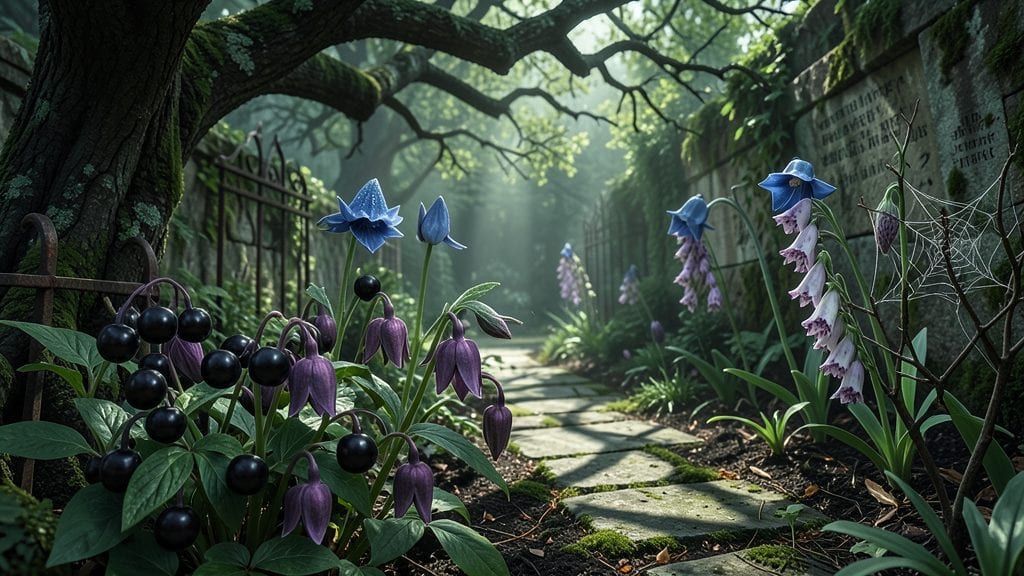
Step into a world where history and danger intertwine—deadly nightshade (Atropa belladonna) and other poisonous plants like monkshood (Aconitum napellus) and foxglove (Digitalis purpurea) transform your gothic garden into a living apothecary of medieval intrigue.
These plants thrive in partial shade and moist, well-draining soil, mirroring the damp conditions of medieval herb gardens. Pair them with antique brass tools or stone mortars to enhance the historical ambiance. Just remember: all parts are toxic—keep them away from pets and children while admiring their striking dark purple blooms and glossy leaves.
Perfect for gardeners who crave authenticity and drama, these plants add layers of folklore and danger to your gothic sanctuary. Just don’t forget the warning signs! ✨
Witch Hazel and Iron Lanterns
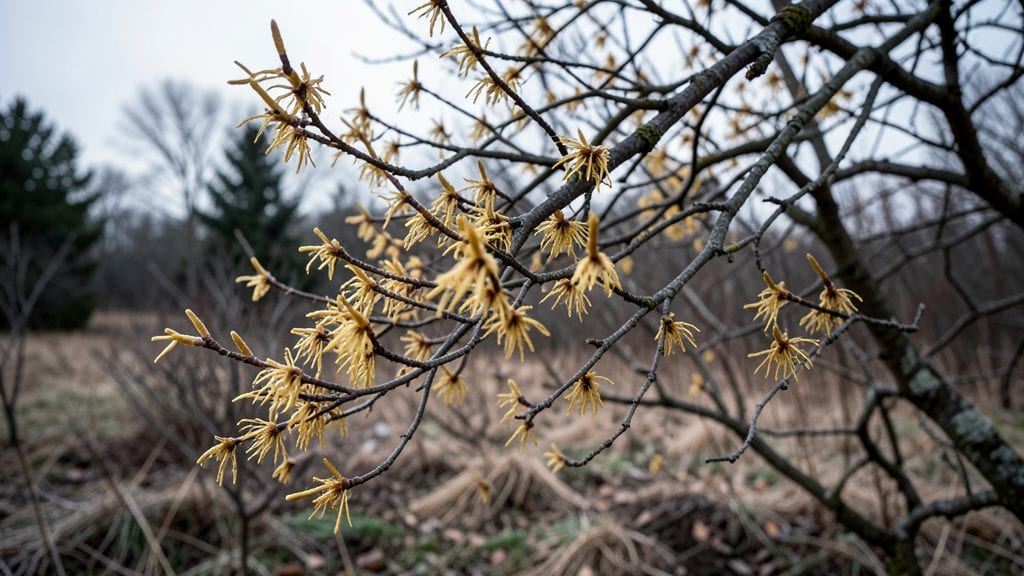
When the rest of your garden fades into winter slumber, witch hazel bursts into golden bloom—its delicate, spidery flowers defying the cold with late autumn and winter blooms. This hardy shrub thrives in USDA zones 4-8, making it perfect for gardeners in colder climates who crave year-round interest.
Pair its luminous blooms with vintage iron lanterns—hang them from branches or place them along pathways to cast a warm, flickering glow. The lanterns' rustic charm contrasts beautifully with witch hazel's ethereal flowers, creating a moody yet magical atmosphere. For extra drama, opt for black or weathered brass lanterns and fill them with LED candles for safety.
This combination is ideal for gardeners who love low-maintenance plants with high visual impact, especially those with limited sunlight in winter. The witch hazel's golden hues will light up your darkest corners, making it a must-have for autumnal and winter gothic gardens. ✨
Black Callas and Marble Busts
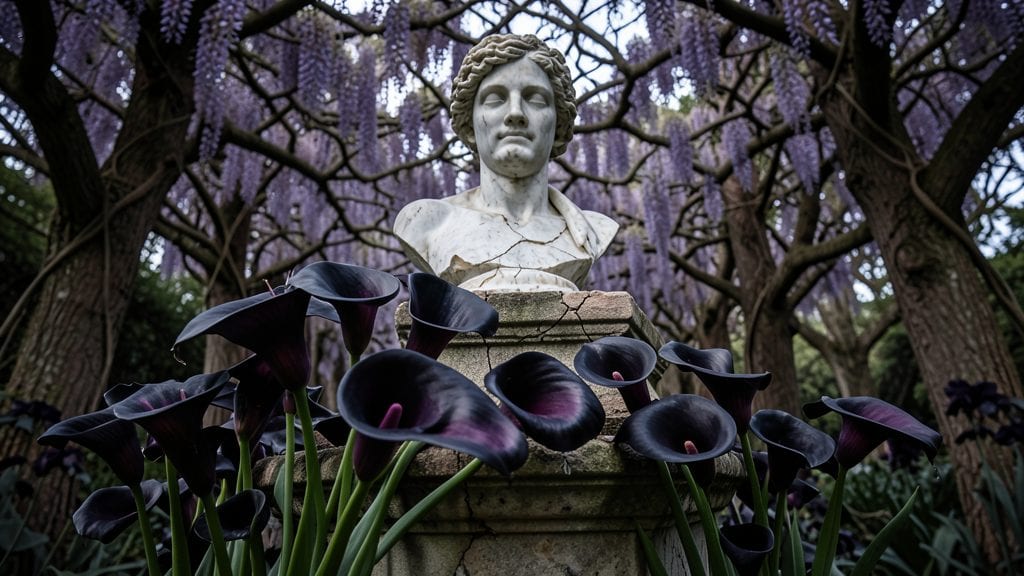
Transform your gothic garden into a museum-worthy masterpiece with black calla lilies (Zantedeschia aethiopica 'Schwarzwalder') and antique marble busts. These velvety dark blooms—nearly black with a deep purple hue—contrasts stunningly against the cool tones of marble, creating a striking visual dialogue that feels straight out of a Renaissance garden.
Plant black callas in rich, moist soil with partial shade to protect their delicate petals from harsh sun. Pair them with weathered marble sculptures (like Roman busts or angelic figures) placed on crumbling pedestals for a historical yet eerie effect. For extra drama, surround the base with dark green ferns or black mondo grass to deepen the contrast.
This combination is perfect for gardeners who love formal, high-impact designs with a touch of old-world grandeur. The contrast between the living darkness of the callas and the timeless coldness of marble creates a hauntingly beautiful focal point that feels both regal and mysterious. ✨
Thorny Roses and Bat Houses
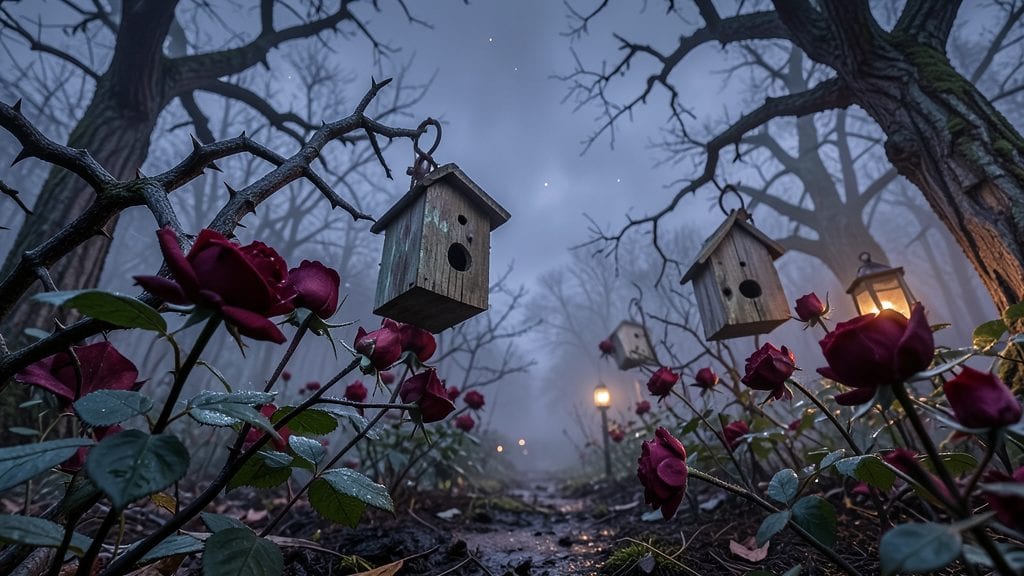
Step into a garden that feels like a scene from a gothic horror novel by pairing thorny roses with wooden bat houses. This unexpected combination creates a living ecosystem that thrives in the twilight hours, where roses bloom dramatically and bats emerge at dusk to hunt mosquitoes—naturally reducing pests while adding an element of mystery.
Choose deep red or black roses like 'Bourbon' or 'Noir' for their velvety petals and sharp thorns, perfect for climbing around bat houses made of untreated cedar or pine. Install the bat houses near the roses but out of direct sunlight, ensuring they’re at least 6-10 feet high and facing a south or southwest direction. Bats will roost here year-round, while the roses provide shade and a gothic backdrop for their evening flights.
This design is ideal for gardeners who love ecological drama and want to blend beauty with function. The rustling leaves of the roses and the fluttering wings of bats create a symphony of sound that feels alive with supernatural energy. 🌿