
Container Gardens
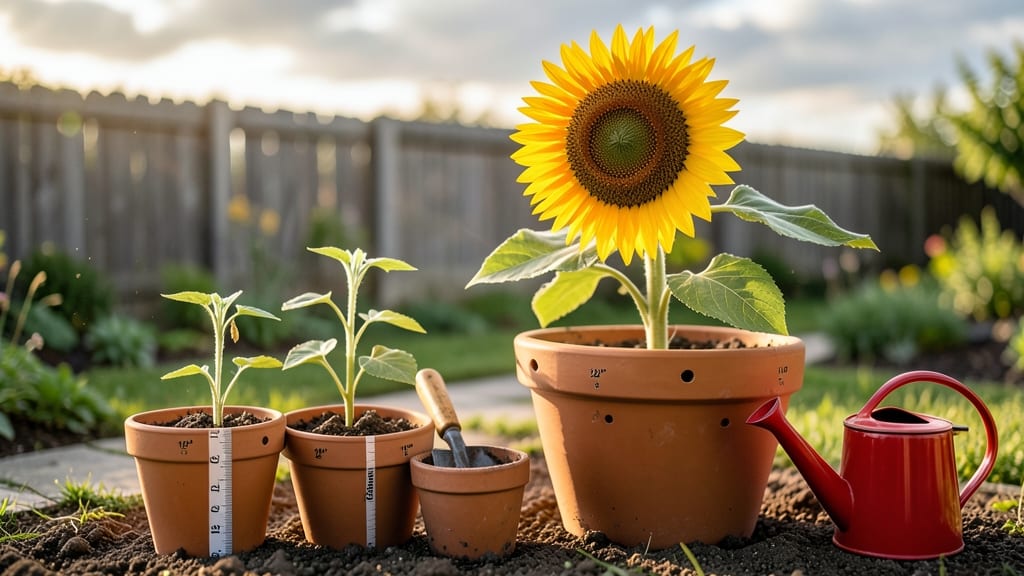
Sunflowers need pots that match their towering height—at least 5-gallon containers for dwarf varieties and up to 15-gallon pots for giants to prevent flopping stems.
Picture this: you’ve nurtured your 🌻 sunflower all season, only to watch it lean dramatically sideways because its roots are cramped. The right pot size isn’t just about aesthetics—it’s the foundation for sturdy stems and vibrant blooms.
Dwarf sunflowers (2–3 feet tall) thrive in 3–5 gallon pots, while standard varieties (8–14 feet) demand 10–15 gallons of space. Depth matters just as much as width—roots need room to anchor, and drainage holes are non-negotiable to avoid soggy soil.
In this guide, I’ll break down the exact pot sizes by variety, share pro tips to keep your sunflowers upright, and reveal the best container materials for stability and longevity.
Minimum pot size requirements for sunflowers by variety
Sunflowers need sturdy containers to support their heavy stems and deep root systems. A pot that’s too small leads to root binding, stunted growth, or even toppling in wind.
The key is matching your sunflower variety to the right pot dimensions—dwarf types need shallow pots, while giants require heavy-duty containers with extra depth. Let’s break down the exact sizing you need for each type.
Most gardeners overlook root depth when choosing pots, but sunflowers need at least 12 inches of soil to establish strong roots. Shallow pots restrict growth, while deeper containers (like 18-24 inches) give giants the stability they crave.
Pair that with a wide diameter to prevent tipping—think of it as giving your sunflower a wide, sturdy base to anchor its height.
Here’s the non-negotiable rule: Pot diameter should equal your sunflower’s mature width (typically 12–24 inches), and depth must match its root zone needs. For example, a 6-foot 'Moulin Rouge' needs a 15-gallon pot, while a 3-foot 'Teddy Bear' thrives in a 3-gallon container.
Skimp on size, and you’ll end up with a leggy, weak-stemmed sunflower that flops over like a drunk ballerina.
For dwarf varieties, a 5-gallon pot is perfect—it’s deep enough for roots but light enough to move if needed. These sunflowers top out at 3 feet, so their shallow root systems don’t demand much space.
Just ensure the pot has drainage holes to prevent root rot, which is a silent killer for container-grown sunflowers.
Medium-height sunflowers like 'Moulin Rouge' (5–6 feet) need 15-gallon containers to thrive. These varieties develop tapered roots that spread wider than they grow deep, so prioritize diameter over height. A 14-inch diameter pot gives roots room to expand while keeping the plant upright in breezy conditions.
Pro tip: Fill the bottom 3 inches with gravel to improve drainage and prevent soggy soil.
Giant sunflowers like 'Russian Giant' are the divas of containers—they need 20–30 gallons of space to avoid toppling. These monsters can reach 12–14 feet, so their root systems plunge deep (sometimes 3 feet or more).
Opt for fabric grow bags or heavy ceramic pots to add stability. Without proper support, a 10-foot stem in a 5-gallon pot will snap like a twig in a storm.
Don’t forget: Sunflowers hate crowded roots. If you’re growing multiple plants in one container, space them 12–18 inches apart to avoid competition. Overcrowding leads to pale stems, small flowers, and weak growth.
For example, a 5-gallon pot should hold only one dwarf sunflower, while a 20-gallon pot can fit two medium varieties if spaced properly.
One common mistake? Using plastic nursery pots without reinforcement. These lightweight containers tip easily when sunflowers reach 5 feet or taller. Swap them for
How to choose the right pot material and drainage for sunflowers
Sunflowers need more than just space—they demand the right container material and drainage to grow strong. Heavy stems can topple, and soggy roots lead to rot. I’ve learned from experience that terracotta pots and plastic containers each have pros and cons, and drainage holes aren’t just optional—they’re essential for survival.
When selecting a pot, consider weight distribution and moisture retention. Terracotta breathes, preventing root rot, while plastic retains moisture longer. But plastic’s lightweight nature can make it tip over in windy conditions.
I always weigh my options carefully—literally and figuratively—to avoid ending up with a sunflower leaning like a drunkard at last call.
Terracotta Pots vs. Plastic Pots for Sunflowers
Terracotta Pots
- Pros: Breathable, prevents root rot, aesthetic appeal
- Cons: Heavy, dries out faster, can crack in freezing temps
Plastic Pots
- Pros: Lightweight, retains moisture, affordable
- Cons: Poor airflow, can tip over, less durable
For drainage, I swear by pots with multiple holes at the bottom. Sunflowers hate soggy feet, and excess water sitting in saucers can invite pests like fungus gnats. If your pot lacks holes, drill them yourself or use a cactus/succulent mix with perlite to improve drainage.
I’ve seen sunflowers thrive in containers that seem too small because of proper drainage—it’s a game-changer.
Don’t overlook the importance of pot stability. A 5-gallon pot for dwarf varieties might work, but for standard sunflowers, aim for 10+ gallons with a wide base. I’ve had to anchor my tallest sunflowers with garden stakes because their pots were too narrow.
A pot that’s wider at the base provides better support and prevents toppling in storms or high winds.
If you’re growing sunflowers in terracotta pots, water them more frequently—they dry out faster. Plastic pots, on the other hand, need less frequent watering but require extra airflow.
I like to add a layer of gravel at the bottom of plastic pots to improve drainage while keeping terracotta pots elevated on pot feet to prevent water pooling.
For long-term success, rotate your pots every few weeks to ensure even sunlight exposure. Sunflowers grow toward the light, and uneven growth can lead to weak stems.
I’ve also found that fabric grow bags are a great compromise—they’re breathable like terracotta but lightweight like plastic. They’re my go-to for container sunflowers now.