
Blooming
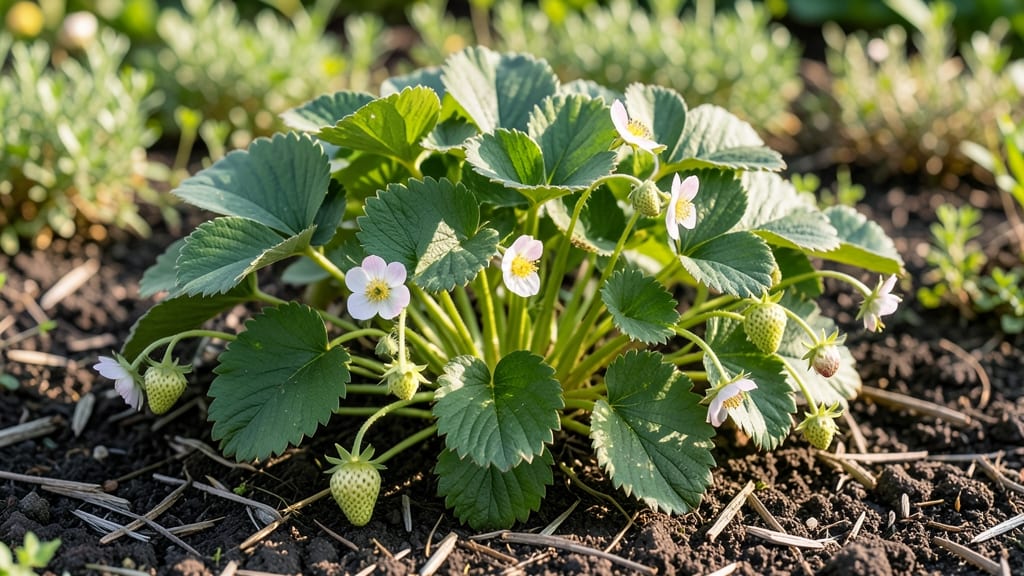
Strawberries take between 3 to 6 weeks to grow after flowering, turning those delicate white blooms into juicy 🍓 harvests.
If you’ve ever watched your strawberry plants burst into blossoms only to wonder, "When will the fruit actually appear?"—you’re not alone. The wait between flowering and harvest can feel like an eternity, especially when you’re eager to enjoy fresh berries straight from the vine.
But here’s the good news: with the right care, you can shave weeks off that timeline.
Understanding the growth stages—from pollination to ripening—and knowing how factors like temperature, sunlight, and soil health play a role helps you predict (and even speed up) when those sweet strawberries will be ready to pick.
In this guide, I’ll break down the exact timeline, share pro tips to accelerate ripening, and warn you about common mistakes that can delay your harvest. By the end, you’ll know exactly what to do to go from blooms to baskets in record time.


Strawberry growth timeline: from flowering to harvest in 3-6 weeks
Once those delicate white strawberry flowers appear, you’re just weeks away from harvest—but the exact timeline depends on several factors. Most varieties take 3-6 weeks from flowering to ripe fruit, though some everbearing or day-neutral types can mature faster under ideal conditions.
Understanding this process helps you anticipate harvests and troubleshoot delays.
The journey from bloom to berry involves pollination, fruit set, and ripening stages. After flowers open, bees (or wind) transfer pollen, which triggers tiny berries to form. These green strawberries grow rapidly, turning red (or their variety’s color) as they ripen.
Temperature, sunlight, and water all play critical roles in speeding up or slowing down this process.
🌱
| Stage | Timeframe | Key Factors | Care Tips |
|---|---|---|---|
| Flowering | 1-2 days (bloom opens) | Bee activity, temperature | Encourage pollinators with nearby flowers |
| Fruit Set | 5-7 days (tiny green berries form) | Sunlight, water, soil nutrients | Water deeply at base; avoid wetting leaves |
| Early Growth | 10-14 days (berries grow to pea size) | Consistent moisture, warmth | Mulch to retain soil moisture |
| Ripening | 14-21 days (color change to ripe) | Sun exposure, temperature | Harvest in morning for best flavor |
| Total Time | 21-42 days (varies by variety) | Variety, climate, care | Choose fast-maturing varieties like 'Albion' for quicker harvests |
Your strawberry variety type is one of the biggest factors in how quickly fruit matures. June-bearing varieties (like 'Chandler') typically take the full 6 weeks to ripen, while everbearing types (such as 'Seascape') may produce fruit in just 3-4 weeks after flowering.
Day-neutral varieties fall somewhere in between, often delivering berries in 4-5 weeks.
Temperature also plays a critical role. Strawberries thrive in 60-85°F conditions, with cooler nights (50-60°F) helping berries develop sweeter flavors. If temperatures drop below 50°F during fruit set, growth slows dramatically, extending the timeline. Conversely, heatwaves above 90°F can cause blossoms to drop before pollination occurs.
Sunlight is another non-negotiable factor. Strawberries need 6+ hours of direct sun daily to ripen properly. Shady spots lead to smaller, less flavorful berries and delayed maturation. If your garden lacks full sun, consider container growing near a south-facing window or using reflective mulch to maximize light exposure.
Watering habits directly impact how fast strawberries grow after flowering. Consistent moisture (about 1-1.5 inches per week) is key, but avoid overwatering, which can cause fruit to split or rot.
I water my strawberries deeply in the morning to encourage strong root growth and prevent fungal diseases. During the ripening stage, slightly reduce watering to concentrate sugars in the fruit.
Soil nutrients also speed up or slow down fruit development. A balanced fertilizer (10-10-10) applied when flowers appear provides the phosphorus needed for fruit formation. Too much nitrogen, however, leads to leafy growth at the expense of berries.
I add a light compost top-dressing around plants when flowers bloom to give them a gentle nutrient boost without overfeeding.
🌿
One common question I hear is whether hand-pollination can speed up the process. While it doesn’t reduce the total time, it ensures 100% fruit set, especially in areas with few bees.
To pollinate strawberries by hand, gently brush the yellow anthers of one flower onto the stigma (the center bump) of another using a small paintbrush. This is particularly useful for container-grown plants or in early spring when pollinators are scarce.
Finally, be patient with your first harvest! While some varieties like 'Everbearing' types
How to speed up strawberry ripening: pro tips for faster harvests
If your strawberry plants are finally flowering but the fruit seems to take forever to ripen, don't despair! With the right techniques, you can cut weeks off the flowering-to-harvest timeline. The key lies in optimizing pollination, watering, and nutrient delivery—all while avoiding common pitfalls that slow growth.
Let’s dive into actionable strategies to get those sweet berries to you faster.
First, understand that strawberries typically take 30–60 days to ripen after flowering, but this window can shrink dramatically with proper care. June-bearing varieties often take the longest, while everbearing and day-neutral types may produce fruit in as little as 20–30 days under ideal conditions.
The secret? Mimicking nature’s perfect growing environment while giving your plants a little extra boost.
- 🌸 Hand-pollinate flowers daily with a soft brush to ensure 100% fruit set—especially if bees are scarce. Focus on open blossoms in the morning.
- 💧 Water deeply 2–3 times weekly at the soil base, avoiding wetting leaves to prevent gray mold. Use drip irrigation for consistency.
- 🌿 Apply balanced fertilizer (10-10-10) every 4–6 weeks during fruiting, paired with compost tea for micronutrients like calcium.
- ☀️ Ensure 6+ hours of sunlight daily—shade slows ripening. Prune nearby plants to eliminate competition for light.
- ✂️ Remove first-year flowers on June-bearing plants to redirect energy to root and crown growth, leading to bigger harvests next year.
Let’s talk pollination, the unsung hero of strawberry ripening. Many gardeners overlook this step, assuming bees will handle it—but if you’re in a low-bee area or dealing with cool, cloudy weather, flowers may not set fruit.
Grab a soft paintbrush or cotton swab and gently transfer pollen from male to female flower parts (the yellow center to the white petals). Do this in the morning when flowers are open, and repeat every 2–3 days for optimal results.
Your watering schedule plays a critical role too. Strawberries need consistent moisture but hate soggy roots. Water deeply 2–3 times per week, aiming for 1–1.5 inches of water per session. Use drip irrigation or soaker hoses to deliver water directly to the roots while keeping foliage dry.
This prevents fungal diseases like powdery mildew, which can stunt fruit development. Mulch with straw or wood chips to retain moisture and regulate soil temperature.
Don’t forget about soil nutrients—they’re the fuel for faster ripening. Before flowering, amend your soil with compost or well-rotted manure to boost organic matter. During fruiting, feed your plants with a balanced fertilizer (like 10-10-10) every 4–6 weeks.
For an extra boost, mix in compost tea or a calcium-rich supplement (like crushed eggshells) to prevent blossom-end rot, a common issue that halts fruit growth mid-development.
Finally, prune strategically to focus your plant’s energy. For June-bearing varieties, remove all flowers in the first year to encourage strong root and crown growth—this leads to larger, more productive plants the following season.
For everbearing and day-neutral types, prune spent flowers to promote continuous fruiting. Always use clean, sharp shears to avoid spreading disease.