
Watering
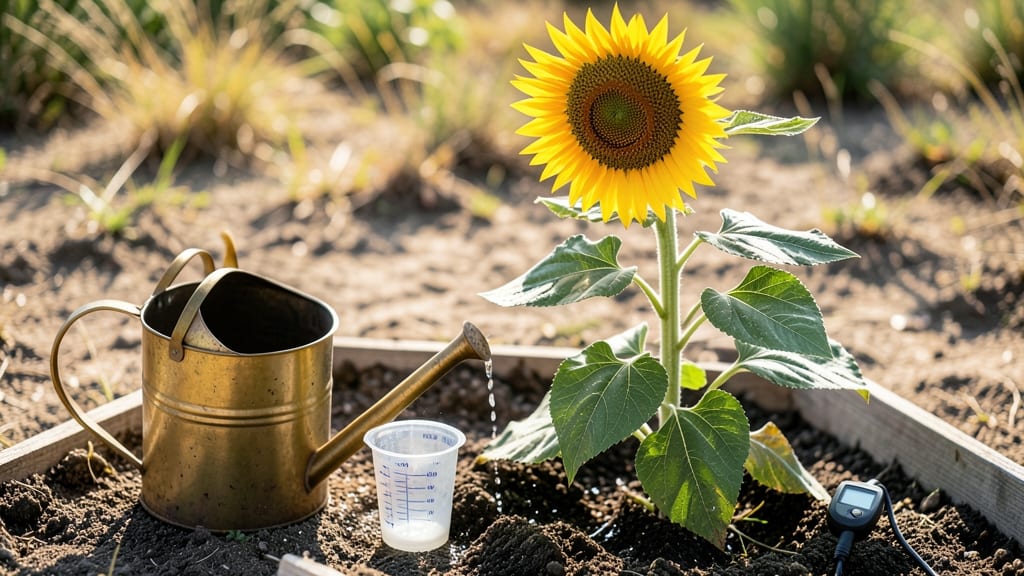
Sunflowers need about 1-2 gallons of water per day during their active growing season to fuel those towering stems and vibrant blooms 🌻.
Picture this: you’ve just planted your seeds in early spring, and you’re eager to see them grow—but too much or too little water can spell disaster. Overwatering drowns roots, while underwatering leaves your sunflowers wilted and weak.
The key is balance, and the right amount keeps them thriving from seedling to full maturity.
Daily watering isn’t just about the numbers; it’s about understanding your sunflower’s stage of growth, soil type, and even the weather. A young seedling in sandy soil won’t need as much as a mature plant in clay during a heatwave.
I’ll break down the exact schedule you need, so you can adjust for your garden’s unique conditions.
By the end, you’ll know not just how much to water, but when and how to do it—so your sunflowers stand tall, strong, and ready to bloom.
Daily water requirements for sunflowers by growth stage
Sunflowers are surprisingly resilient, but their water needs shift dramatically as they grow. Young seedlings demand consistent moisture to establish roots, while mature plants develop drought tolerance once their taproots penetrate deep. Understanding these stages helps you avoid overwatering risks like root rot or underwatering stress that weakens stems.
I’ve grown sunflowers in clay-heavy soil and sandy loam, and the difference in water retention is night-and-day. Clay holds moisture longer but can suffocate roots if saturated, while sandy soil drains quickly, requiring more frequent watering.
Your local climate—especially summer heat and wind exposure—also dictates adjustments. Let’s break it down by growth phase so you can tailor your watering schedule.
During the seedling stage, sunflowers need gentle but frequent watering—think of it like a baby’s bath. I’ve seen seedlings wilt within hours if the soil dries out, so I set a reminder to check moisture every morning.
A simple trick? Stick your finger 1 inch deep; if it feels dry, water lightly. Avoid overhead sprinklers, which can spread fungal spores like powdery mildew.
As sunflowers enter the vegetative stage (3-6 weeks), their roots grow rapidly, and you’ll notice them drinking more water. This is when mulching becomes your best friend. A 2-inch layer of straw or wood chips locks in moisture and keeps soil temperatures stable.
In sandy soil, I water twice weekly to prevent the topsoil from drying out completely, while clay soil gardens can go 3-4 days between deep waterings.
The flowering stage is the most critical for watering precision. Sunflowers need 1-1.5 inches of water daily during peak summer, but here’s the catch: overhead watering can cause buds to rot. I use a soaker hose or drip irrigation to deliver water directly to the root zone.
If your area experiences high winds, water in the early morning to reduce evaporation and stem stress. Pro tip: Watch for drooping petals by midday—this often signals thirst, not heat stress.
Once sunflowers reach maturity (11+ weeks), their deep taproots make them surprisingly drought-tolerant. At this stage, I reduce watering to every 2-3 days, focusing on keeping the seed heads hydrated.
Overwatering now can split seed pods or attract pests like sunflower moths. If you’re growing sunflowers for seeds, let the soil dry slightly between waterings to improve flavor and storage life.
Environmental factors demand extra attention. In hot climates (USDA Zone 8+), I increase watering to daily deep soaks during heatwaves, while cooler regions (Zone 4-6) can often stretch watering to every other day.
Windy areas lose moisture faster, so I group sunflowers together to create a microclimate that retains humidity. For container-grown sunflowers, check soil moisture twice daily—small pots dry out in hours.
One common mistake I see? Watering on a schedule instead of checking soil conditions. Sunflowers are not cacti—they need consistent moisture, but they’ll also tell you when they’re thirsty.
Look for wilting leaves that don’t perk up by evening (a sign of underwatering) or yellowing foliage with mushy stems (overwatering). Adjust based on what you observe, not just a calendar.
To monitor soil moisture like a pro, invest in a moisture meter or use the "squeeze test": Grab a handful of soil near the roots. If it crumbles easily, water; if it stays clumped, wait.
For clay soil, aim for a "soggy sponge" consistency, while sandy soil should feel like a damp towel. These simple checks save you from both underwatering and drowning your sunflowers.
Remember, sunflowers are forgiving plants—they’ll bounce back from minor watering mistakes. But
Signs your sunflowers are overwatered or underwatered (and how to fix it)
Sunflowers are resilient, but even they show clear signs when their hydration is off. Yellowing leaves or wilted stems aren’t just random—these are SOS signals from your plants.
The key is learning to read their cues before damage becomes permanent. Overwatering and underwatering both stress sunflowers, but the fixes couldn’t be more different.
Start by checking the soil moisture just below the surface. Stick your finger 1-2 inches deep—if it’s soggy, you’re overwatering. If it’s bone-dry, your sunflowers are thirsty. The goal is consistent moisture, not soggy soil or drought stress.
Sunflowers need 1-2 gallons per plant every 2-3 days during active growth, but this changes with weather and soil type.
⚠️ How Much Water Does a Sunflower Need Per Day?
Daily needs: 1/2 to 1 gallon per plant (morning watering). Adjust for:
- Heatwaves: Double water to 2 gallons (deep soak)
- Clay soil: Reduce to every 4-5 days (holds moisture longer)
- Sandy soil: Water daily (drains quickly)
Warning: Never let water pool around the base—sunflowers hate "wet feet."
Overwatered sunflowers often show mushy stems or yellowing leaves with brown edges. The roots may smell foul, and the soil feels compacted. If you see white mold near the base, that’s root rot—a fungal infection from too much moisture. The fix? Stop watering immediately and let the soil dry out. If the plant is still standing, loosen the soil around the roots to improve airflow.
On the flip side, underwatered sunflowers develop crispy, brown leaf edges and drooping stems that don’t bounce back when touched. The soil pulls away from the pot (if container-grown) and feels like a dry sponge. Here, the solution is deep watering—aim for 1-2 inches of moisture per session.
Water at the base, not the leaves, to prevent fungal issues. Mulch around the plant to retain moisture and keep roots cool.
For seedlings, the stakes are higher—overwatering can drown tiny roots, while underwatering stunts growth. Use a spray bottle for gentle watering and keep the soil evenly moist (like a wrung-out sponge).
As they mature, gradually reduce frequency but increase water volume per session. A mature sunflower’s taproot can stretch 6 feet deep, so deep watering encourages strong stems and vibrant blooms.
Pro tip: Morning watering is your best friend. It gives leaves time to dry before evening, reducing fungal risks. If you must water in the evening, avoid getting foliage wet.
And always check the weather forecast—a hot, windy day means your sunflowers will need extra hydration to compensate for evaporation. Listen to your plants, and they’ll reward you with towering, golden blooms all season long. 🌻