
Plants
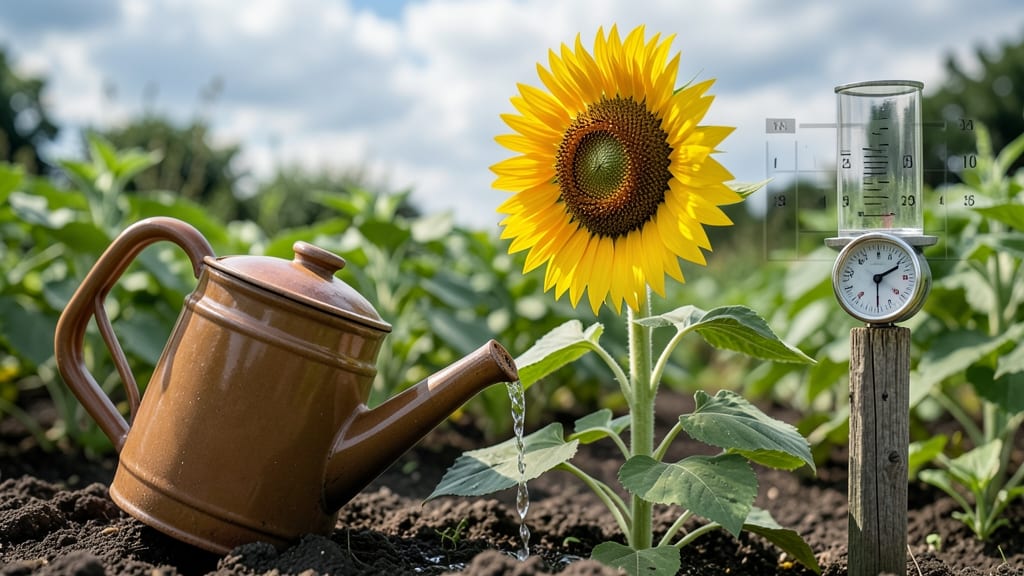
To water a sunflower plant correctly, aim for deep soaks every 3–5 days—not light sprinkles that barely reach the roots—because their towering stems need moisture down to 12–18 inches deep.
Sunflowers may seem low-maintenance, but watering them just right—not too much, not too little—is the secret to towering, vibrant blooms that turn heads.
Overwatering drowns their roots, while underwatering stunts growth, and both mistakes show up in droopy stems or yellowing leaves before you even notice.
Below, I’ll break down the exact watering schedule by growth stage, how to test soil moisture like a pro, and drought-proofing tricks to keep your 🌻 thriving even in Zone 6a heatwaves.
Sunflower watering schedule by growth stage: from seedling to full bloom
Sunflowers are drought-tolerant giants once established, but their seedling stage is delicate. Think of watering as a three-phase journey: nurturing tiny sprouts, supporting rapid growth, and sustaining blooms. Each stage demands a different approach—especially when you factor in soil type and climate.
For example, sandy soil drains faster than clay soil, so your watering frequency must adapt. Let’s break it down by growth phase so you never guess again.
Your first 2 weeks with sunflower seedlings are critical. These tiny plants have shallow roots and need consistent moisture to avoid drying out. Water daily in loamy soil, but every other day in well-draining sandy mixes.
The key? Keep the soil evenly moist—not soggy, not bone-dry. Overwatering here can cause root rot, while underwatering stunts growth. Use a spray bottle or gentle watering can to avoid disturbing delicate sprouts.
Here’s a quick reference for watering sunflowers by growth stage and soil type: