
Light Requirements
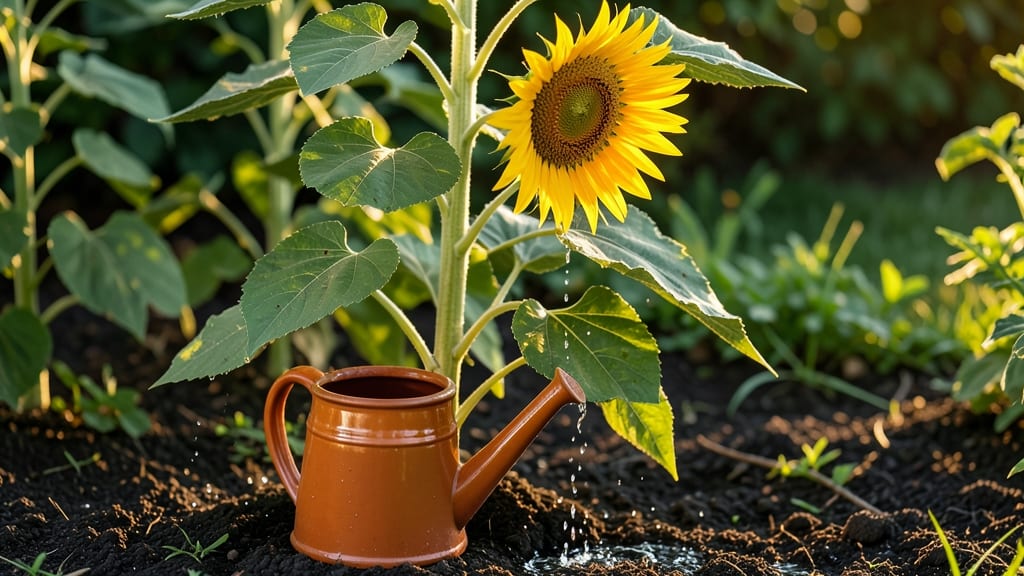
The sunflower water requirements are simple but critical—these giants of the garden need 1-2 inches per week, delivered deep into the soil to build strong roots.
Picture this: your towering 🌻 stands proud one day, then wilts the next—all because the soil dried out too fast or stayed soggy. The key? Balancing moisture so their roots dive deep without drowning.
In Zone 6a, where spring planting kicks off in April, young sunflowers need frequent checks—every 3-4 days—while mature plants in summer can stretch their watering to 5-7 days once established.
Below, I’ll break down exactly how much to water, when to adjust for heat or drought, and how to spot the subtle signs of thirst or overwatering before they become big problems.
How much water do sunflowers need weekly by growth stage?
Sunflowers may seem hardy, but their deep taproots need consistent moisture to reach their full 6-14 foot potential. Unlike drought-tolerant perennials, young sunflowers are particularly sensitive to water stress during their first 6-8 weeks of growth.
Understanding their weekly water requirements by stage ensures strong stems, vibrant blooms, and healthy seed production.
Most gardeners overlook the fact that sunflowers have two critical watering phases: germination (when roots establish) and flowering (when they need 20-30% more water). Skipping either phase risks stunted growth or blind stems—where flowers fail to develop.
Let’s break down the exact watering schedule for each growth stage, including deep-watering techniques to avoid shallow roots.
Pro Tip: Always water in the early morning (before 10 AM) to reduce fungal risks like powdery mildew. Use a soaker hose or drip irrigation to deliver water directly to the root zone, avoiding wet foliage.
| Growth Stage | Water Frequency | Water Amount | Key Notes |
|---|---|---|---|
| Germination (Weeks 1-2) | Every 2-3 days | 1/4 inch per watering | Keep soil consistently moist (not soggy). Use a spray bottle for seeds. |
| Seedling (Weeks 3-4) | Every 3-4 days | 1/2 inch per watering | Encourage deep root growth with deep watering (1 inch total per week). |
| Vegetative (Weeks 5-8) | Every 4-5 days | 1-1.5 inches per week | Focus on stem strength—avoid overhead watering to prevent disease. |
| Budding (Weeks 9-10) | Every 3-4 days | 1.5-2 inches per week | Critical stage—increase water to support flower development. |
| Flowering (Weeks 11-12) | Every 2-3 days | 2-3 inches per week | Peak water demand—deep soak 2x weekly to prevent wilting. |
| Seed Maturation (Weeks 13+) | Every 5-7 days | 1 inch per week | Reduce water to harden seeds—overwatering causes cracking. |
During the vegetative stage (weeks 5-8), sunflowers prioritize stem and leaf growth. This is when their roots dive deep—up to 3-4 feet—to anchor the plant. To encourage this, I deep-water my sunflowers by applying water slowly over 15-20 minutes until the soil is 6-8 inches deep and moist.
A simple test: Stick your finger 2 inches into the soil; if it’s dry, it’s time to water.
When buds form (weeks 9-10), sunflowers need a 20% water increase to support their heavy flower heads. This is also when many gardeners make the mistake of reducing water to "stress" the plant for better blooms—don’t do this.
Stress at this stage leads to blind stems (no flowers) or weak stems that snap under the weight. I’ve seen this firsthand with my Mammoth Russian variety; they need consistent moisture to produce those 12-inch-wide blooms.
At the flowering stage, sunflowers are at their peak thirst. The 1.5-2 inch weekly rule becomes 2-3 inches during hot, dry spells. I use a moisture meter to check soil levels—if it reads below 40%, it’s time to water.
Mulching with straw or wood chips helps retain moisture and keeps roots cool,
Signs of overwatering vs underwatering sunflowers (and how to fix it)
Sunflowers 🌻 thrive on balance—too much water drowns their roots, while too little stunts their growth. Learning to spot the early warning signs of improper watering can save your plants before damage sets in.
Yellowing leaves, wilting, or moldy stems are common red flags, but each issue requires a different fix to restore your sunflowers' health.
Overwatering is sneaky because soggy soil hides beneath the surface. Your sunflowers might show yellowing lower leaves first, followed by a mushy stem when you gently squeeze it. Fungal diseases like powdery mildew or root rot often appear as white fuzz or black spots.
These signs mean your plants are struggling to breathe in waterlogged conditions.
Sunflower Water Requirements
- Water deeply 1-2 inches per week
- Use morning watering to reduce fungal risk
- Check soil moisture with your finger (1-2 inches deep)
- Apply mulch to retain moisture
- Let soil stay soggy for more than 2 days
- Water at night (encourages mold)
- Use shallow watering (promotes weak roots)
- Ignore yellowing leaves or wilting
Underwatering shows up differently, often with crispy leaf edges or leaves that feel dry to the touch. Your sunflowers might also wilt during the day but recover at night, a classic sign of thirst.
If the soil pulls away from the pot or feels like sandpaper, your plants need a deep drink immediately. Severe underwatering can cause buds to drop before opening.
To fix overwatered sunflowers, reduce frequency and improve drainage by amending soil with perlite or compost. Gently loosen compacted soil around the roots to help oxygen flow. For underwatered plants, water deeply until it runs out the drainage holes, then mulch to lock in moisture.
Both issues require adjusting your routine—overwatering means longer gaps between waterings, while underwatering demands more frequent, thorough soaks.
Pay attention to your sunflowers' growth stage too. Young seedlings need consistent moisture, while mature plants can handle slightly drier conditions. During hot summer months, increase watering slightly but always prioritize morning sessions to prevent fungal growth.
With the right balance, your sunflowers will reward you with vibrant blooms and strong stems.
When in doubt, touch the soil—it’s the simplest way to gauge moisture. Healthy sunflowers should have damp but not soggy soil at the root level. Adjust your watering schedule based on what you feel, not just what you see above ground.
A little observation goes a long way in keeping your sunflowers thriving!