
Watering
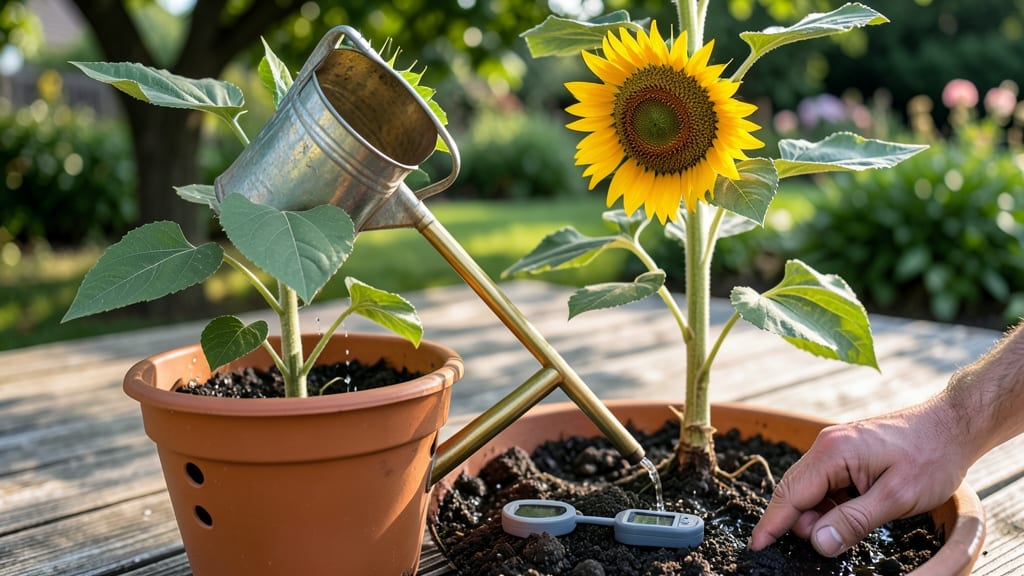
How often to water sunflowers in pots is the key to keeping them thriving—stick to a 2-3 day schedule, but adjust based on soil, pot size, and climate, or risk stunted growth or root rot.
Struggling to keep your potted 🌻 thriving? Overwatering or underwatering can stunt their growth—or worse, kill them before they bloom. The secret lies in a simple soil-drying test that ensures your sunflowers get just the right amount of moisture every time.
Unlike in-ground plants, potted sunflowers dry out faster because containers have limited soil volume and poor drainage. A quick finger check in the top inch of soil tells you exactly when to water—no guesswork required.
Below, I’ll walk you through the exact method, how to adjust for summer heat or winter chill, and the telltale signs your sunflower is thirsty or drowning. By the end, you’ll have a foolproof routine for perfect growth every time.
The soil-drying test: perfect watering schedule for potted sunflowers
Potted sunflowers need consistent moisture, but their watering needs change with season, pot size, and climate conditions. Unlike in-ground plants, containers dry out faster, making the soil-drying test your best tool for precision.
This simple method saves time and prevents both root rot and stunted growth—two common mistakes I see with sunflower pots.
Here’s how it works: Stick your finger 1 inch deep into the soil. If it feels dry, water thoroughly until it drains from the bottom. If it’s still damp, wait another day.
This finger-dip method is foolproof and works for all pot sizes, from small nursery pots to large grow bags.
Your sunflower’s pot size directly impacts how often you water. A 5-gallon pot holds moisture longer than a 1-gallon nursery pot, so adjust your schedule accordingly. For example, a small pot may need watering every 1-2 days in summer, while a large container could go 3-4 days between waterings.
🌻
Summer is the most critical time for potted sunflowers because high temperatures and direct sunlight cause soil to dry out quickly. I recommend watering in the early morning to reduce evaporation and prevent fungal diseases.
If your sunflower’s leaves start wilting by midday, it’s a sign the roots aren’t getting enough moisture.
In spring and fall, when temperatures are milder, you can stretch the time between waterings. For example, a 5-gallon pot might only need water every 3 days in spring. Always check the soil first—don’t rely on a rigid schedule. Clay pots dry out faster than plastic, so adjust accordingly.
Winter care is minimal, but don’t ignore your sunflower completely. Reduce watering to every 7-10 days unless you’re in a heated greenhouse or indoor setting. Overwatering in winter can lead to root rot, especially if the pot lacks drainage holes.
Pro tip: Use a moisture meter for extra accuracy, especially if you’re new to container gardening. These $10 tools take the guesswork out of the soil-drying test and help you avoid both underwatering and overwatering. I’ve found they’re worth the investment for sunflowers in small pots.
💧
Remember, sunflowers in pots are more vulnerable to drought stress than in-ground plants. If you notice the leaves curling or the stem feeling soft, it’s often a sign of underwatering. Conversely, yellowing leaves and a foul smell from the soil mean you’re overwatering.
Adjust your schedule based on these visual cues, and your sunflowers will reward you with vibrant blooms all season long.
Signs of overwatering vs underwatering in sunflower pots
Potted sunflowers 🌻 are surprisingly delicate when it comes to water—too much or too little can send them into a downward spiral. The first clue often appears in your leaf color or stem texture.
Overwatered sunflowers develop yellowing leaves with a mushy feel, while underwatered ones show crispy, brown edges. Both problems can look similar at first glance, but the soil condition and root health reveal the real story.
Let’s break down the key differences. Overwatering creates a soggy soil environment that suffocates roots, leading to mold growth on the surface and a foul odor.
Underwatering, on the other hand, causes the soil to pull away from the pot edges and leaves your sunflower wilting by midday, even after watering. The trick is to check the top 1-2 inches of soil—if it’s damp, hold off on watering.
Overwatering vs Underwatering in Sunflowers
| Issue | Signs | Solution |
|---|---|---|
| Overwatering |
|
|
| Underwatering |
|
|
💡 Pro Tip: Always water in the morning to prevent fungal growth from overnight moisture.
If your sunflower shows signs of root rot—black, mushy roots—it’s already a critical situation. The best course of action is to trim the affected roots with sterilized scissors and repot in fresh, well-draining soil.
For underwatered plants, a deep watering session followed by a mulch layer can prevent future stress. Remember, sunflowers in pots dry out faster than in-ground plants, so always prioritize soil moisture checks over a fixed schedule.
Another red flag is stunted growth. Overwatered sunflowers may grow slowly due to oxygen deprivation in the roots, while underwatered ones might stop growing altogether. Adjust your watering routine based on the season and pot size.
A 5-gallon pot may need watering every 2-3 days in summer, while a 1-gallon pot could dry out in just 1-2 days. Pay attention to these cues, and your sunflowers will reward you with vibrant blooms all season long.
Don’t let a single misstep ruin your sunflower’s potential. The key is to observe daily and adjust as needed. If you’re unsure, stick your finger 1-2 inches into the soil—if it’s dry, it’s time to water.
If it’s still damp, wait another day. This simple soil-drying test is your best friend for keeping potted sunflowers thriving. 🌱
When in doubt, less water is better than too much. Sunflowers are resilient, but they can’t bounce back from waterlogged roots. With the right balance, you’ll enjoy towering stems and cheerful blooms that brighten up any patio or garden. Happy growing! ✂️