
How To
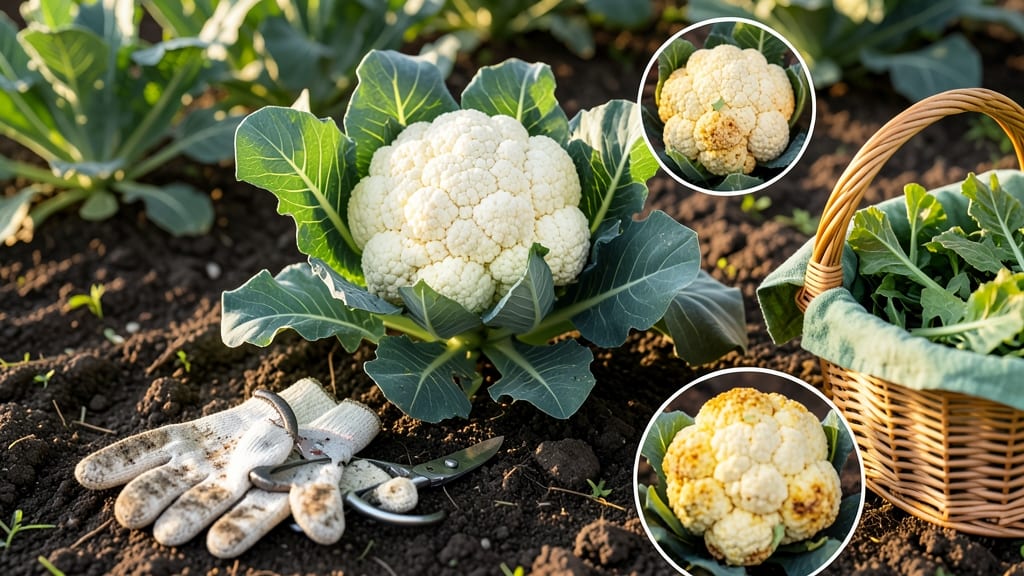
To know when to pick cauliflower, watch for a tight, firm head that’s reached its variety’s ideal size—usually 6 to 12 inches in diameter.
Picking too early means tiny, underdeveloped heads, while waiting too long turns them bitter or woody. The key is timing: a deep, consistent color (white, purple, or orange, depending on the type) and a slight give when gently pressed at the stem.
Most gardeners miss the sweet spot because they focus only on size or ignore leaf signals—like yellowing outer leaves—that hint it’s nearly ready. Below, I’ll break down the exact visual cues, from curd tightness to weather conditions, so you never guess again.
Master these signs, and you’ll harvest perfect cauliflower every time—crisp, flavorful, and ready for the table.


Cauliflower curd color and size: the exact visual cues for harvesting
Timing your cauliflower harvest correctly transforms a simple garden task into a rewarding experience. The curd color and size benchmarks act as your primary indicators, but many gardeners miss subtle cues that signal the perfect moment.
For example, a white cauliflower should develop a creamy hue, while purple varieties deepen to a rich, violet shade—both signs of maturity.
Size matters just as much as color. Most cauliflower heads reach harvest readiness between 6 to 12 inches in diameter, depending on the variety. However, tightness of the curd is often the most overlooked clue—loose leaves or gaps mean it’s past its prime.
Ignoring these visual cues can lead to bitter, woody textures or heads that split open from overgrowth.
Let’s break down the exact color and size standards for different varieties, along with how to test readiness for a foolproof harvest. Understanding these details ensures you never miss the window between perfect flavor and disappointment.
For white cauliflower varieties, the creamy color should be uniform and free of brown spots. A 6-inch diameter is ideal for most compact types, while larger varieties like Snowball Y can reach up to 10 inches.
Gently squeeze the curd—if it feels firm but yields slightly, it’s ready. Waiting too long causes the head to split or turn yellow, ruining the texture.
Purple cauliflowers like Purple of Sicily develop a rich, deep hue when mature. Their size range is typically smaller (6-8 inches), so don’t wait for them to grow larger.
Overripe purple cauliflower loses its vibrant color and becomes tough. Test readiness by checking for tight leaf layers—if they’re loose, harvest immediately to avoid bitterness.
Orange varieties, such as Orange Duke, are often overlooked but pack a sweet, nutty flavor. Their 10-12 inch heads should have a vibrant orange color with a slightly soft center when pressed. Unlike white types, orange cauliflower can tolerate a slightly softer texture at harvest, as it cooks down more tenderly. However, never let it develop brown spots or a hollow center.
Green varieties like Romanesco are unique because their color signals maturity differently. The pale green curd should form a tight, conical shape with no yellowing. Harvest when it reaches 5-7 inches, as these types mature quickly and can become woody fast.
The key is to act before the florets start opening, which happens almost overnight.
One common mistake is assuming size alone determines readiness. A 12-inch head that’s still pale or loose isn’t ready—it’s just large. Always combine color, size, and tightness for accurate timing.
For example, a white cauliflower at 8 inches with a creamy hue is perfect, while one at 10 inches with yellowing leaves should be harvested immediately to salvage flavor.
Environmental factors also play a role. Cooler temperatures slow maturation, so cauliflower planted in early spring may take longer to reach harvest size. Conversely, hot weather can cause heads to bolt prematurely.
Monitor your plants daily for these visual and environmental cues to ensure you never miss the ideal harvest window.
Finally, avoid the temptation to wait "just a little longer" for a bigger head. Overripe cauliflower loses its sweetness and becomes tough, no matter how large it grows. By mastering these color, size, and tightness cues, you’ll consistently harvest cauliflower at its peak—crisp
5 Key signs your cauliflower is ready to pick (beyond just size)
Checking cauliflower size alone isn’t enough to guarantee a perfect harvest. The curd’s firmness, leaf color, and even weather conditions play crucial roles. I’ve learned the hard way that ignoring these subtle cues can lead to woody, bitter heads—or worse, losing your entire crop to split curds.
Let’s dive into the five must-check signs that your cauliflower is truly ready for picking.
First, pay attention to the outer leaves. When they start turning yellow or brown, it’s a clear signal that the plant is shifting energy toward the curd development. However, if the leaves are still vibrant green, your cauliflower needs more time.
This leaf color change is nature’s way of telling you the head is maturing. I always check this first—it’s the simplest visual cue that saves me from picking too early.
- 1. Leaf Color Shift Outer leaves turn yellow or brown while inner leaves stay green.
- 2. Stem Thickness Grip the stem near the base—it should feel thick and sturdy, not hollow or brittle.
- 3. Curd Firmness Press gently—it should yield slightly (like a ripe avocado) but not feel mushy.
- 4. Weather Window Harvest on a cool, cloudy day to prevent stress—avoid extreme heat or frost.
- 5. Aroma Check Sniff the stem—ready curds emit a slightly sweet, earthy scent.
Don’t overlook the stem thickness—this is a game-changer for avoiding split heads. A thick, woody stem means the plant has fully supported the curd’s growth. If you squeeze it and feel resistance, your cauliflower is ready.
I once ignored this sign and ended up with a head that split open overnight—not a pretty sight! Pro tip: If the stem feels hollow or weak, wait another 2-3 days.
Testing curd firmness is non-negotiable. A perfectly ripe cauliflower should have a slight give when you press it gently with your thumb. If it’s rock-hard, it’s underripe; if it feels mushy, it’s overripe. I use this trick every time: press the curd near the stem.
The right firmness means the starch-to-sugar ratio is ideal for flavor. Overripe cauliflower turns bitter and woody—trust me, you’ll taste the difference.
Weather plays a surprisingly big role in harvest timing. Always pick your cauliflower on a cool, overcast day to minimize stress on the plant. Extreme heat can cause the curd to split or bolt prematurely, while frost will ruin the texture.
I schedule my harvests for early morning on cloudy days—this simple habit has saved me from countless disappointments. If you’re in a hot climate, consider harvesting in the late afternoon instead.
Finally, trust your nose! A ripe cauliflower emits a mildly sweet aroma near the stem. This scent is your final confirmation that the flavor and texture are perfect. If you don’t smell anything, your cauliflower needs more time.
I’ve found that purple varieties often have a more pronounced scent than white ones—another reason to pay attention to this detail. When all five signs align, grab your sharp knife and harvest before the next day.