
Propagation
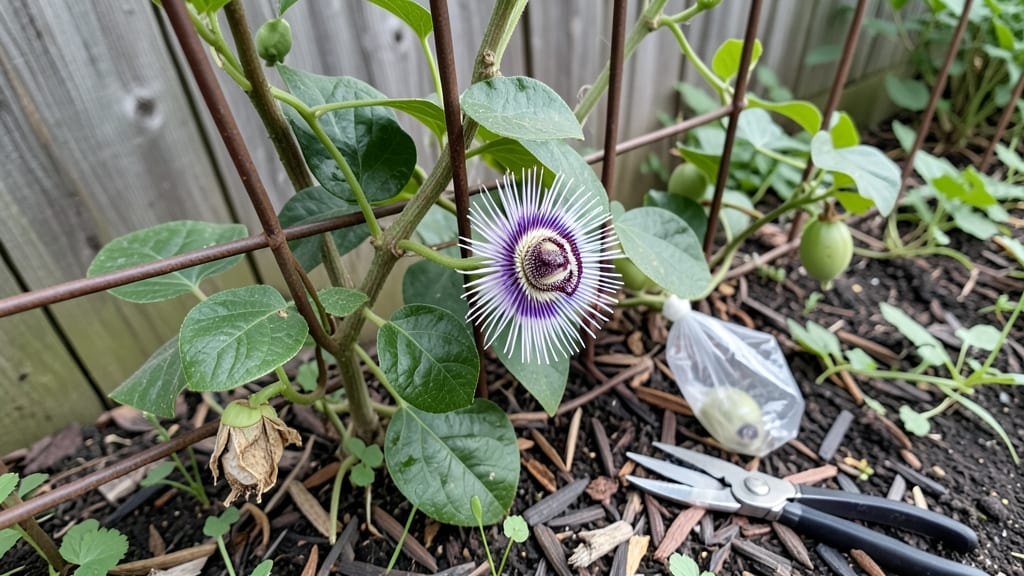
Learn how to propagate passion flower vine the easy way—just place cuttings in water, and watch your grove grow in weeks instead of years. ✨ I’ve turned a single vine into a small patch using this method, and the best part?
You can skip the soil entirely until roots form—no digging, no guesswork. The key is timing: take cuttings just as new growth starts in early spring, when the vine is full of energy but hasn’t hardened off yet.
You’ll need sharp pruners, a clean jar of water, and a sunny windowsill—no fancy tools required. Cut a 4- to 6-inch section just below a node (that little bump where leaves grow), strip the lower leaves, and pop it in water.
Change the water every 3-4 days to keep it fresh, and watch for roots in 2-4 weeks. The vine’s adaptability means it’ll root even in low light, though faster growth happens near a bright window.
Once roots hit 2-3 inches, transplant into soil and you’ll see new leaves within days. The vine’s fast growth means you could have a 6-foot climber by midsummer if you start early.
Just avoid overwatering after transplanting—passion vines hate soggy roots, and they’ll tell you by dropping leaves faster than you can say “humidity tray.”
This method works for both tropical and hardy varieties, so whether you’re in Zone 8-11 or a container setup, the same principles apply. The only real challenge is patience—roots take time, but the payoff is worth it. Ready to turn one vine into dozens?
📚 In This Guide
- What you need
- Instructions
- Tips and common mistakes
- Wrapping up and next steps
What you need
- ● Passion flower vine cuttings: 4–6 inches long, with at least 2–3 leaf nodes (healthy, disease-free stems).
- ● Clean, sharp pruning shears: Sterilized to prevent contamination (rubbing alcohol works great!).
- ● Room-temperature water: 1–2 cups per cutting (use filtered or distilled if tap water is heavily chlorinated).
- ● Clear glass or jar: Wide-mouthed (like a mason jar) to accommodate the cutting and monitor root growth.
- ○ Optional rooting hormone: (e.g., willow water or commercial rooting gel) to speed up root development.
- ● Small pebbles or marbles: 1–2 per jar to weigh down the cutting and keep it submerged.
- ● Spray bottle with water: To mist leaves and maintain humidity (prevents wilting).
- ● Bright, indirect light source: A sunny windowsill or grow light (avoid direct sun to prevent overheating).
- ● Notebook or label: To track cutting progress (date planted, root growth, etc.).
- ● Patience! 😉 Roots typically appear in 2–4 weeks, but consistency is key.
- ● 💡 Use a pencil or chopstick to prop the cutting at a slight angle (encourages root growth at the nodes).
- ● 🌡️ Keep water warm (around 70–75°F) by placing the jar near a heat source (like a sunny window).
- ● ✨ Change water every 3–4 days to prevent bacterial growth and keep it oxygenated.
Step-by-Step instructions for propagating passion flower vine in water
Here’s the quickest way to grow new passion flower vines—no soil, no fuss, just roots in jars.
🌱 Step 1: Select and Prepare Healthy Cuttings
Choose a 4-6 inch stem from a healthy, disease-free vine. Look for non-flowering sections with at least two sets of leaves—this ensures enough energy for rooting. Use clean, sharp pruners to cut just below a leaf node (the bump where leaves attach). This is where roots will sprout.
Remove the lower leaves, leaving only the top 1-2 pairs. Too many leaves mean more water loss and slower root growth. Strip any flowers or buds too—the plant needs to focus on roots, not blooms. Dip the cut end in room-temperature water for 10 seconds to help seal the wound and prevent rot.
💧 Step 2: Place Cuttings in Water and Monitor
Fill a clean glass jar with room-temperature water, leaving 1-2 inches of stem submerged. I use 16-ounce mason jars because they’re easy to see roots in. Change the water every 2-3 days—stagnant water breeds bacteria that can rot your cuttings before roots form.
Set the jar in bright, indirect light (like an east-facing window). Direct sun overheats the water, and too little light slows root growth. You’ll see tiny white bumps appear at the nodes in 1-2 weeks—those are your future roots! Keep the water level consistent—never let the stem dry out, but don’t submerge new leaves.
☀️ Step 3: Encourage Root Growth with Light and Patience
Once roots reach 1-2 inches long (usually 3-4 weeks), they’re ready for transplanting. I check daily by lifting the jar—roots should feel firm but flexible, not mushy. If roots turn brown or smell foul, it’s time to refresh the water immediately.
To speed things up, add a pinch of cinnamon to the water (it’s natural and prevents rot). Avoid fertilizers—you’re growing roots, not leaves! When roots fill the jar or hit 3 inches, your cutting is ready for soil. Here’s the thing—don’t rush this step. Strong roots mean a stronger vine later.
🪴 Step 4: Transplant to Soil and Care for New Growth
Plant your rooted cutting in well-draining potting mix (like the 3 gallons of seed-starting mix you’ll use later). Dig a hole twice as wide as the root ball and 1 inch deeper than the jar’s water line. Gently remove the cutting, rinse off any jar residue, and plant—don’t pack soil tightly around the roots.
Water lightly after planting, then wait 3-5 days before watering again. This lets roots adjust without drowning. Keep the soil moist but not soggy—passion vines hate wet feet. Place in full sun (6+ hours daily) and watch for new leaves in 2-3 weeks. That’s your signal the transplant took!
⏰ Step 5: Train and Support the Vine for Fast Growth
Passion vines grow fast, but they need support from day one. Install a trellis or stakes near your plant and gently weave the main stem upward. Young vines are flexible—don’t force them. Use soft plant ties to secure growth as it climbs.
Fertilize lightly with a balanced 10-10-10 formula every 4-6 weeks once new growth appears. Too much fertilizer burns roots, so start small. Prune leggy growth to encourage bushier vines. In 6-8 months, you’ll have a thriving vine ready for flowers—and you did it in water!
Tips & tricks for propagating passion flower vine
Here's how to make this propagation method even faster and more successful—without the guesswork.
Timing is Everything: The 10-second dip in room-temperature water at Step 1 is crucial—it seals the cut and prevents rot. I've ruined cuttings by skipping this step, so don't make my mistake! Also, those 1-2 weeks for white bumps to appear can vary based on temperature. If your space is cooler, you might need an extra week. Keep an eye out for those little signs of life!
Light Matters More Than You Think: Bright, indirect light is non-negotiable in Step 2. I learned this the hard way when my cuttings grew leggy and weak from insufficient light. Place your jars near an east-facing window where they'll get gentle morning sun. If you only have south-facing windows, use a sheer curtain to diffuse the light. The goal is to encourage root growth, not sunburn the stems.
Root Growth Hack: In Step 3, when you're checking for roots, don't just look—lift the jar! Healthy roots should feel firm but flexible, like a rubber band. If they feel mushy or smell foul, it's time to refresh the water immediately. That pinch of cinnamon in the water works wonders—it's a natural antiseptic that prevents bacterial growth without harming your cuttings. I've seen rooting time cut in half with this simple addition.
Transplanting Wisdom: When transplanting in Step 4, resist the urge to pack soil tightly around the roots. Loose soil allows better root penetration and prevents waterlogging. Also, that 3-5 day wait before watering again is critical—it lets the roots establish before getting overwhelmed. Think of it as a confidence-building period for your new plant!
Pro Tips for Propagate Passion Flower Vine
- Here's how to make this propagation method even faster and more successful—without the guesswork.
- Timing is Everything: The 10-second dip in room-temperature water at Step 1 is crucial—it seals the cut and prevents rot.
- Light Matters More Than You Think: Bright, indirect light is non-negotiable in Step 2.
Frequently asked questions
Got questions about propagating your passion flower vine? You’re not alone—this process can be a little tricky at first! Here are some common concerns and answers to help you grow confident and successful:
Can I propagate my passion flower vine at any time of year?
While passion vines are hardy, spring or early summer is the ideal time to propagate cuttings—when the plant is actively growing. Avoid winter or dormancy periods, as roots may struggle to develop in cooler temps. If you’re in a mild climate, late fall (before the first frost) can work too, but keep cuttings warm and moist.
How long does it take for passion flower cuttings to root in water?
Patience is key! Most passion flower cuttings take 3–6 weeks to develop roots in water, depending on conditions. Keep the water lukewarm (not hot) and change it weekly to prevent bacteria. If you see small white roots in 2–3 weeks, they’re ready for soil!
What if my cutting doesn’t root in water?
Don’t worry—sometimes water isn’t the best method. If your cutting shows no roots after 6 weeks, try soil propagation instead. Bury the cutting 2–3 inches deep in moist potting mix, cover with a plastic bag for humidity, and place it in bright, indirect light. Mist regularly and check for roots in 4–8 weeks.
Can I propagate passion flower vine from seeds instead of cuttings?
Yes! Seeds are another option, but they take longer (6–12 months) to mature into flowering plants. Start seeds indoors in spring, keep soil warm (70–80°F), and germinate them in moist, well-draining medium. Cuttings are faster for established vines, but seeds offer more variety if you’re experimenting with different cultivars.
Why are my passion flower cuttings turning black or mushy?
This is usually a sign of rot, often caused by overwatering or contaminated water. If your cutting goes soft or black, trim the affected parts with clean scissors and repot it in fresh, sterile water or soil. Ensure your cutting has healthy, green growth before propagating—diseased or old wood won’t root well. A little prevention goes a long way!
Wrapping up and next steps
Propagating a passion flower vine is a rewarding way to expand your garden or share its beauty with others! 🌱 With just a few simple steps—like selecting healthy cuttings, using clean water, and providing the right conditions—you’ll soon see new roots forming and vibrant growth. Don’t let hesitation hold you back: grab those pruners and get growing!
Ready to take the next step? Once your cuttings root successfully, transplant them into soil and watch your passion flower vine thrive. Happy gardening! 🌿