
Trees
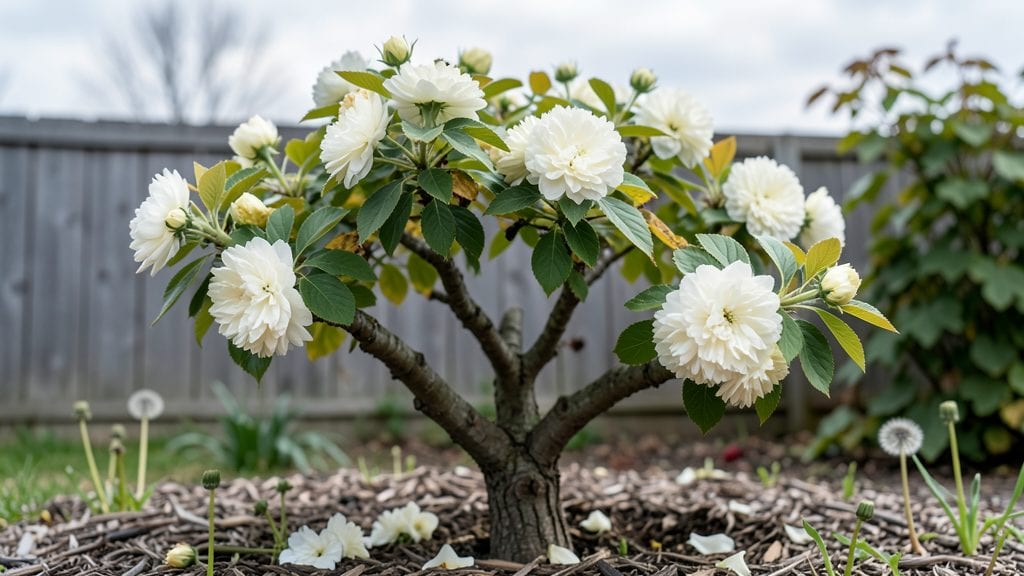
To identify a flowering tree 🌸, start by scanning its leaves, bark, and blooms—they hold the clues you need to pinpoint the species in minutes.
Strolling through a park or planning your garden, you spot a stunning flowering tree—but have no idea what species it is. With over 3,000 varieties, identifying them can feel overwhelming.
This guide reveals the key visual clues—leaf shape, bark texture, and bloom patterns—that unlock the mystery of any flowering tree in seconds.
Why does it matter? Knowing the species helps you care for it properly, plan your landscape with confidence, and even spot rare or ecologically valuable trees in your area. Whether you’re a gardener or a nature lover, these simple tricks will turn you into a tree detective.
Below, I’ll walk you through the quickest methods—from using free apps to reading bark like a pro—and share the most common flowering trees so you can match what you see to what you know.
How to identify flowering trees by leaf shape, size & arrangement
Leaves are nature’s ID badges for flowering trees. By mastering just three key traits—leaf shape, size, and arrangement—you can narrow down species with surprising accuracy. The margin (smooth or serrated), vein pattern, and whether leaves are simple or compound often reveal 90% of the mystery.
Start by examining one branch closely: the clues are there, waiting to be decoded.
For example, a smooth-edged, palmate-veined leaf with opposite arrangement is your first hint it might be a maple. Meanwhile, lobed leaves with alternate arrangement scream oak. These visual cues work like a botanical fingerprint, and once you learn them, identifying flowering trees becomes second nature.
Grab a magnifying glass and let’s unlock the secrets hidden in foliage.
🌿 Leaf ID Cheat Sheet: Flowering Trees by Foliage
| Leaf Type | Shape & Margin | Arrangement | Vein Pattern | Common Trees | 🌸 Bloom Clue |
|---|---|---|---|---|---|
| Simple | Oval, lobed, or smooth-edged | Alternate (staggered) | Palmate (spreading) or pinnate (parallel) | Maple, Oak, Magnolia | Spring blooms before leaves |
| Compound | Multiple leaflets (5-11) | Alternate or opposite | Pinnate (feather-like) | Honeylocust, Ash, Catalpa | Summer flowers after leaves |
| Serrated | Toothed edges | Alternate | Pinnate | Dogwood, Serviceberry | White/pink clusters |
| Entire | Smooth edges | Opposite | Palmate | Japanese Maple, Redbud | Pink/purple spring blooms |
| Lobed | Deep indentations | Alternate | Pinnate | Oak (White, Red) | Catkins (not showy) |
Let’s break down the leaf arrangement first, as this is your fastest filter. Most flowering trees fall into two camps: alternate (like holly or oak) or opposite (like maple or dogwood). Simply walk along a branch—if leaves grow in pairs at each node, it’s opposite.
If they spiral upward solo, it’s alternate. This simple trick cuts your options in half immediately.
Next, focus on the leaf margin. A smooth edge often points to trees like magnolia or redbud, while serrated edges (like tiny teeth) scream oak or hickory.
Pro tip: Run your fingers along the edge—rough margins are a dead giveaway for compound leaves, common in trees like ash or honeylocust. These textures are your secret weapon in the field.
Don’t overlook vein patterns, which act like a tree’s circulatory system. Palmate veins (spreading from one point) are classic in maples and horse chestnuts, while pinnate veins (parallel lines) dominate oaks and willows.
Hold the leaf up to sunlight—you’ll see the intricate network that’s unique to each species. This step alone can reveal whether you’re looking at a tulip tree or a sycamore.
Here’s a game-changer: leaf size matters. Large, broad leaves (4-8 inches) often belong to magnolias or crepe myrtles, while tiny leaves (1-2 inches) might hint at serviceberry or dogwood.
Measure a few leaves—if they’re palm-sized, you’re likely dealing with a tropical-inspired tree like frangipani or royal poinciana. Size is your shortcut to ruling out entire categories.
Combine these clues like a detective. For instance, if you spot a tree with opposite, palmate leaves, smooth margins, and white spring blooms, it’s almost certainly a Japanese maple.
Or if the leaves are compound with 7-9 leaflets, arranged alternately, and the tree sports summer flowers, you’re probably looking at a black locust. Practice this method in your garden or local park—soon, you’ll recognize patterns without even thinking.
One common mistake? Ignoring leaf undersides. Some trees, like magnolias, have felt-like undersides, while others like birches are smooth. Flip the leaf over—this hidden detail often confirms your guess.
Pair this with the bark texture (smooth vs. furrowed) and bloom timing (spring vs. summer), and you’ve got a foolproof ID system.
Remember, no single trait is foolproof. Always cross-reference with flower color, fruit type, and growth habit. But mastering leaves gives you the foundation to
Flowering tree identification by bark texture & seasonal clues
When identifying flowering trees, most gardeners focus on leaves or blooms—but bark texture and seasonal changes often hold the key clues. A tree’s bark tells its life story, revealing age, health, and even species.
For example, smooth bark often indicates younger trees, while deep furrows signal maturity. Combine this with seasonal patterns—like spring bud bursts or autumn leaf colors—and you’ll narrow down species faster than a field guide.
Seasonal transitions are your secret weapon. In spring, watch for bud break patterns—some trees bloom before leaves emerge (like cherry blossoms), while others follow leaf growth. Autumn’s leaf color shifts also vary by species, from fiery reds to golden yellows.
Pair these observations with bark details, and you’ll identify that mysterious tree in minutes, even without flowers present.
Here’s how to decode bark texture and seasonal signals for five iconic flowering trees:
| Tree Species | Bark Texture | Seasonal Clues | Bloom Time | Signature Feature |
|---|---|---|---|---|
| Sycamore | Patchy, mottled gray-brown | Spring buds appear before leaves | May-June | Large, maple-like leaves |
| Paper Birch | White, papery peeling | Yellow autumn foliage | April-May | Catkin flowers |
| Crape Myrtle | Rough, diamond-shaped plates | Purple-red summer blooms | Summer | Pom-pom flower clusters |
| Japanese Maple | Smooth, reddish-brown | Bright red autumn leaves | April-May | Lacy, delicate flowers |
| Dogwood | Smooth, gray with age | White bracts in spring | April-May | Four-petaled flowers |
Take the paper birch, for instance. Its peeling white bark is unmistakable, but combine that with its yellow autumn leaves and you’ve got a foolproof ID. Or consider the crape myrtle, whose rough, exfoliating bark and summer pom-pom blooms make it stand out in any landscape.
These visual cues work year-round, even when flowers aren’t in season.
Pro tip: Snap a photo of the bark up close and compare it to your notes on seasonal patterns. For example, if you see furrowed bark with spring blooms before leaves, you’re likely looking at a cherry tree.
Pair this method with leaf shape analysis (from our previous section), and you’ll identify flowering trees with near-certainty—no app required.
Remember, bark isn’t just for winter ID. In spring, bud scales and new growth patterns reveal even more. Keep a small notebook or use your phone to log these details as you explore.
Over time, you’ll recognize patterns that make tree ID second nature, turning every walk into a botanical adventure.