
Vegetables
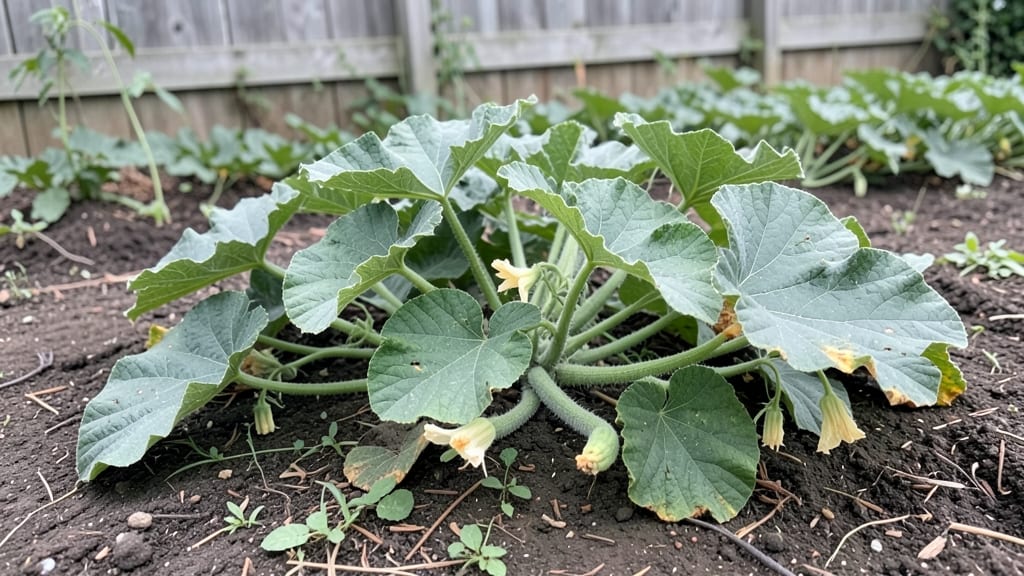
Male cantaloupe flowers are not edible and serve only to pollinate female blooms, which produce fruit. They lack the small, round ovary at the base that female flowers have, instead featuring long, slender stamens that release pollen.
These flowers play a crucial role in the cantaloupe's life cycle—without them, there’d be no fruit at all. 🌱 The male flowers appear first and are often more abundant, while female blooms develop later with that telltale swollen ovary at the base.
If you’re growing cantaloupes, you’ll want to spot these key differences to ensure proper pollination and a bountiful harvest.
Interestingly, gardeners sometimes hand-pollinate by transferring pollen from male stamens to female flowers using a soft brush, especially in greenhouses where natural pollinators are scarce. This extra step can boost yields significantly, making it a handy trick for anyone serious about maximizing their melon crop.
💡 In This Article
- How to Identify Male vs Female Cantaloupe Flowers
- Encouraging Pollination for Better Cantaloupe Yields
How to identify male vs female cantaloupe flowers
Here's what's actually happening beneath the petals: male cantaloupe flowers develop five long, slender stamens (the pollen-producing structures) that extend dramatically beyond the flower's center, often by 0.5 to 1 inch.
These stamens are delicate, with bright yellow pollen sacs at their tips that release clouds of pollen when mature. Female flowers, in contrast, have a small, round ovary at their base that looks like a tiny melon bud—this is where fruit development begins. 🌸
The size difference is striking too: male flowers typically measure 1.5 to 2 inches in diameter with thin, wiry stems about 1/8 inch thick, while female flowers are slightly larger (2 to 2.5 inches) with thicker stems (1/4 inch or more).
The ovary on females feels firm to the touch, like a miniature cantaloupe, while male flowers have a hollow base. This ovary becomes the fruit after pollination—a process that takes about 3-5 days to complete.
What most people don't realize is how growth position reveals the secret: male flowers grow from the main vine and appear in clusters, while female flowers emerge from side shoots closer to leaf nodes.
This positioning helps bees efficiently transfer pollen—males open first (usually 2-3 days earlier) to ensure females are ready when they bloom. The scent difference also helps: male flowers emit a sweeter, more pronounced fragrance to attract pollinators, while females have a milder aroma focused on retaining pollen.
There's a practical implication you might not expect: the stamen length in male flowers (often 1.25 inches) makes them perfect for hand-pollination. When bees aren't around, gardeners can gently brush these stamens against female flowers' stigmas (the fuzzy center) to ensure fruit set.
The pollen grains are microscopic (20-50 microns) but remarkably sticky, allowing them to adhere even with minimal contact. 🌿
For visual learners, here's what to watch for:
- Male flowers: Long stamens, hollow base, thin stems, grow on main vine
- Female flowers: Swollen ovary at base, thicker stems, grow on side shoots
- Edibility clue: Only female flowers develop fruit—male flowers are purely functional
Remember this visual trick: if you see a flower with a tiny melon-shaped bump at its base, it's female and edible (eventually). If it's just a cluster of long tubes with no bump, it's male and best left for pollination duty.
This knowledge becomes especially valuable when growing cantaloupes in containers or greenhouses where natural pollinators are limited. 💡