
Trees
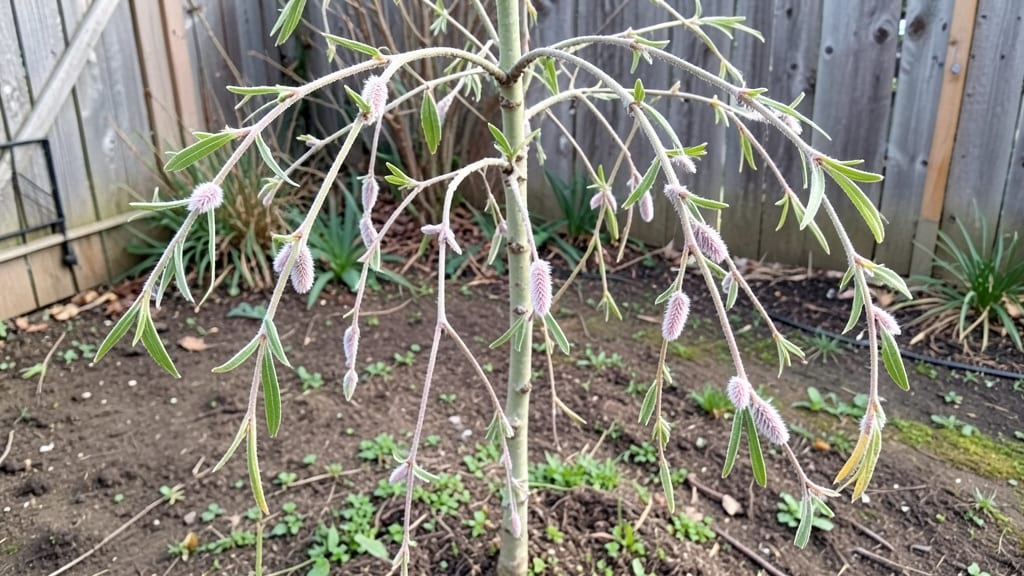
Pink flower willow trees feature vibrant magenta or blush-colored catkins that appear in early spring, distinguishing them from standard willows with their drooping, fuzzy blooms. These ornamental varieties thrive in wet soil and partial sun, making them ideal for ponds or stream edges.
These showy trees aren't just about their springtime color bursts—they also bring dramatic foliage contrast with their deep green, willow-like leaves that turn golden in fall. 🌸 I’ve seen them transform water gardens into living art pieces, especially varieties like Salix caprea ‘Pendula’, which pairs its magenta plumes with cascading branches that create natural privacy screens.
Their adaptability means they’ll even tolerate occasional flooding, though they’ll reward you best with consistent moisture and a spot where they can stretch their roots without competition.
What’s often overlooked is their multi-season appeal: even after the catkins fade, the trees maintain structural interest with their graceful, arching forms.
If you’re in USDA zones 4–8, you’re in luck—these trees handle cold snaps surprisingly well, though young specimens may need winter protection in their first few years. The key to keeping them blooming reliably?
Prune back any dead branches in late winter and avoid heavy fertilization, which can actually reduce flowering intensity.
💡 In This Article
- Identifying Pink Flower Willow Tree Varieties
- Optimal Planting and Maintenance for Pink Willow Blooms
Identifying pink flower willow tree varieties
The most striking pink-flowering willow is Salix purpurea, also called the purple willow, which produces deep magenta catkins that emerge before the leaves in early spring. These catkins can reach 1-2 inches long and create a dramatic cloud-like effect when viewed from below.
The tree itself grows 10-15 feet tall with a multi-stemmed, bushy habit, making it ideal for smaller landscapes or as a focal point in cottage gardens. Its narrow, lanceolate leaves (up to 4 inches long) have finely serrated edges and turn golden-yellow in fall.
In contrast, the weeping willow variant Salix babylonica 'Pendula' produces more subdued pale pink to cream-colored catkins that appear slightly later in spring. This variety's signature feature is its pendulous branches that can reach 30-50 feet when mature, creating a dramatic, fountain-like silhouette.
The leaves are similar in shape but narrower (2-3 inches long), with a slightly silvery underside that adds texture. What most gardeners don't realize is that this variety's pinkish blooms often develop a yellowish tint as they age, which creates a beautiful two-tone effect in the landscape.
The key distinguishing factor between these varieties is their growth habit and bloom intensity. Salix purpurea grows in a more compact, multi-trunked form with vibrant magenta blooms that create an immediate visual impact, while Salix babylonica 'Pendula' offers a more subtle pink hue but makes up for it with its dramatic weeping branches.
Both thrive in USDA zones 4-8, but the purple willow handles colder climates slightly better due to its denser growth structure. For maximum bloom performance, plant both varieties in full sun to partial shade with consistently moist soil—this mimics their natural habitat along stream banks.
Here's what to look for when identifying these varieties in the wild or at nurseries:
- Bloom color: Salix purpurea has bright magenta catkins, while Salix babylonica shows pale pink to cream blooms
- Branch structure: Purple willow is multi-stemmed and bushy; weeping willow has single dominant trunk with cascading branches
- Leaf size: Purple willow leaves are 3-4 inches long; weeping willow leaves are 2-3 inches with silvery undersides
- Mature height: Purple willow stays 10-15 feet; weeping willow reaches 30-50 feet
The timing of blooms also differs slightly. Salix purpurea typically flowers in late winter to early spring (February-March), while Salix babylonica blooms a bit later (March-April).
This difference is crucial for gardeners planning seasonal interest—the purple willow provides earlier color, which can be especially valuable in colder climates where spring arrives later. Both varieties produce catkins that appear before the leaves, creating that signature willow "cloud" effect that's so prized in ornamental landscapes.
One advanced tip for identification is to examine the catkin structure closely. Purple willow catkins have denser, more compact flowers with a slightly fuzzy texture, while weeping willow catkins are more open and airy.
This structural difference affects how they catch light—purple willow catkins create a solid magenta mass, while weeping willow catkins allow more light penetration, creating a lacy, translucent effect. This subtle difference becomes obvious when viewing the trees from different angles in your garden. 💫