
Blooming
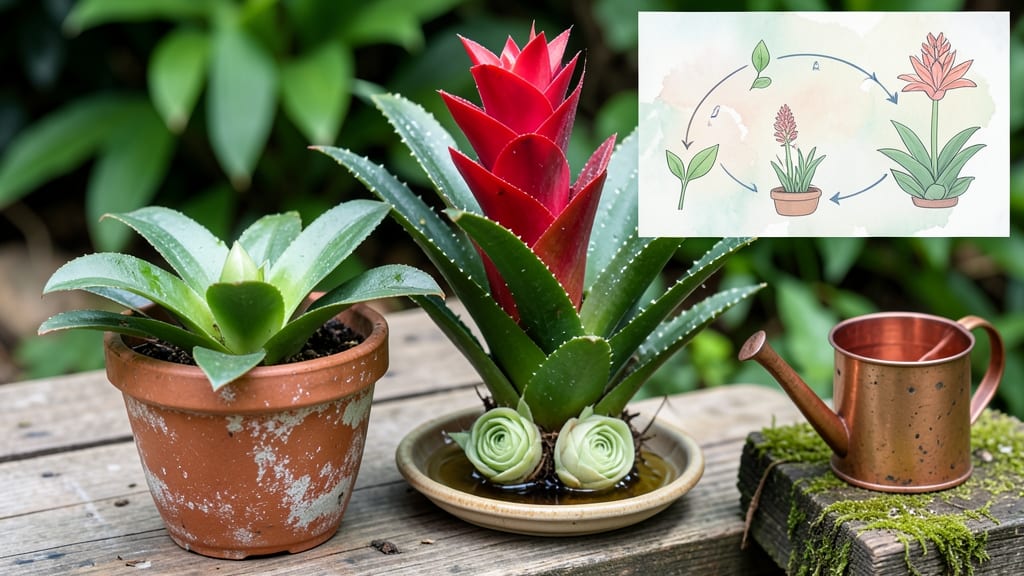
Bromeliads flower when they reach maturity and receive the right light cues — a process that can take 1 to 3 years depending on the species and growing conditions.
Picture this: your 🌸 bromeliad has spent months thriving in your home, its rosette tight and vibrant, but then—nothing. No spike, no bracts, no flowers. You’re not alone; many gardeners miss the subtle signals that trigger this tropical plant’s stunning display.
The truth? Their blooming isn’t random—it’s tied to age, light exposure, and even temperature shifts.
For General (Tropical/Subtropical) bromeliads, flowering often kicks off in fall or winter, when daylight shortens and humidity rises. Some species, like Guzmania, may bloom year-round indoors if given the right conditions, while others wait until they’re 2–3 years old and fully mature.
The key? Understanding how light duration and intensity work together to set off the blooming process.
In this guide, I’ll break down the exact timing by species, how to spot the first signs of a coming bloom, and pro tips to encourage flowering—even if your plant seems stubborn.
Whether you’re growing bromeliads indoors or in a warm climate, you’ll learn how to turn that patience into a showstopping display.
How light exposure triggers bromeliad flowering: the science behind the bloom
Bromeliads are fascinating tropical plants that rely on precise light triggers to bloom. Unlike many houseplants, their flowering isn't just about age—it's primarily controlled by photoperiodism, the plant's response to daylight duration.
Most bromeliads are short-day plants, meaning they need shorter daylight periods to flower, typically between 10-12 hours of light daily. This natural timing explains why many bloom during late fall or winter in their native tropical habitats.
The science behind this involves a hormone called florigen, produced when bromeliads detect specific light patterns. When daylight shortens (like in autumn), this hormone signals the plant to shift from vegetative growth to flowering.
Understanding this process lets you control blooming times—even forcing flowers indoors during holidays by manipulating light exposure. For example, covering plants with a blackout cloth for 12-14 hours mimics shorter days and can trigger blooms.
| Bromeliad Type | Natural Blooming Season | Light Requirements | Indoor Forcing Method |
|---|---|---|---|
| Aechmea (e.g., 'Carolina') | Late fall to winter | 10-12 hours daylight | 14-hour dark period (cover with cloth) |
| Guzmania (e.g., 'Mirage') | Spring to early summer | 12-14 hours daylight | 8-hour dark period (night interruption) |
| Vriesea (e.g., 'Fosteriana') | Summer to autumn | 10-12 hours daylight | 12-hour dark period (natural winter light) |
| Neoregelia (e.g., 'Firecrest') | Winter to early spring | 8-10 hours daylight | 16-hour dark period (extended night) |
Light intensity also plays a crucial role—bromeliads need bright indirect light (about 1,000-2,000 foot-candles) to thrive. Too little light delays flowering, while too much direct sun can scorch leaves and stress the plant.
In my experience, placing bromeliads near an east-facing window provides ideal morning light without harsh afternoon rays. For indoor growers, supplementing with a grow light (12-14 hours daily) can help maintain consistent light levels year-round.
Seasonal variations matter too. In tropical climates, bromeliads naturally bloom during shorter daylight months (like December-February), while in temperate zones, they may bloom in late spring or early autumn when days lengthen or shorten.
This explains why your Guzmania might flower in June but your Aechmea waits until November—it's all about their native light patterns. Paying attention to these seasonal cues helps you predict and even accelerate blooming.
One common misconception is that all bromeliads follow the same light rules. In reality, some species like Billbergia are long-day plants, flowering when daylight exceeds 14 hours. This makes them ideal for summer blooming in northern latitudes.
To identify your plant's needs, check its native habitat—most tropical bromeliads come from regions with distinct wet/dry seasons, where light duration triggers flowering at specific times.
For indoor gardeners, manipulating light cycles is the easiest way to force blooms. Start by observing your plant's current light exposure—most homes provide 12-14 hours of natural light during summer but only 8-10 hours in winter.
To encourage winter blooming, extend the dark period to 14 hours by covering the plant after sunset. Conversely, for summer blooms, interrupt the night with 2-3 hours of artificial light to simulate longer days. This technique works best when applied consistently for 4-6 weeks before the desired bloom time.
Temperature interacts with light to influence flowering. Bromeliads typically need 65-80°F (18-27°C) during daylight hours and a 10°F (5°C) drop at night to trigger florigen production.
In my greenhouse, I use a simple thermometer to monitor these fluctuations—even a slight drop below 70°F (21°C) at night can signal the plant to start blooming. Combine this with the right light duration, and you've got a perfect recipe for flowers.
Light quality matters too. Bromeliads respond best to blue and red light spectrums, which are abundant in natural sunlight. If growing indoors under artificial lights, use full-spectrum LED grow lights that mimic these wavelengths.
I've found that cool white LEDs work well for general growth, but adding a red light supplement can boost flowering responses in stubborn varieties like Tillandsia.
Finally, remember that bromeliads are monocarpic—they flower only once in their lifetime before producing offsets (pups). This makes timing especially important, as you'll only get one chance to see that stunning inflorescence.
By mastering light exposure, you can ensure your bromeliads bloom at the perfect moment, whether it's for a holiday centerpiece or simply to enjoy nature's tropical beauty indoors. 🌸
Bromeliad age and species-specific flowering windows: when to expect blooms
Predicting when your bromeliads will flower depends on two key factors: species maturity and environmental cues. While some varieties bloom within 1-2 years, others may take 3+ years to reach their flowering window.
Understanding these timelines helps you set realistic expectations and create ideal growing conditions for your plants.
Not all bromeliads follow the same schedule—Guzmania species often flower faster than Vriesea varieties, while Aechmea plants may surprise you with earlier blooms. The secret lies in recognizing maturity signals like leaf rosette size, bract development, and central spike emergence.
Let’s break down what to watch for in your favorite bromeliad types.
- 1 1-2 years for fast bloomers like Guzmania lingulata—look for a 12-inch rosette with tightly packed leaves.
- 2 2-3 years for moderate bloomers like Vriesea splendens—watch for bright pink bracts emerging from the center.
- 3 3+ years for slow bloomers like Aechmea fasciata—identify by thick, spiky leaves and a woolly central spike.
- 4 Bract color change signals imminent blooming—red or orange bracts in Guzmania or yellow-green in Vriesea.
- 5 Central spike emergence is the final cue—once the inflorescence appears, blooms will follow in 4-8 weeks.
Once you spot these maturity signals, your bromeliad is ready to bloom. The Guzmania species often produce flowers in spring or summer, while Aechmea varieties may bloom in fall or winter. Creating the right conditions—like bright indirect light and consistent humidity—will help trigger that stunning display.
Remember, bromeliads are monocarpic, meaning they bloom just once before producing offsets. After flowering, remove the spent bloom to redirect energy to those pups—your future blooming stars! With patience and the right care, you’ll unlock the breathtaking beauty these tropical plants have to offer. 🌸