
Landscaping
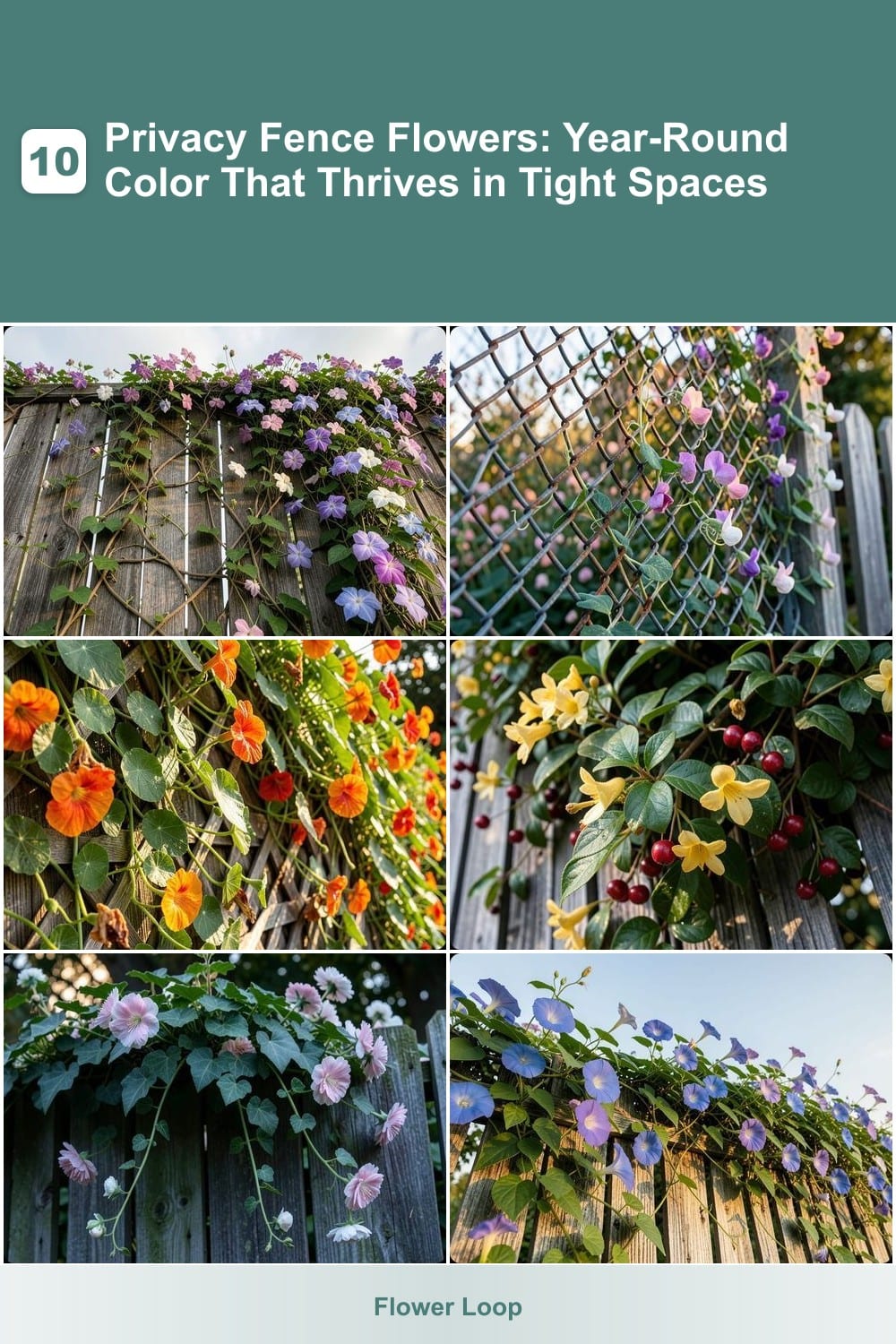
Transform your privacy fence into a lush, colorful vertical garden with these 10 low-maintenance flowers. Perfect for small yards, urban spaces, or anywhere you need vibrant blooms without sacrificing privacy or space.
Clematis Vine Flowers for Vertical Drama
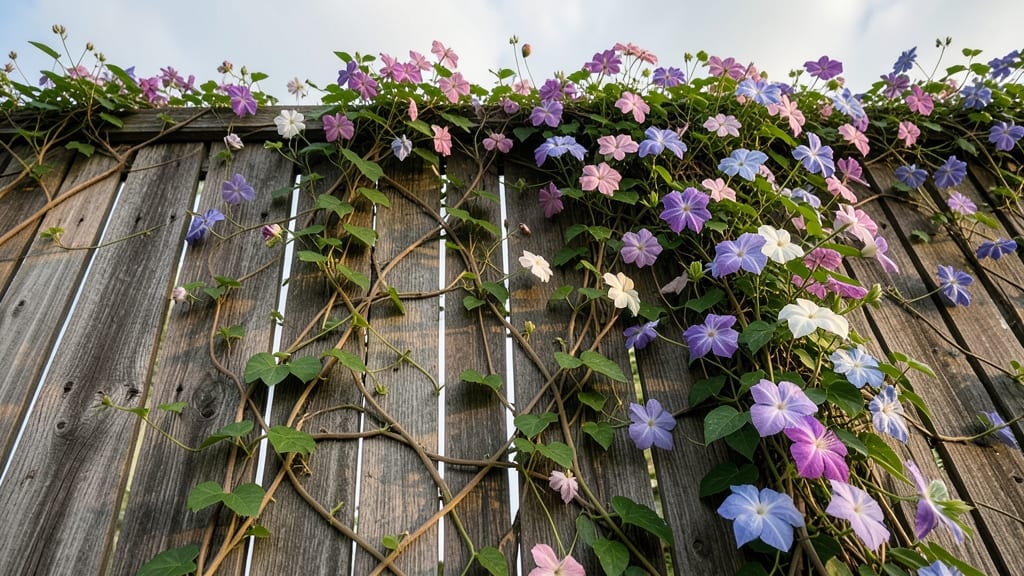
Turn your plain privacy fence into a seasonal floral masterpiece with clematis vines, nature’s most elegant vertical climbers. These fast-growing beauties produce spring-to-fall blooms in shades of purple, pink, white, and blue, transforming bare panels into lush, fragrant curtains with minimal effort.
Clematis thrives on trellises, arbors, or even chain-link fences when given 6 hours of sun daily and well-drained soil. Plant near the fence base with a support structure (like a wire trellis) to guide their growth upward. Prune once a year in late winter—simply trim back last year’s growth to encourage fresh, vigorous blooms. Varieties like Jackmanii or Nelly Moser offer dramatic color with minimal fuss.
Perfect for small spaces, urban balconies, or narrow yards, clematis adds height and sophistication without overwhelming your garden. Urban gardeners and beginners will love how these vines self-support once established, requiring only occasional watering and an annual feeding of balanced fertilizer for nonstop blooms. 🌷
Sweet Pea Flowers for Fragrant Climbing Beauty
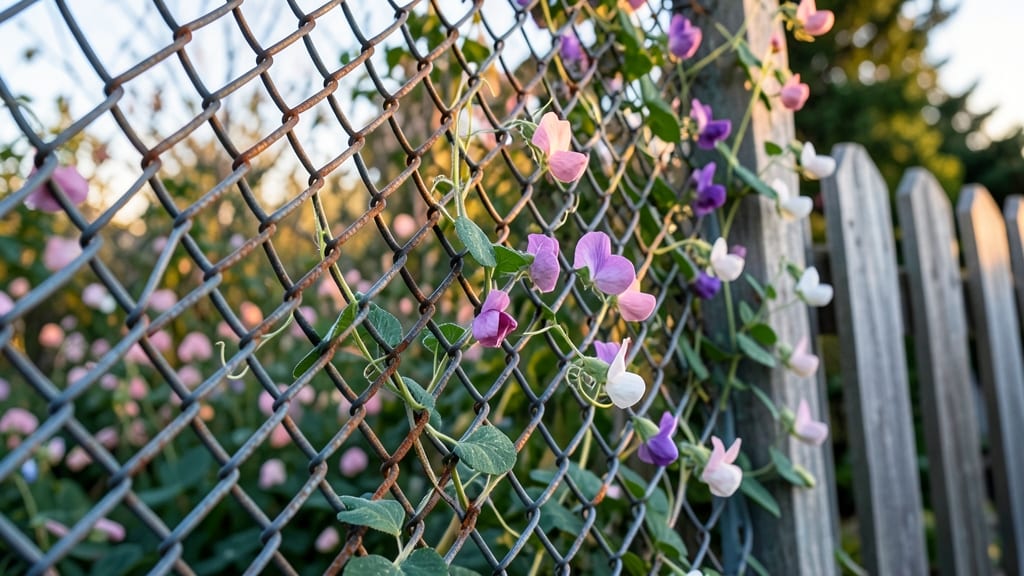
Skip the complicated trellis systems—sweet peas are nature’s fence-climbing experts, twisting their tendrils around chain-link or wood without a single tie. Their delicate, fragrant blooms in shades of pink, purple, and white appear just 60-70 days after sowing, turning bare fences into a fragrant floral display.
These cool-weather annuals thrive in partial shade and well-drained soil, making them ideal for urban gardens where space is tight. Plant seeds directly into the ground in early spring or fall for a burst of color that attracts bees and butterflies. With minimal care—just consistent moisture and occasional deadheading—you’ll enjoy a pollinator-friendly showstopper that self-seeds for years.
Perfect for beginners, sweet peas offer instant gratification and a sensory experience no other fence plant can match. 🌷
Nasturtium Flowers for Edible Privacy
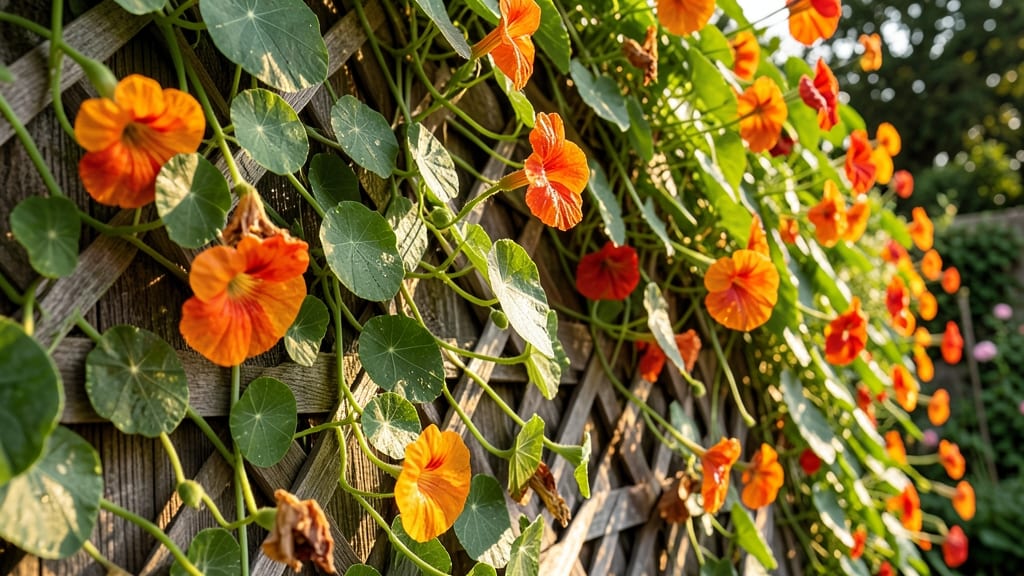
Looking for a privacy fence solution that’s not only beautiful but also edible? Nasturtiums deliver with their bright orange and red blooms that double as a natural pest deterrent while adding a pop of color to your space.
These fast-spreading annuals thrive in partial shade and even tolerate poor soil, making them perfect for urban balconies or neglected corners. Their peppery leaves and flowers are edible—toss them in salads or garnish dishes—and they repel squash bugs and aphids, protecting your other plants. Plant seeds directly in the soil or containers for a cascading effect.
Urban gardeners and small-space enthusiasts will love how nasturtiums create a lush, edible privacy screen with almost no effort. 🌻
Honeysuckle Flowers for Year-Round Interest
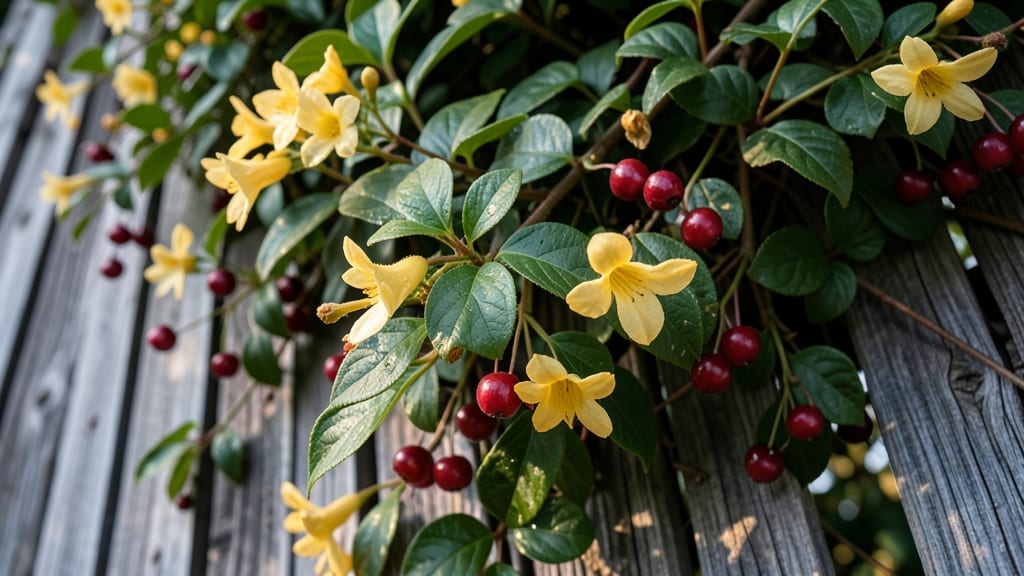
Tired of seasonal fence flowers that fade into winter doldrums? Honeysuckle brings year-round texture—fragrant summer blooms and glossy winter berries—making it the ultimate mild-winter workhorse for privacy screens.
This semi-evergreen vine thrives in full sun to partial shade and clings effortlessly to fences without needing trellis support. Plant in well-drained soil, water regularly the first year, then enjoy low-maintenance growth with minimal pruning. The golden tubular flowers attract hummingbirds, while the red berries add winter color—perfect for climates like USDA Zones 5-9.
Ideal for gardeners who want seasonal interest without seasonal replanting, honeysuckle’s fragrant blooms and wildlife appeal make it a standout for rustic or cottage-style fences. 🌻
Ivy Geranium for Shade-Loving Color
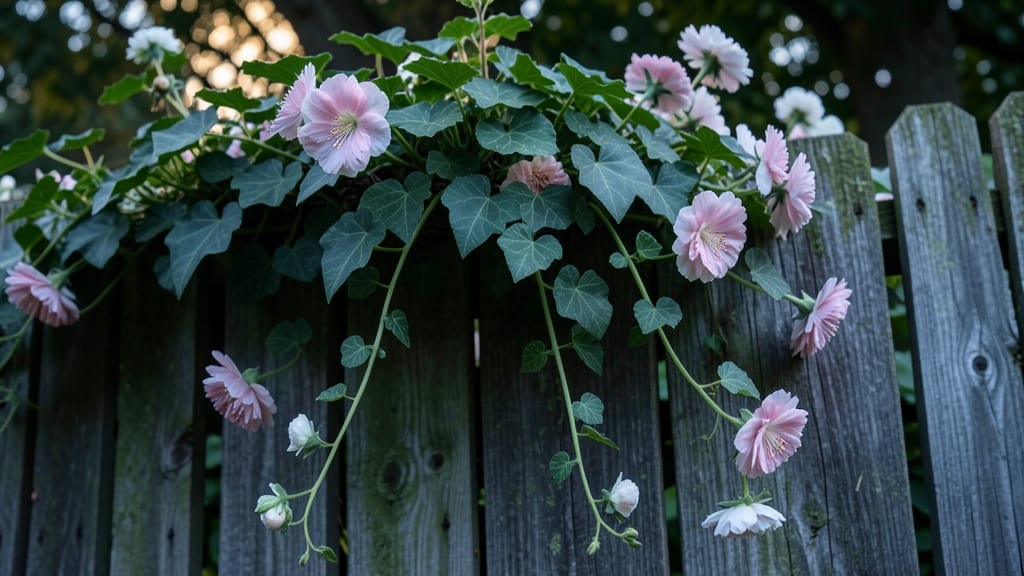
If your fence sits in deep shade where most plants struggle, ivy geranium (Pelargonium peltatum) is your secret weapon. This hardy perennial thrives in low-light conditions, producing cheerful clusters of pink or white flowers that bloom from early summer through fall—no full sun required.
Its spreading, vine-like growth makes it perfect for softening rough fence edges or filling gaps between slats. Simply tuck plants into crevices or train them along wires—no trellis needed. Drought-tolerant once established, it’s ideal for urban yards with minimal water access, and deer typically leave it alone.
Perfect for gardeners with shady fences who still crave color, ivy geranium adds textural interest without the high-maintenance demands of sun-loving climbers. 🌿
Morning Glory for Fast Summer Coverage
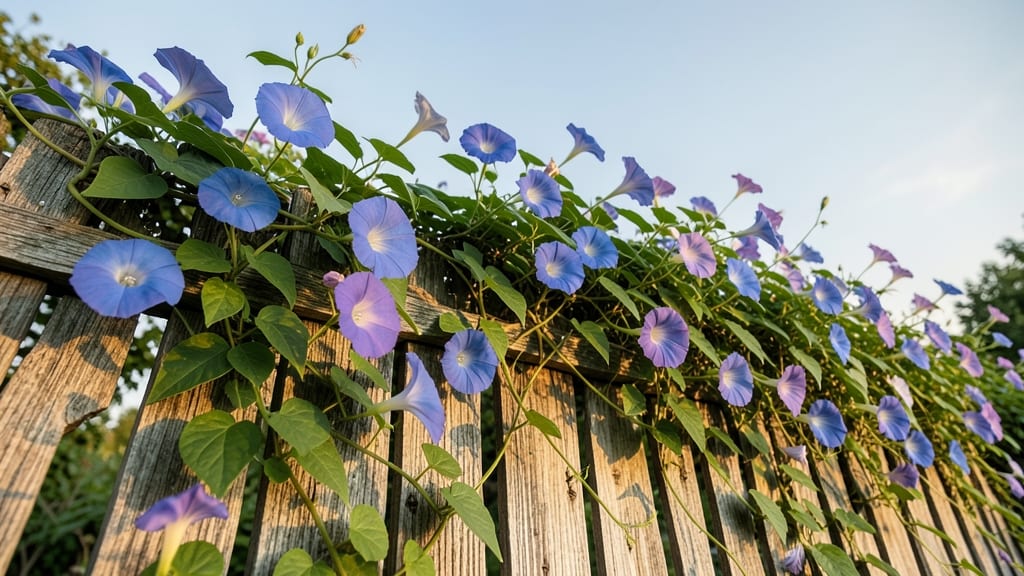
Want to transform your fence into a dazzling summer curtain in just weeks? Morning glory is the ultimate fast-track solution, bursting into vibrant blue or purple blooms by midsummer with almost no effort from you.
These annual vines grow at a staggering rate—up to 10 feet in a single season—and thrive in full sun to partial shade, making them perfect for chain-link or wooden fences. The real magic? They self-seed prolifically, so you’ll wake up to fresh clusters of flowers year after year without replanting. Deadhead spent blooms to encourage even more flowers, and watch your fence transform into a living tapestry by July.
Ideal for renters, urban gardeners, or anyone craving instant summer color, morning glory is the low-maintenance superstar of seasonal privacy. Just plant the seeds in spring, water occasionally, and enjoy the show! 🌻
Coral Vine for Bold Winter Interest
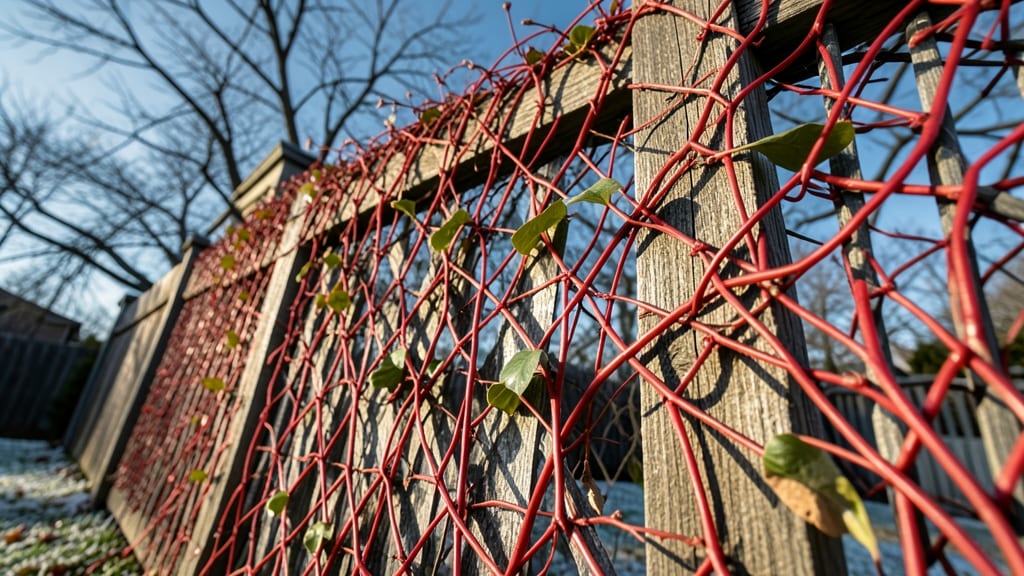
If you want a privacy fence that stays stunning even when other plants sleep through winter, coral vine (Aristolochia californica) delivers with its fiery red stems that glow against bare branches. Unlike most vines that fade in cold months, this deciduous climber transforms your fence into a winter art piece while still offering delicate white flowers in summer.
Plant it in full sun where it thrives in well-drained soil, and watch it climb 10-15 feet in just one season. The architectural stems create natural vertical lines, while the small flowers attract hummingbirds. Prune back in late winter to encourage fresh growth and maintain its tidy form.
This is the perfect choice for gardeners who love year-round structure and bold winter accents. It’s especially great for modern landscapes where clean lines meet natural beauty. 🌻
Lantana for Drought-Tolerant Blooms
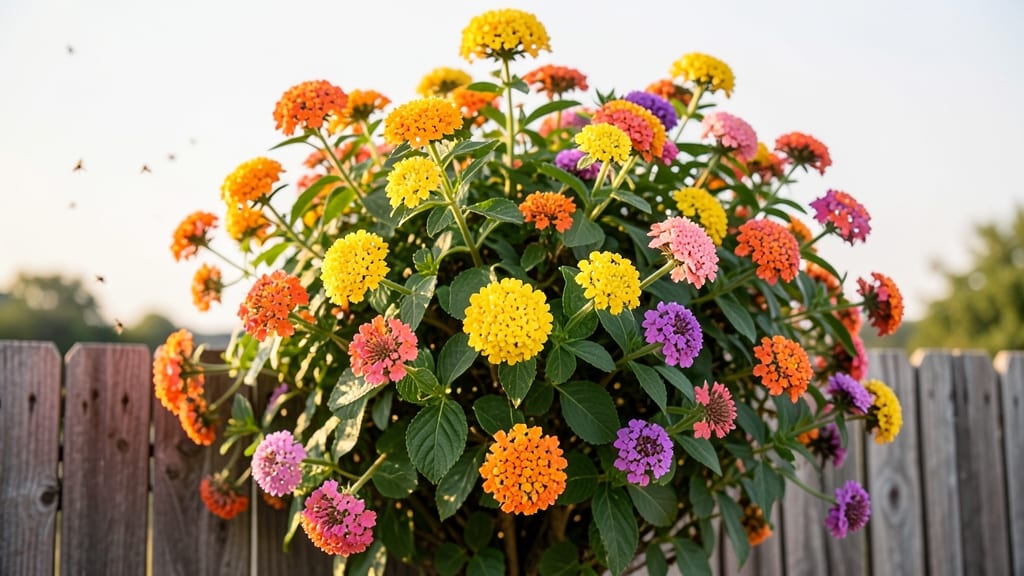
If you're looking for a low-maintenance flower that thrives in heat and drought, lantana is your answer. This cheerful perennial produces clusters of tiny, butterfly-attracting blooms in shades of yellow, orange, pink, and purple—all while requiring almost no water once established.
Lantana thrives in full sun and poor soil, making it ideal for urban or neglected spaces. Simply plant it near your fence and watch it spill over with vibrant color. Deadhead spent blooms to encourage continuous flowering, but otherwise, it’s nearly foolproof. The butterfly magnet quality adds extra charm to your privacy screen.
Perfect for gardeners in hot climates or those who want year-round color with minimal effort, lantana is the ultimate no-fuss bloomer. 🌻
Passionflower Vine for Tropical Privacy
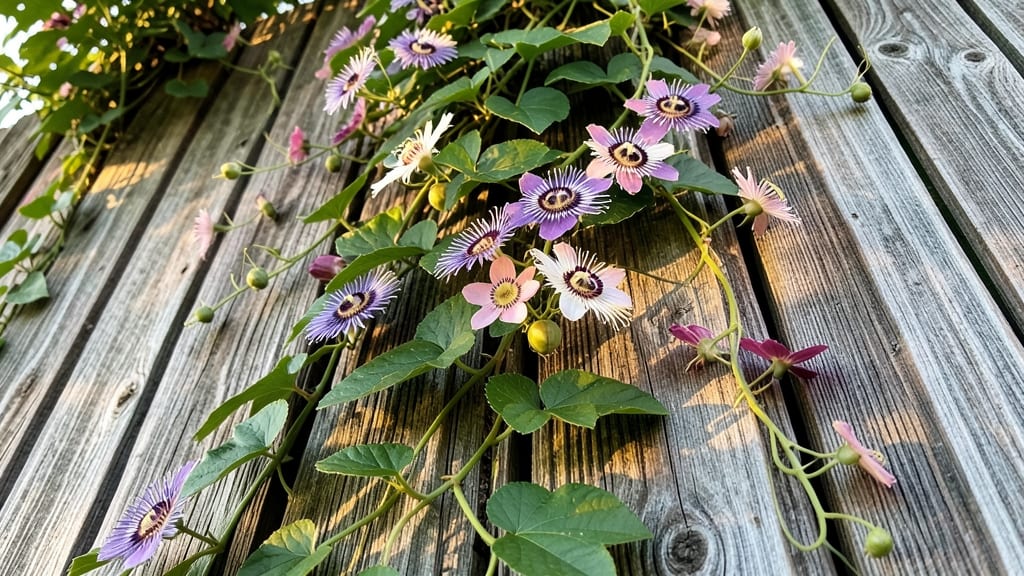
Want to transform your fence into a tropical oasis with zero effort? The passionflower vine (Passiflora) delivers exotic, moon-shaped blooms in vibrant purples, pinks, or whites—plus edible fruit—while growing aggressively in warm climates.
This fast-growing perennial thrives in full sun to partial shade and tolerates poor soil, making it ideal for neglected fence sections. Its self-clinging tendrils eliminate the need for trellises, and the passionfruit it produces is a bonus for culinary enthusiasts.
Perfect for gardeners in USDA zones 8-11, this vine adds dramatic vertical interest with minimal pruning. Just water occasionally once established, and watch your fence become a living work of art. 🌻
Black-Eyed Susan Vine for Native Beauty
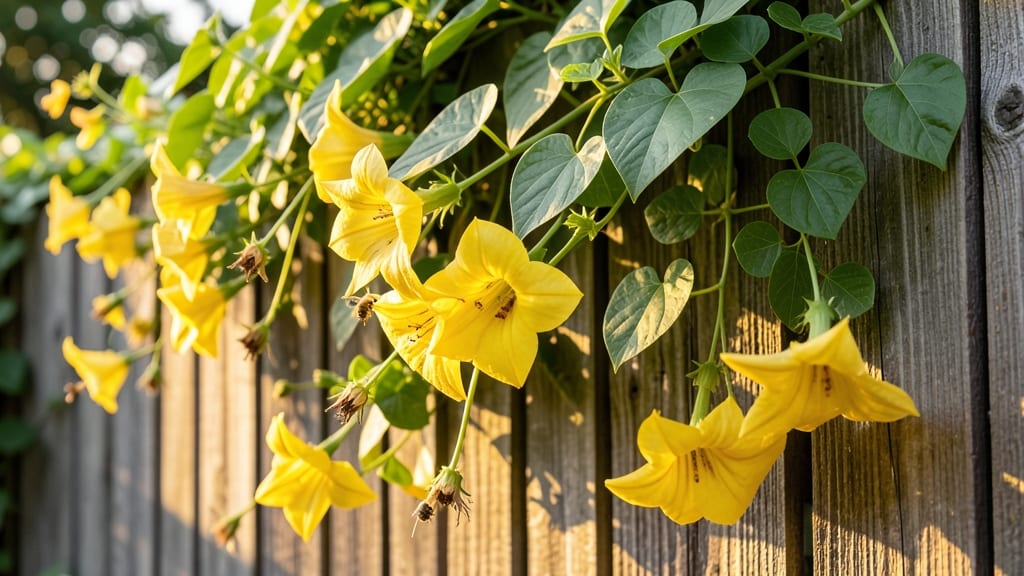
Looking for a native plant that brings effortless charm to your fence while supporting local ecosystems? The Black-Eyed Susan Vine (Thunbergia alata) delivers bright yellow blooms that pollinators adore, all while thriving in conditions that would challenge other plants.
This hardy annual (often treated as a perennial in warm climates) tolerates poor soil, drought, and even partial shade, making it ideal for urban fences or neglected corners. Simply plant seeds near the base of your fence in spring—it’ll climb naturally without needing trellis support, covering gaps with cheerful flowers from summer through fall. Deadhead spent blooms to encourage even more vibrant reblooms.
Perfect for gardeners who want low-maintenance beauty with a native twist. Its pollinator-friendly nature also makes it a favorite among wildlife enthusiasts. 🌻