
Pruning
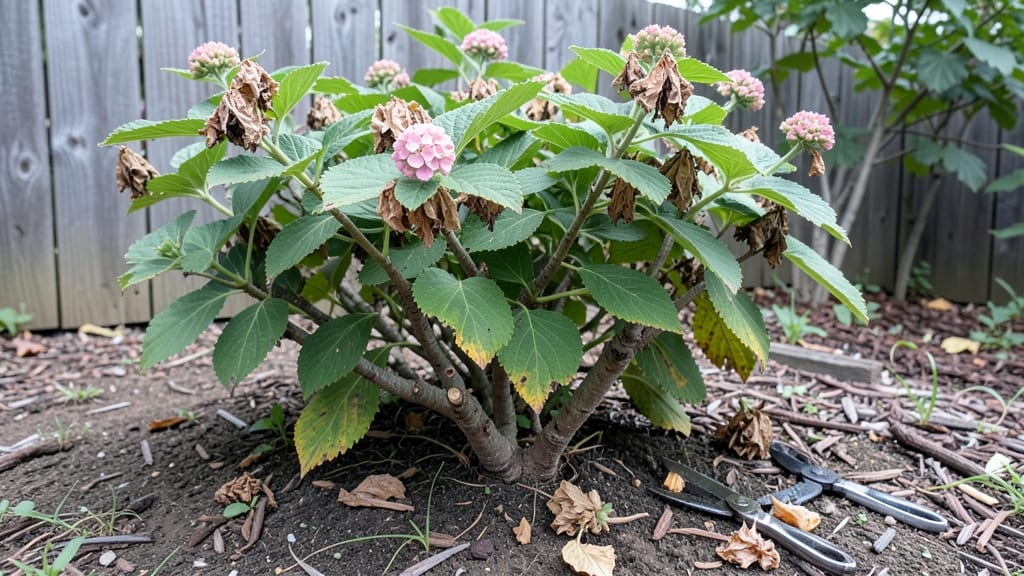
Pruning hydrangea flowers at the right time transforms your shrubs from scraggly to showstopping. ✨ I learned the hard way that timing matters—cutting too early means no blooms, but waiting too long means leggy growth. The secret lies in knowing your hydrangea type and the season’s cues.
You’ll need sharp pruners, gloves, and a clear day to see the plant’s structure. For mophead hydrangeas, prune right after blooming; lacecaps need a gentler approach in late winter.
The goal is to remove dead wood while shaping the bush to encourage new growth—think of it like giving your plant a haircut for maximum volume.
After pruning, your hydrangeas will reward you with denser foliage and bigger blooms next season. The key is making clean cuts just above a set of leaves or buds, never leaving stubs. Water deeply afterward to help the plant recover, and watch as it bounces back with vibrant, bushy growth.
This method works for both container and in-ground hydrangeas, and the results speak for themselves—neighbors will ask how you got such lush, full plants. Let’s get those shears ready!
📚 In This Guide
- What you need
- Instructions
- Tips and common mistakes
- Wrapping up and next steps
What you need
- ● Pruning shears: A sharp, bypass-style pair (4–6 inches long) for clean cuts. Avoid dull or anvil shears—they crush stems and damage plant health. (1 pair required)
- ● Loppers: For thicker stems (½–1 inch in diameter). Look for long-handled, bypass loppers for leverage. (1 pair required)
- ● Garden gloves: Cut-resistant, breathable gloves (e.g., leather or synthetic mesh) to protect your hands from thorns and sharp stems. (1 pair recommended)
- ● Disinfectant (70% rubbing alcohol or bleach solution): Clean tools between cuts to prevent spreading disease. (Small bottle or spray)
- ○ Rake or leaf blower: For clearing away debris after pruning. (Optional but helpful)
- ● Know your hydrangea type: Identify whether your plant is mophead, panicle, oakleaf, or smooth—pruning timing varies! (Check your plant tag or do a quick online search.)
- ● Weather check: Prune on a dry, overcast day or in early morning to reduce stress on the plant. Avoid pruning in extreme heat or cold.
- ● Pruning plan: Sketch a rough outline of your hydrangea’s shape beforehand. Note which stems to cut back and which to preserve for blooms.
- ○ Compost bin or yard waste bag: For disposing of pruned stems. (Optional but eco-friendly!)
Step-by-Step instructions for pruning hydrangea flowers
Here's how I keep my hydrangeas thriving with seasonal cuts—no guesswork, just results.
✂️ Step 1: Identify Your Hydrangea Type First
This is the moment that matters: knowing whether you have mophead, lacecap, or panicle hydrangeas determines how you prune. Mopheads and lacecaps bloom on old wood (last year's growth), while panicles bloom on new wood (current season's growth). I always check for bud clusters along last year's stems—if they're there, you're dealing with old-wood bloomers.
If you're unsure, don't panic. Most bigleaf hydrangeas are old-wood bloomers, so I default to that unless I see new growth with buds forming in spring. Here's the thing—cutting back old-wood bloomers too aggressively means no flowers that year. I mark my calendar to prune right after blooming season ends, usually in late summer or early fall.
✂️ Step 2: Prune Old-Wood Bloomers After Flowering
For mopheads and lacecaps, wait until after the flowers have faded—this is when you'll see the seed heads forming. I like to prune in September or October because it gives the plant time to develop next year's buds before winter dormancy. Start by removing dead or diseased stems first—these are easy to spot as they're brown and crispy.
Next, cut back the remaining stems by about one-third of their height. I never cut all the way to the ground—always leave 2-3 healthy buds on each stem. This encourages bushier growth and more flowers next season. Use clean, sharp pruners to make cuts at a 45-degree angle just above a bud or node.
✂️ Step 3: Renew Panicle Hydrangeas in Late Winter
Panicle hydrangeas are the exception—they bloom on new wood, so you can prune them in late winter or early spring before new growth starts. This is when I do my most aggressive cuts. Remove any dead or weak stems first, then cut back the remaining stems by half their height to encourage fresh, vigorous growth.
Here's what I do: I look for the lowest set of healthy buds on each stem and cut just above them. This ensures the plant will focus its energy on producing new stems with plenty of flower buds. Don't worry about missing this step—panicles are forgiving and will still bloom even if you skip pruning, though the flowers will be smaller.
🌿 Step 4: Shape and Maintain Through the Growing Season
After the initial pruning, I do light maintenance throughout the growing season to keep my hydrangeas looking their best. Remove any spent blooms as they fade to encourage new flowers. For old-wood bloomers, I also trim back any stems that grow too long or flop over—this keeps the plant compact and prevents it from becoming leggy.
I always use clean pruners to make cuts, and I dip them in rubbing alcohol between cuts to prevent spreading disease. Here's the thing about hydrangeas—they respond well to regular shaping, so I don't hesitate to snip off a few leaves or stems if they're crowding the center. Just avoid heavy pruning in summer, as this can stress the plant and reduce next year's blooms.
⏰ Step 5: Prepare for Winter and Next Year's Blooms
In late fall, I give my hydrangeas a final check to remove any remaining dead or weak stems. This is also when I apply a balanced fertilizer to help the plant recover and prepare for next year's growth. I water deeply before the first frost to ensure the roots are hydrated and ready for winter.
Real talk: Hydrangeas are tough plants, but they do need a little help in harsh winters. I mulch around the base with 2-3 inches of mulch to protect the roots from freezing temperatures. In spring, I'll remove the mulch and watch for new growth—this is my signal that the plant is ready for another season of blooms.
Tips & tricks for perfect hydrangea pruning
Pruning hydrangeas the right way makes all the difference between sparse blooms and lush, vibrant flowers. These tried-and-true tips will help you avoid common mistakes and keep your plants thriving for years.
Timing is Everything: I can't stress this enough—pruning old-wood bloomers like mopheads and lacecaps in September or October (Step 2) gives them crucial time to develop next year's buds before winter dormancy. If you prune too early, you risk cutting off flower buds that haven't formed yet. For panicles (Step 3), late winter pruning is perfect because they bloom on new growth, so you're not sacrificing current year's flowers.
The One-Third Rule: When pruning old-wood bloomers, cutting back by about one-third of their height (Step 2) is ideal. This might seem drastic, but it encourages bushier growth while still leaving enough energy for next year's blooms. I always look for the 2-3 healthy buds at the base of each stem—these are your future flowers! Cutting at a 45-degree angle just above these buds helps water run off properly and prevents disease.
Tool Maintenance Matters: Your pruners are your most important tool, so keep them sharp and clean. I dip my pruners in rubbing alcohol between cuts (Step 4) to prevent spreading disease from one stem to another. Dull pruners crush stems instead of making clean cuts, which can damage the plant and leave it vulnerable to infections. A good pair of bypass pruners costs about $15-$25 and will last you years with proper care.
Winter Prep Secret: That 2-3 inches of mulch you add in late fall (Step 5) does more than just protect roots—it also helps regulate soil temperature and retain moisture. I always remove old mulch in spring to prevent it from compacting around the base of the plant. This simple step can make a huge difference in how well your hydrangeas bounce back in spring.
Pro Tips for Prune Hydrangea Flowers
- Pruning hydrangeas the right way makes all the difference between sparse blooms and lush, vibrant flowers.
- Timing is Everything: I can't stress this enough—pruning old-wood bloomers like mopheads and lacecaps in September or October (Step 2) gives them crucial time to develop next year's buds before winter dormancy.
- The One-Third Rule: When pruning old-wood bloomers, cutting back by about one-third of their height (Step 2) is ideal.
Frequently asked questions
Got questions about pruning hydrangea flowers? You’re not alone—this task can feel tricky if you’re new to it! Here are answers to the most common concerns, straight from gardeners who’ve been there.
When’s the best time to prune hydrangea flowers?
For mophead (bigleaf) and lacecap hydrangeas, prune in early spring (March–April) after the last frost. For panicle hydrangeas, you can prune in late winter or early spring—they bloom on new wood, so timing is flexible!
Why are my hydrangea blooms smaller after pruning?
If blooms shrink, you might’ve pruned too aggressively. Bigleaf and lacecap hydrangeas bloom on old wood, so avoid cutting back more than one-third of the plant. Panicle hydrangeas can handle harder pruning but still benefit from selective trimming to encourage growth.
Can I prune hydrangeas in summer?
Yes, but only for dead or diseased wood—never for shaping blooms. Summer pruning can remove next year’s buds (on old-wood types) and stress the plant. If you must prune for shape, stick to panicle hydrangeas and trim lightly.
What if I pruned my hydrangea too late in the season?
Don’t panic! If you pruned after June, focus on removing dead or crossing branches and watering deeply. Your hydrangea may still recover, but expect fewer blooms next year. Next spring, prune only the necessary stems to encourage new growth.
Are there alternatives to pruning for smaller hydrangeas?
If your hydrangea is overgrown but you’re hesitant to prune, try these tricks:
- Pinching back new growth in early summer to encourage bushiness.
- Using mulch or shade cloth to slow growth and reduce size.
- Transplanting to a smaller pot (for container varieties) to limit spread.
Wrapping up and next steps
Pruning your hydrangeas might feel like a big task, but with the right timing and technique, you’ll unlock vibrant, bushier blooms and a healthier plant! Remember: know your variety (old vs. new wood), use sharp tools, and prune strategically—whether it’s in late winter, early spring, or just after flowering.
A little effort now means big rewards come summer!
Ready to transform your garden? Grab your shears and start pruning with confidence—your hydrangeas will thank you! 🌸✂️