
Pruning
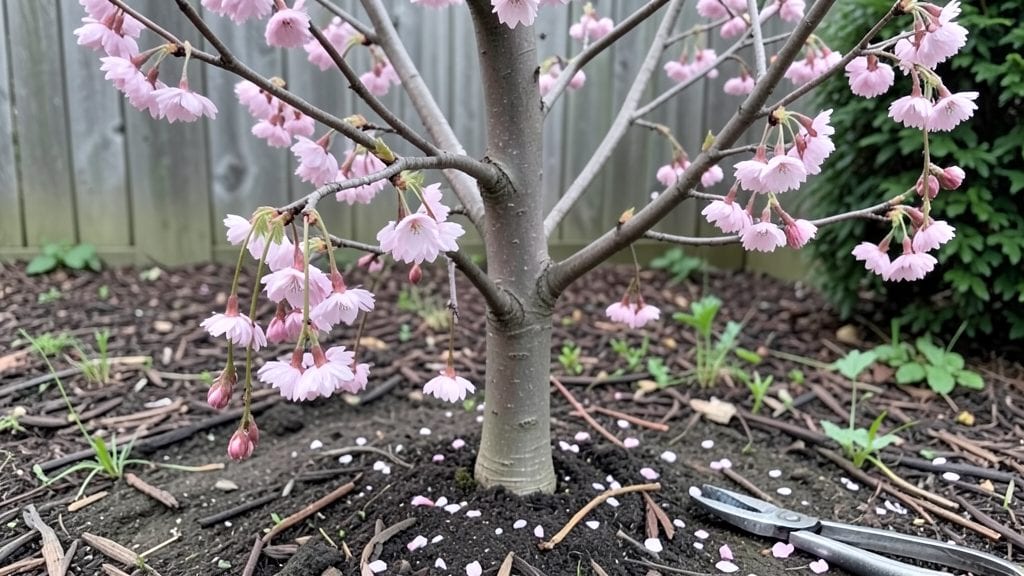
Pruning flowering cherry trees transforms a struggling shrub into a showstopper with vibrant pink or white blooms every spring.
I’ve watched my own cherry tree go from a tangled mess to a picture-perfect specimen after learning the right timing and cuts—it’s all about when and how you prune relative to the blooming cycle.
The key isn’t just cutting back; it’s understanding that these trees flower on last year’s growth, so aggressive pruning at the wrong time can mean fewer blooms next year.
You’ll need just a few tools: sharp bypass pruners for clean cuts, loppers for thicker branches, and a ladder if your tree is taller than your reach. The best time to prune is right after the blooms fade in late spring, but light shaping can happen in summer too.
Avoid pruning in fall or winter—you’ll risk encouraging new growth that won’t harden off before cold snaps, leaving your tree vulnerable to dieback. For established trees, aim to remove no more than 25% of the canopy in any single year to keep the blooms coming.
What you’ll end up with is a tree that bursts into color each spring, with stronger branches and fewer weak spots. The blooms stay abundant because you’re preserving last year’s flower buds while removing dead or crossing branches that steal energy.
Even better, the tree’s structure becomes more open, letting sunlight and air reach the center—preventing those pesky fungal issues that plague dense, overgrown cherries. It’s the difference between a tree that puts on a spectacular show and one that fades into the background.
This approach works for both young trees you’re shaping from scratch and mature ones needing rejuvenation. The same principles apply whether you’re dealing with a 10-foot dwarf cultivar or a towering 30-foot specimen.
Start small, and you’ll see the payoff in next year’s blooms—trust me, your neighbors will notice the difference. Ready to give your cherry tree the care it deserves?
📚 In This Guide
- What you need
- Instructions
- Tips and common mistakes
- Wrapping up and next steps
What you need
- ● Bypass Pruners: Sharp, high-quality pruners (e.g., Felco or Fiskars) for cuts up to ½-inch in diameter. (1 pair)
- ● Loppers: For thicker branches (½-inch to 2-inches). Look for bypass blades to avoid crushing. (1 pair)
- ● Pruning Saw: For branches over 2-inches thick. A bow saw or pruning saw with a fine-tooth blade works best. (1)
- ● Gloves: Heavy-duty, cut-resistant gloves (e.g., Mechanix or garden-specific) to protect hands from thorns and sap. (1 pair)
- ● Disinfectant: 70% isopropyl alcohol or a pruning sealant (e.g., Tanglefoot Tree Wound Pruning Seal) to prevent disease spread. (small bottle)
- ● Ladder or Step Stool: Sturdy and tall enough to reach the tree’s highest branches safely. (1)
- ● Trash Bags: Heavy-duty bags (13-gallon or larger) for collecting pruned branches. (2–3)
- ● Hand Saw: For precision cuts on stubborn branches.
- ● Extension Pole Pruners: For high branches without a ladder.
- ● Work Apron: With pockets to keep tools handy.
- ● First-Aid Kit: For minor cuts or scrapes.
- ● Marking Twine or Spray Paint: To tag branches for removal (useful for large-scale pruning).
Step-by-step instructions for pruning flowering cherry trees
Here's the method I've used for years to keep my flowering cherries healthy and bursting with spring blooms.
Choose the Right Time for Pruning
Flowering cherries bloom on last year's growth, so timing matters. The best window is late winter to early spring, just before buds swell but before flowers appear. This ensures you don't remove next year's blooms. If you must prune after flowering, do it immediately—delaying too long risks weakening the tree before winter.
Never prune in fall. The tree needs time to heal before cold sets in, and late cuts invite disease. I mark my calendar for February to March in most climates, but adjust for your region—wait until after the last hard frost when daytime temperatures stay above 40°F.
Gather Tools and Assess the Tree
You'll need clean, sharp pruning shears for small branches and loppers for thicker stems. Sterilize tools with rubbing alcohol to prevent spreading disease. Wear gloves—flowering cherries have thorns that pack a punch. Before cutting, step back and examine the tree's structure from all sides.
Look for dead, diseased, or crossing branches—these are your first targets. Dead wood is easy to spot: it's brown inside when you cut it, while healthy wood is green or white. Crossing branches compete for energy and often rub together, creating wounds that invite pests. Remove these first, then address any branches growing inward or rubbing against others.
Make Clean Cuts to Encourage Growth
Cut just outside the branch collar—the swollen area where the branch meets the trunk. This ensures the tree seals the wound properly. Make cuts at a 45-degree angle for branches thicker than ½ inch, but avoid leaving stubs. For thinner branches, a straight cut across is fine. Always cut on the outside of the branch to prevent water from pooling and rotting the wound.
Remove no more than 25% of the tree's foliage in one season. Flowering cherries are sensitive to heavy pruning, and overdoing it stresses the tree, reducing next year's blooms. Focus on opening the center of the tree to improve airflow and sunlight penetration. You'll see stronger branches and more vibrant flowers the following spring.
Clean Up and Monitor Recovery
Rake up and dispose of all pruned branches—don't leave them under the tree. This prevents disease and pests from overwintering. After pruning, water the tree deeply to help it recover. Flowering cherries have shallow roots, so 1-2 gallons of water spread evenly around the drip line is ideal. Avoid wetting the trunk to prevent rot.
Watch the tree in the weeks after pruning. New growth should appear within 4-6 weeks if conditions are right. If you notice oozing sap or discolored leaves, the cuts may have been too severe or the tree is stressed. In that case, reduce watering slightly and avoid fertilizing until the tree shows signs of recovery.
Tips & tricks for pruning flowering cherry trees
A few key insights will help you prune like a pro and keep your flowering cherry trees thriving for years.
The Timing Factor: The late winter to early spring window is non-negotiable for flowering cherries. I've learned this the hard way—pruning at the wrong time can mean losing next year's blooms entirely. Mark your calendar for February to March, but always wait until after the last hard frost when daytime temperatures consistently stay above 40°F. This timing ensures the tree has time to heal before winter sets in again.
Tool Preparation: Never skip sterilizing your pruning shears and loppers! I use rubbing alcohol between cuts to prevent spreading disease from one branch to another. Also, make sure your tools are sharp—dull blades crush wood fibers, creating larger wounds that heal poorly. I keep a small bottle of rubbing alcohol in my tool bag for quick sterilization between trees.
Branch Identification: When assessing your tree, look for three key indicators: dead branches (brown inside when cut), crossing branches (rubbing together), and branches growing inward (blocking sunlight). I always prioritize removing these first—they're the biggest energy drainers and disease risks. Remember, healthy wood should be green or white when you make a small cut to test.
Recovery Monitoring: After pruning, watch for new growth within 4-6 weeks as a sign your tree is recovering well. If you notice oozing sap or discolored leaves, you may have been too aggressive. In that case, reduce watering slightly and avoid fertilizing until the tree shows clear signs of recovery. I've found that patience during this phase pays off with stronger blooms the following spring.
Pro Tips for Pruning Flowering Cherry
- A few key insights will help you prune like a pro and keep your flowering cherry trees thriving for years.
- The Timing Factor: The late winter to early spring window is non-negotiable for flowering cherries.
- Tool Preparation: Never skip sterilizing your pruning shears and loppers!
Frequently asked questions
Got questions about pruning your flowering cherry? Here are answers to the most common concerns to help you keep your tree healthy and blooming beautifully!
When is the best time to prune a flowering cherry?
The ideal time to prune depends on your tree’s bloom type. For late-blooming varieties (like Kwanzan), prune in late winter or early spring before buds swell. For early-blooming types (like Yoshino), wait until just after flowering to avoid cutting off next year’s blooms. Always aim for dormant season when possible!
Can I prune my flowering cherry in summer?
Summer pruning is riskier but can be done for specific reasons—like removing diseased branches or shaping the tree. However, it may stress the tree and reduce next year’s blooms. If you must prune in summer, limit cuts to 10-20% of the canopy and avoid heavy pruning. Always sterilize tools with rubbing alcohol to prevent disease spread!
What if I accidentally prune off flower buds?
Don’t panic! If you’ve cut into flower buds by mistake, the tree will often regrow them—especially if pruned lightly. For severe mistakes, focus on encouraging new growth by fertilizing lightly with a balanced formula (10-10-10) and ensuring consistent watering. Next year’s blooms should bounce back!
How do I tell if my flowering cherry needs pruning?
Watch for these red flags that your tree needs a trim:
- Overcrowded branches rubbing together (risk of disease).
- Dead or diseased wood (discolored, brittle, or fungal spots).
- Weak growth with sparse blooms or leggy branches.
- Unbalanced shape—like a top-heavy canopy.
If you notice any of these, light pruning in the right season can restore health and beauty!
Are there alternatives to traditional pruning?
Yes! If you’re hesitant about pruning, consider these low-stress alternatives:
- Guided growth: Use tree wraps or stakes to direct branch growth naturally.
- Thinning from below: Remove lower branches to improve air circulation and sunlight penetration.
- Hiring a professional: Arborists specialize in cherry tree care and can handle heavy pruning safely.
- Regular fertilization: A slow-release bloom booster (like alfalfa meal) can encourage healthier growth with minimal pruning.
Each method has pros and cons—choose what fits your tree’s needs!
Wrapping up and next steps
Pruning your flowering cherry tree doesn’t have to be intimidating—it’s all about timing, technique, and a little love! 🌸 By following seasonal guidelines and keeping your tools sharp, you’ll encourage vibrant blooms year after year. Remember, patience is key, and even small adjustments make a big difference.
Ready to give your tree the care it deserves? Start by reviewing your notes—mark your calendar for next year’s pruning schedule and gather your tools. With each snip, you’re not just shaping a tree; you’re nurturing a stunning spring spectacle. Happy pruning! 🌿✂️